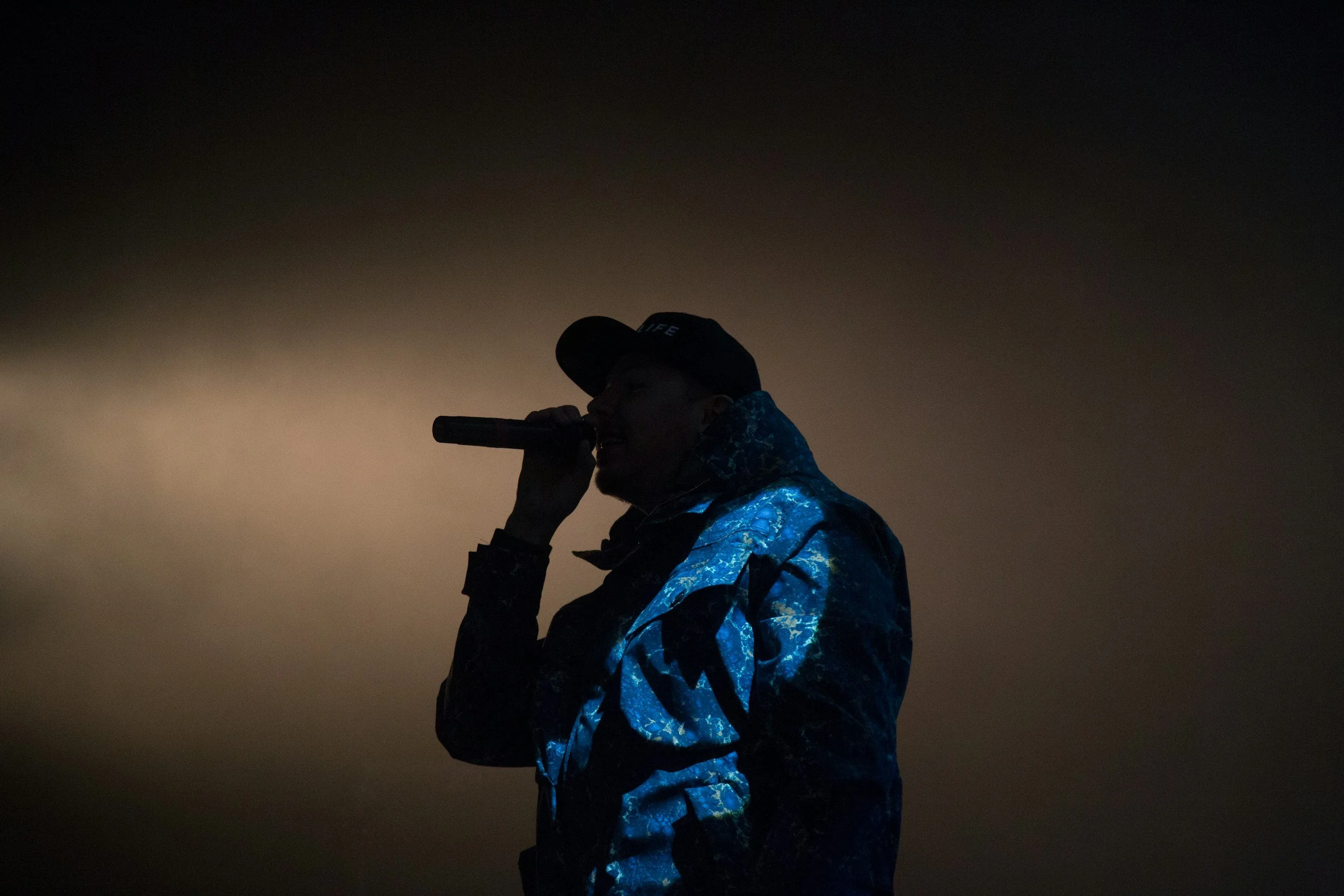
The Numbers That Check Out: Jubet, 'Hardest Truth' and a Song That Outgrew Its Own Coverage
Three months after release, download blogs are still reposting it. This paper went back to the platforms themselves to separate what can be verified from what arrived by press release, and found the checkable figure is bigger than the reported one.
A Voxtrendy download post for Jubet's "Hardest Truth" surfaced in the music feeds this week carrying no news whatsoever. No interview, no chart announcement, no fresh release to hang it on. Just an MP3 link for a record that has been sitting on Audiomack, Boomplay, Spotify and Apple Music since early May. Shazam's page for the track gives the release date as 3 May 2026 and lists the label as All Ways Global.
p>On its own that repost is nothing. But it is a useful place to begin, because it forces the only question left worth asking now that the launch cycle has closed: three months on, what about "Hardest Truth" can still be checked by anybody who wants to check it?
What the platforms say for themselves
More than you would expect, and they say it free of charge.
Jubet's Spotify artist page, retrieved on 12 August 2026, shows 330,077 monthly listeners. It puts "Hardest Truth" at 7,778,629 plays. Underneath it sit four other songs with real numbers attached: "Life Purpose" at 836,944 plays, "Caterefe talent hunt" at 288,216, "Police Brutality" at 286,472 and "Jamb Results" at 225,802. The same profile carries a line Jubet has written about himself: "I make music for real people, real hustle, real life. No filter, just vibes."
p>Two things follow from that page, and neither of them made it into the coverage this year. The first is that the song has carried on growing for weeks after the publicity stopped. The second is that Jubet is not a man with a single song and nothing behind it. He has a catalogue, and the titles in it, Jamb Results and Police Brutality among them, indicate what he has been writing about for some time.
Where the reported figures came from
The mainstream notice began in May. Vanguard reported on 21 May that "Hardest Truth" had passed 504,000 Spotify streams with 119,600 monthly listeners, 1.3 million streams on Audiomack, more than 406,000 on Boomplay, over 411,000 YouTube audio views, 281,805 Shazams and more than 900,000 pieces of TikTok user-generated content. The Nation ran the same block of figures the same day under an "Our Reporter" byline.
p>By early June the numbers had moved sharply. Vanguard reported on 3 June that Audiomack had passed four million, Spotify two million, Apple Music and Boomplay 1.5 million each, YouTube audio 1.2 million and global Shazams 586,000, with TikTok creations at 2.2 million. Blueprint carried an almost identical set on 6 June under a Blueprint Entertainment byline. Punch, in a piece bylined Favour Abalaka on 7 June, reported that the record had debuted on Billboard's US Afrobeats Songs chart. Vanguard reported that it climbed from a number 14 debut to number eight there, entered the Spotify Nigeria Top 100, peaked at number two on the Shazam Worldwide chart and held that position two weeks running before slipping to seven, and charted in more than 20 countries including Liberia, Sierra Leone, Tanzania, Cote d'Ivoire and South Africa.
p>A caution belongs here, and it is not a small one. Those metric blocks repeat across four newsrooms in the same fortnight, down to the oddly exact 281,805 Shazams. That is the signature of a single management-supplied data sheet rather than four separate verifications. The sheet was not even copied cleanly: Vanguard put Audiomack at four million while Punch and Blueprint both put it at 3.7 million, from coverage days apart. Nigerian readers should therefore treat the chart placements, which Billboard and Shazam compile and publish themselves, as firmer than the raw platform totals, which no outside party in Nigeria can audit.
p>That caution cuts both ways, and this is the part worth sitting with. The one figure anybody can walk up and verify today, the Spotify play count, is nearly four times what the June coverage claimed. Whatever the press releases were doing, they were not inflating that one.
The artist, checked
Vanguard and The Nation both report that Jubet was born Akanbi Oluwa Jubelo Emmanuel and raised in Ilora, Oyo State, that his interest in music developed during secondary school through freestyle sessions, and that he graduated from Obong University, where he was named Best Performing Artist in 2025. Obong University is a private institution at Obong Ntak in Etim Ekpo Local Government Area of Akwa Ibom State, so the man's route ran from a small town in the South West to a small private university in the South South, nowhere near the Lagos machinery. His management is LOUI-K Empire Ltd, led by Louiza Williams, according to both papers. There is no major label in the picture.
One small flag for the record: The Guardian rendered the name as Akanbi Oluwajubelo Emmanuel rather than Vanguard's Akanbi Oluwa Jubelo Emmanuel. Nothing turns on it, but it is the kind of variation that survives when four outlets work from one sheet.
What has actually been written about the song
This is where the coverage thins out badly, and it is worth being precise rather than filling the gap.
There is no substantial Nigerian music criticism of "Hardest Truth" that this newspaper could retrieve. What exists is characterisation, mostly brief and mostly unattributed to any named critic. The Nation wrote that music critics put the song's appeal down to its "reflective tone and relatable subject matter, particularly among younger listeners discussing heartbreak, emotional pressure and personal struggles", without naming a critic. Blueprint wrote that "music industry stakeholders have attributed part of the song's growth to its strong emotional appeal among listeners", without naming a stakeholder. The download blog 360naijahits described the record as "deeply relatable, emotionally painful, honest and reflective of real-life experiences many young people silently go through". Voxtrendy's own lyrics page calls it "an engaging record that has steadily captured listeners' interest across streaming services and trending music charts", which says nothing at all.
That is the complete inventory. Anyone telling you what Nigerians are saying about this song, which line they repeat, which verse they argue over, is guessing. This paper looked. Nairaland returned HTTP 403 to every retrieval attempt. The Audiomack track page returned no comment content. Voxtrendy's lyrics page showed a comment count of zero. No X or Reddit discussion cluster surfaced in search. The engagement is measurable; the conversation, so far as any of it can be retrieved, is not.
The blog layer nobody credits
Which returns us to the Voxtrendy post. Nigeria's MP3 blog ecosystem, Voxtrendy, Vistanaij, MackNaija, Manyhitz and dozens more, gets dismissed as spam by people who have never had to think about the price of data. In practice it works as a long-tail distribution layer for listeners who are not living inside Spotify. A song still being reposted three months after release is a song still being searched for by name. For an artist with no label budget, that recirculation is not noise. It is most of the campaign.
What remains unknown
Whether "Hardest Truth" is still on the Billboard Afrobeats Songs chart today could not be established: Billboard's chart pages returned a payment-required response to retrieval. The Guardian published a piece on Jubet's global breakthrough that reportedly put the song at number 17 on Billboard's Afrobeats Global chart, but that page returned 403 and the figure is carried here from a search index rather than from the article itself, so treat it as unconfirmed. Jubet has given no interview that this paper could find. What he was paid, what deal LOUI-K Empire is working under, and what is coming next are all simply not on the record.
Ask any Nigerian artist who came up between 2005 and 2015 how it happened and the shape of the answer is always the same. A DJ. A radio slot. Somebody at a label who heard it and made a call. The route existed and it ran through Lagos, and if you were not in Lagos or could not get to somebody who was, your record did not exist regardless of how good it was.
Look at the route Jubet actually took. Ilora, a small town in Oyo State. Obong University, a private school at Obong Ntak in Etim Ekpo, Akwa Ibom, which is about as far from Alagomeji as a Nigerian undergraduate can get. Management by an outfit, LOUI-K Empire, that almost nobody in the industry could have named in April. No major label anywhere in the reporting.
And yet on 12 August his Spotify artist page showed 330,077 monthly listeners and 7,778,629 plays on one song. Punch reported a Billboard US Afrobeats Songs debut. Those are not vanity metrics supplied by a publicist; the Spotify page is public and anyone reading this can open it.
p>Here is what I take from that, and it is a claim about infrastructure rather than about taste. The thing that used to be scarce was not talent and it was not even audience. It was the introduction. Somebody had to carry your record into a room. Streaming platforms and short-form video have not abolished that room, but they have made it possible to reach an audience without ever entering it. A man can now be discovered at scale from a town most Lagos A&R staff cannot place on a map.
The industry response should follow and mostly has not. If a catalogue is sitting there in public with checkable play counts on five songs, there is no excuse for signing on the basis of whose cousin somebody is. Scouting is now a research job that anyone with a browser can do properly, and the labels that keep treating Lagos proximity as a proxy for potential are simply choosing to look at a smaller field than the one available to them.
I do not dispute a single figure in this story and I still think we are about to teach young Nigerians something false.
The argument going round is that Jubet proves the gate is open. Ilora to Billboard, no label, do it yourself. It is a lovely story and it is being told as though it were a method. It is not a method. It is an outcome, and outcomes are the worst possible thing to reason backwards from.
Consider what has and has not changed. Discovery has changed; nobody serious argues otherwise. What has not changed at all is the part that comes after discovery, which is the only part that pays rent. Nigeria still has no accepted national singles chart with a published methodology. Streaming payouts at Nigerian subscription prices are not a living for an independent artist, whatever eight-figure play counts suggest to an outsider. Publishing administration and royalty collection here remain a maze that swallows people who have no lawyer. Live fees, brand deals and festival slots, which is where Nigerian artists actually earn, are still awarded through relationships in Lagos, exactly as they were in 2012.
So the honest reading of "Hardest Truth" is narrower than the celebratory one. A song broke through without a label. That says the top of the funnel has widened. It says nothing whatsoever about whether the funnel below it has widened, and there is no evidence in this story that it has.
Why does this matter? Because a whole generation is being encouraged to skip the boring work, the management contract read properly, the split sheet, the distribution terms, the registration with a collecting society, on the theory that the algorithm will handle it. The algorithm handles attention. It does not handle ownership. Attention without ownership is how Nigerian artists have been losing money for decades, and doing it at 7.8 million plays instead of 7,800 does not change the arithmetic. It only raises the stake.
p>