Nigeria's Next Generation Is Missing: Flying Eagles and Golden Eaglets Both Locked Out of Continental Football
Nigeria's senior football team still produces stars the whole continent recognises — players like Victor Osimhen and Alex Iwobi, both products of the same national football system. Somewhere behind them, though, the pipeline that is supposed to produce the next generation has just failed twice in less than a year.
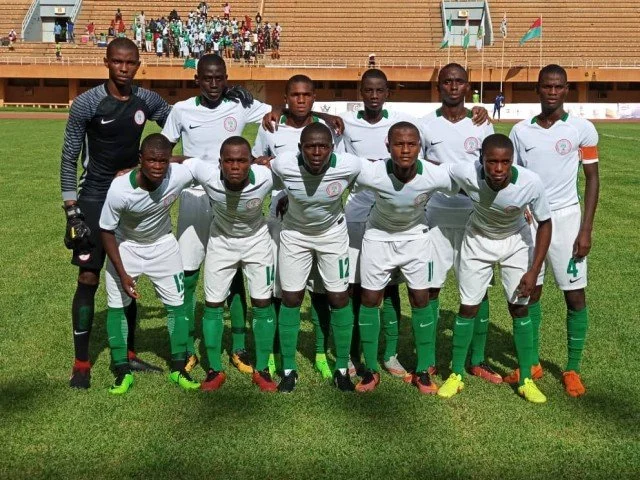
The Flying Eagles lost the 2026 WAFU Zone B final 4-1 to Burkina Faso's Young Stallions, missing out on next year's U-20 AFCON — this from a Nigerian age-group side that has won that tournament seven times. The Golden Eaglets, Nigeria's U-17s, are already out of continental contention for a second straight cycle. Two teams, two different tournaments, one shared conclusion: Nigeria's teenagers cannot get past their own region anymore.
Neither collapse happened for lack of talent on the pitch. Both happened at the same hurdle: the regional qualifying stage that decides whether Nigeria's teenagers get to play continental football at all.
How the Flying Eagles Actually Lost
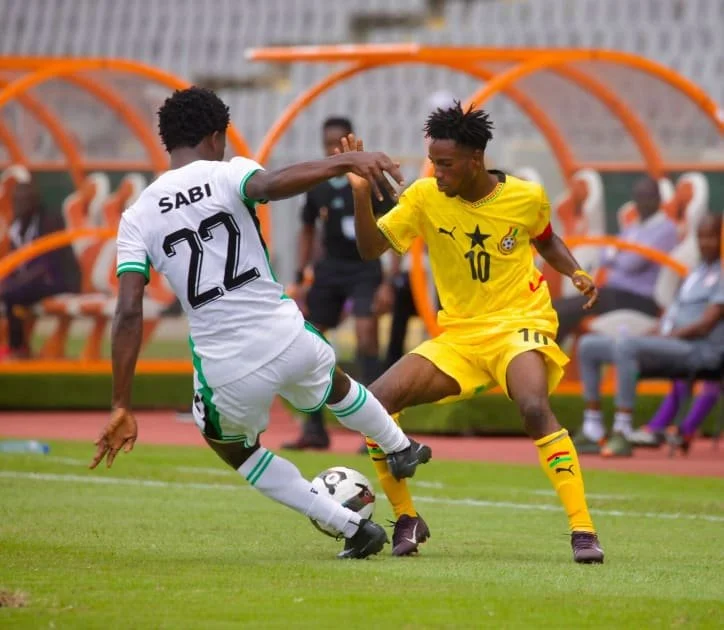
It wasn't a horror run to get there. Nigeria's U-20s beat Ghana 4-2 and Togo 3-0 in the group stage — comfortable, even expansive wins. The only blemish before the final was a group-stage loss to Burkina Faso themselves. In the semi-final, the Flying Eagles beat hosts Cote d'Ivoire on penalties, 4-3, after a 2-2 draw, to set up a final rematch with the team that had already beaten them once.
None of that is the record of a side short on quality. A team that scores four against Ghana and needs penalties to get past the host nation in a semi-final is a team that can play. What it could not do was find another gear when Burkina Faso came around for a second time.
Burkina Faso won that rematch 4-1. A team Nigeria had already lost to in the group stage beat them again, this time with the U-20 AFCON ticket on the table, and did it comfortably enough that the scoreline reads like a gap in class, not misfortune.
The Under-17s Never Even Got This Far
If the Flying Eagles' story is one of a final lost, the Golden Eaglets' story is one of a semi-final never survived. Nigeria's U-17s missed the 2026 U17 AFCON — and by extension the FIFA U17 World Cup that follows it — for the second consecutive time, after losing 2-0 to Ghana in the WAFU Zone B semi-final back in September 2025.
Manu Garba, the long-serving coach who built much of Nigeria's recent youth football identity, is gone. Eboboritse Uwejamomere has taken over, and has already opened a camp targeting the 2027 U-17 AFCON, calling in 62 players, per Soccernet. A fresh start, in other words — but one forced by back-to-back failure, not chosen from a position of strength.
Why This Keeps Happening
Part of the explanation is structural, and it's worth stating plainly because it rarely gets said: CAF's zonal qualification system gives West Africa's Zone B only two automatic slots to teams that reach their regional final. That is a narrow door for a region this dense with football-mad, football-producing countries. Burkina Faso, Ghana, Cote d'Ivoire, Togo — every one of them is also trying to fit through it.
But a narrow door does not explain why Nigeria, seven-time winners of the U-20 tournament, keep finishing on the wrong side of it. Structure sets the difficulty. It does not lose the football matches.
Seven-time U-20 AFCON winners. Second straight cycle without a U-17 continental appearance. Same country, same year.
The Question Nobody Wants to Ask
Every senior Super Eagles conversation eventually invokes the same names: Osimhen, Iwobi, and the rest of a generation that came through Nigerian youth football at some point. The uncomfortable question two youth-team exits in one year forces onto the table is simple — where is the next one supposed to come from, if the pipeline that found the last generation keeps getting knocked out before the continental stage even starts?
That isn't an argument that Nigeria has run out of talent. Sixty-two players in a new Golden Eaglets camp says otherwise — there is clearly no shortage of teenagers being looked at. What's in question is whether the system around them — coaching continuity, qualifying preparation, competitive minutes at the right age — is still capable of turning that talent into continental football appearances, let alone World Cup ones.
None of this is unique to Nigeria — every football nation eventually asks whether its youth structures still work. What makes Nigeria's version sting more is the gap between reputation and result: seven U-20 AFCON titles is a real history, not a boast, and history like that is supposed to make it harder to lose to the same opponent twice in one tournament, not easier.
What continuity looks like on the technical bench across both age groups, and how much preparation time each squad gets together before matches that decide years of a football career in ninety minutes, are fair questions for the NFF to answer — not just for this cycle, but for the next one already forming behind it. Two youth generations missing continental football in the same twelve months is not a coincidence Nigerian football can afford to shrug off. It reads less like bad luck twice than like a warning delivered twice, in case anyone missed it the first time.
What a Missed Generation Actually Costs
Missing a U-20 or U-17 continental tournament is not just a bad month for a youth federation. Those tournaments are where scouts watch, where senior call-ups get seeded, and where a seventeen or twenty-year-old either gets seen on a continental stage or does not. A generation that misses out does not stop existing — it simply develops with less continental football on its résumé than the generation before it had.
That is the quieter cost sitting underneath both results this year: not just two trophies Nigeria failed to win, but two batches of teenagers who will now take longer, if they get there at all, to reach the stage their predecessors reached before them. Seven U-20 AFCON titles built a reputation. Two failed campaigns in the same year are what put that reputation to the test.