The Senate Has Summoned The NFF. Again. And That Is The Problem.
Abuja · Friday 21 August 2026
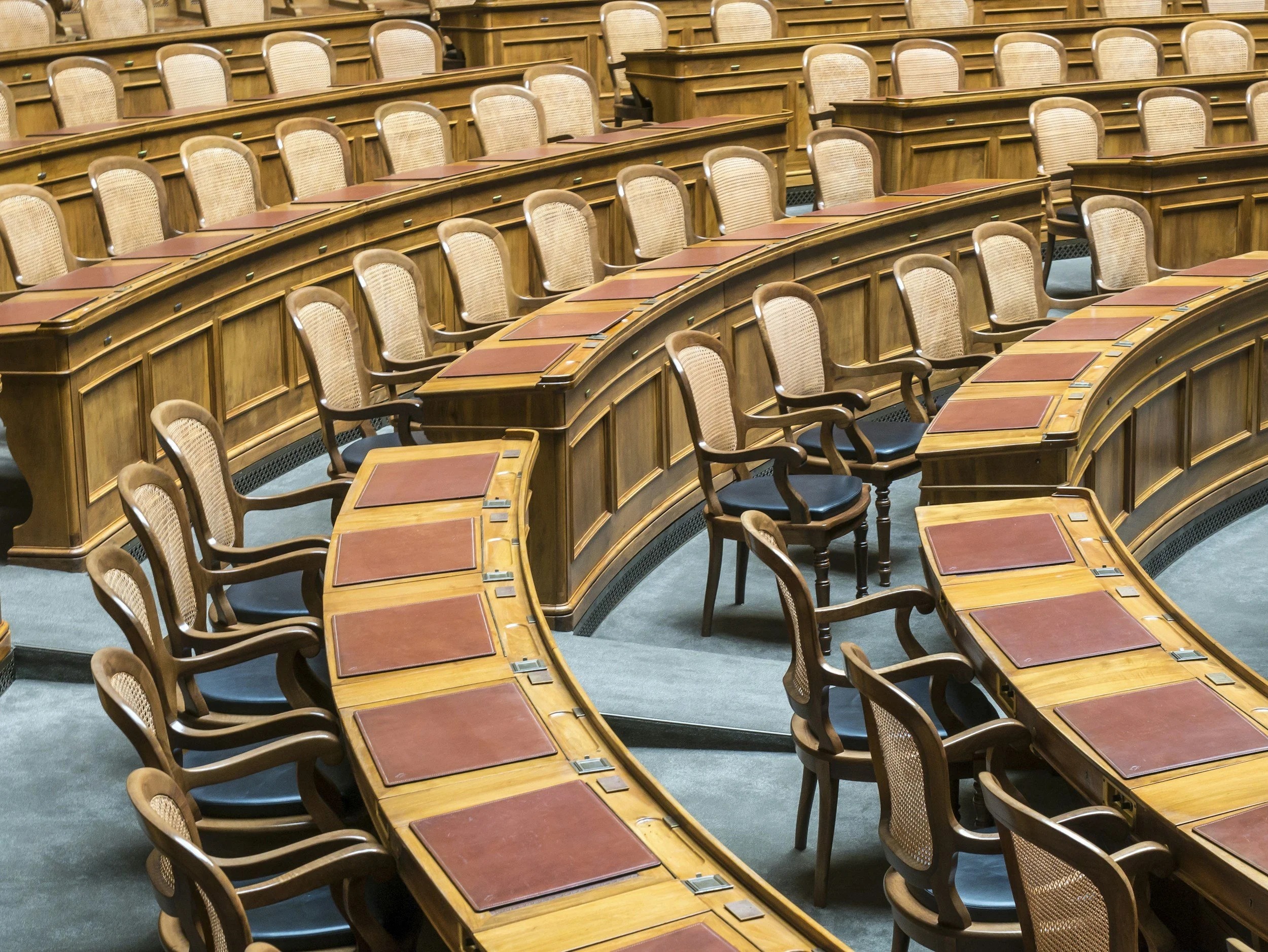
The Senate Committee on Sports has summoned the leadership of the Nigeria Football Federation and the National Sports Commission to an emergency meeting. The Super Eagles are not going to the World Cup. The Super Falcons are not going to the World Cup. Somebody, the Senate has decided, is going to sit down and explain that.
The summons came from Senator Abdul Ningi, who represents Bauchi Central and chairs the committee, and it was issued at the prompting of the Senate President, Godswill Akpabio. The two men expected in the room are Shehu Dikko, chairman of the National Sports Commission, and Ibrahim Musa Gusau, president of the NFF. The stated agenda is the declining fortunes of Nigerian sport, football first among them. The unstated agenda, which several senators have not bothered to keep unstated, is the feud between the two institutions those men run.
It is a reasonable thing for a legislature to do. It is also, on the evidence, the least effective tool in the box.

What actually happened, in order
Strip out the commentary and the record for this cycle is short and brutal. The Super Eagles failed to qualify for the 2026 World Cup, a tournament expanded to 48 teams, on a continent granted nine and a half places. The Super Falcons then failed to qualify for the 2027 Women's World Cup in Brazil, going out of WAFCON to Cameroon and losing the automatic route that a title defence would have secured.
Those are not the same failure. The men's campaign was a slow accumulation of dropped points in fixtures Nigeria was expected to win. The women's was a single tournament collapsing inside a fortnight. Treating them as one story, which is what an emergency joint session inevitably does, is the first way this meeting goes wrong. The men's problem is squad management across two years. The women's problem is a federation that has spent a decade running its most successful national team on goodwill and back pay.
| Campaign | Outcome | Consequence |
|---|---|---|
| Super Eagles, 2026 World Cup | Did not qualify | No senior men's tournament until AFCON |
| Super Falcons, WAFCON 2026 | Out before the final stages | Lost the automatic 2027 World Cup place |
| Super Falcons, 2027 World Cup | Playoff route only | Qualification now runs through an intercontinental route |
Positions as recorded at the close of the 2026 qualifying and tournament cycles.
Why the summons is the wrong instrument
A committee hearing produces three things reliably: a day of headlines, a set of undertakings, and a transcript nobody reads. It does not produce a change in how a federation is financed, and financing is where the Nigerian football problem actually lives.
The NFF does not control its own money in any meaningful sense. It receives FIFA development funding on FIFA's schedule, government intervention money on the government's schedule, and sponsorship revenue that is small relative to both. When players are owed bonuses, the federation's usual answer is that the money has not arrived from the Federal Government yet, and that answer is often true. When the government's answer is that the money was released, that is also often true. The gap between those two true statements is where several years of Nigerian football has disappeared, and it is not a gap a two-hour hearing closes.
The question a summons cannot ask is the only one that matters: who is accountable for the money between the moment it leaves the Federal Government and the moment a player is paid?
The NSC and the NFF are not on the same side
The other item on Ningi's agenda is the relationship between the two bodies, and it is the item most likely to produce something useful, precisely because it is the one thing the National Assembly can actually legislate on.
The National Sports Commission exists to coordinate Nigerian sport across federations. The NFF is a member association of FIFA, and FIFA has an unusually firm view about government bodies giving instructions to member associations. That tension is not a personality clash between Dikko and Gusau, though it is often reported as one. It is a structural conflict written into the way Nigerian sports administration was rebuilt, and it means that on any given question there are two bodies with a plausible claim to be in charge and neither with a clean one.
Nigeria has been warned before about what happens when a government arm is seen to be running a football federation. Suspension is the sanction, it has been applied to member associations elsewhere, and it removes national teams and clubs from international competition while it lasts. That is the reason senators talk carefully in these sessions even when they are angry, and it is also the reason those sessions rarely conclude with anything sharper than an appeal for cooperation.
What a serious response would look like
Three things would signal that this round is different from the last five.
The first is publication. If the committee compels the NFF to publish a full audited account of what it received and what it spent across the qualifying cycle, and publishes it in a form ordinary Nigerians can read rather than as an annexe to a legislative record, that alone changes the incentives. Federations behave differently when the arithmetic is public.
The second is separation. The men's and women's programmes need distinct budget lines with distinct reporting, because the current arrangement lets the women's programme absorb the shortfall every time the men's programme overruns. That is not an allegation, it is what a shared pool does under pressure.
The third is a technical review that is not conducted by the people being reviewed. Nigeria's qualification failures were coached failures as well as administrative ones, and no federation in the world has ever produced a candid assessment of its own appointments.
The part nobody in the room will say
Nigerian football is not short of players. It has an international goalkeeper joining a Championship club this week, a striker Saudi Arabian money cannot prise away from Istanbul, and a forward being asked to lead the line for Atletico Madrid. The raw material is not the constraint and has not been the constraint at any point in the last twenty years.
What Nigeria is short of is an institution that can convert that raw material into qualification with the same reliability as countries whose players are individually less gifted. Morocco built one. Senegal built one. Both took roughly a decade, both required a federation that survived more than one election cycle, and neither did it in response to a legislative summons.
Ningi's committee will get its meeting. Dikko and Gusau will attend, because declining is not an option. Undertakings will be given. Whether anything follows depends entirely on whether the National Assembly is willing to do the unglamorous, multi-year work of restructuring how football money moves, long after the cameras have gone.
Reporting: THISDAY, The Whistler, The Guardian Nigeria, Voice of Nigeria and Sports247.
Read next
- EFCC And ICPC Are Both Looking At The Same N12 Billion
- Galatasaray Have Now Said No To Al-Hilal Twice Over Osimhen
- Nigeria Is About To Stop Prosecuting People For Surviving
If you argue about Nigerian football for a living, you may as well dress like it. Caps and tees are in the TalkTalkNigeria store, and Naira pricing is here.