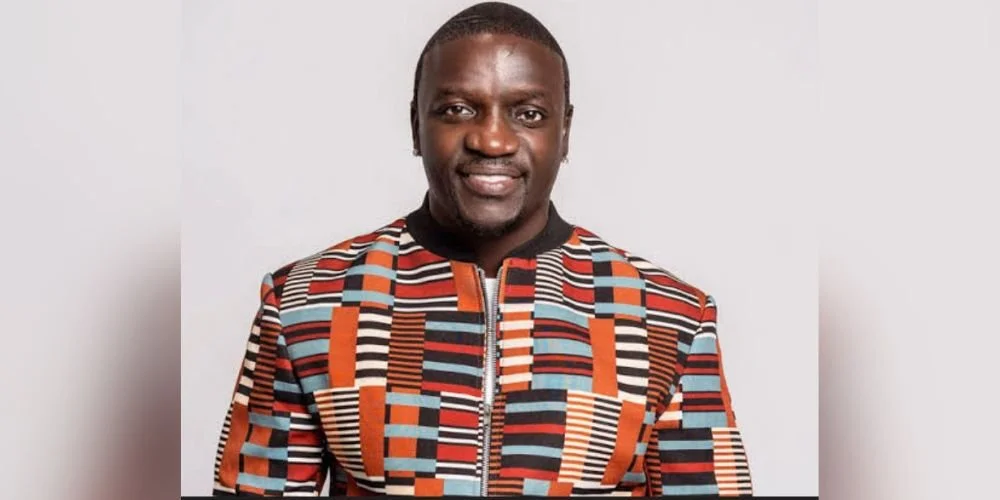
“Lagos Could’ve Been the World’s Financial Capital” — Akon Reflects on Nigeria’s Lost Oil Fortune
Senegalese-American singer and entrepreneur Akon has once again stirred thought and reflection across Africa with his latest remarks about Nigeria’s unrealized potential.
In a viral Instagram post, Akon argued that Nigeria could have become one of the world’s most powerful nations if it had retained control over its oil wealth since independence in 1960.
“What if Nigeria had kept 100% of its oil money since 1960 instead of letting Shell and Exxon take it? We’re talking about two trillion dollars that could have stayed in African hands,” he wrote.
According to the Locked Up crooner, such financial control could have completely changed the course of the nation’s destiny — and even reshaped the global power map.
“Lagos would be the world’s financial capital today, not London or New York. Nigerian universities would lead global innovation, producing the next generation of tech giants. Nollywood wouldn’t just compete with Hollywood, it would completely dominate global entertainment,” Akon said.
He went further to paint a vivid picture of an alternate reality where Nigeria’s wealth built Africa’s prosperity, rather than fueling foreign economies:
“London’s banking district would be empty as major firms relocate to Abuja. Nigerian passports would be more valuable than American ones. Europeans would be crossing the Mediterranean in search of work opportunities in Africa.”
Akon concluded with a hopeful note:
“The possibilities are endless, but it’s never too late.”
Opinion: Akon’s Vision Isn’t Fantasy — It’s a Wake-Up Call
Akon’s words may sound like a dream, but they’re also a mirror — reflecting what could have been if Africa, and particularly Nigeria, had managed its resources with foresight and unity.
Nigeria, blessed with some of the world’s richest oil reserves, has too often watched wealth flow outward while citizens face economic hardship, corruption, and poor infrastructure. Akon’s “what if” scenario is not just about money — it’s about missed opportunities, leadership failure, and dependence on foreign powers that still haunt many African nations today.
Yet, his final words — “it’s never too late” — hold power. They remind us that Nigeria’s greatness isn’t gone; it’s just untapped. With the right vision, accountability, and investment in human capital, Lagos can still rise as a true global hub — not as a shadow of London or New York, but as Africa’s financial heartbeat.
Perhaps Akon isn’t just reminiscing — he’s challenging a generation of Nigerians to rewrite the story, to make the next 60 years a triumph of self-reliance and reform.
Because indeed, it’s never too late.