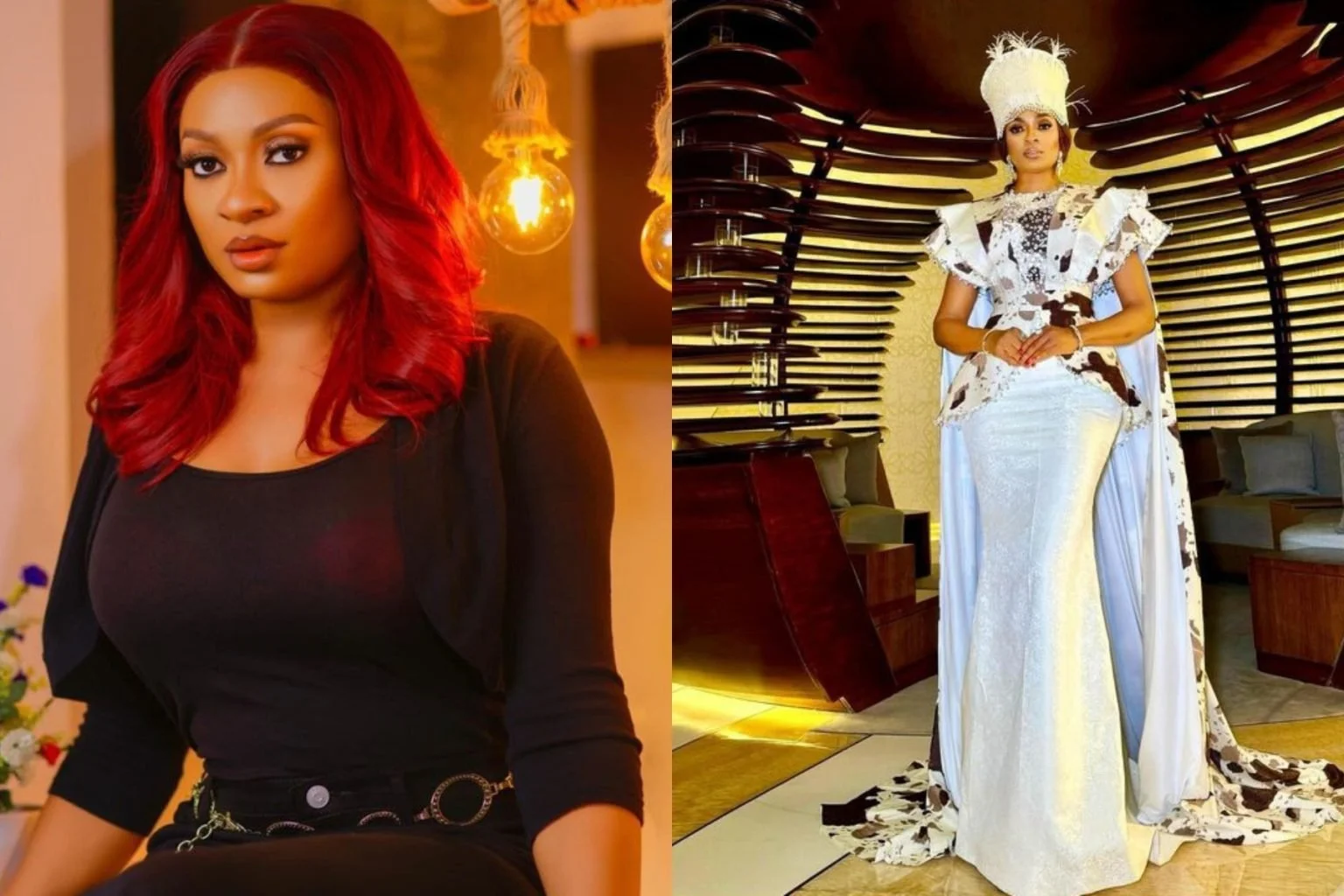
Wumi Toriola Blasts Afeez Owo Over Podcast Comment Comparing Her to Mide Martins
Nollywood actress Wumi Toriola has publicly slammed veteran filmmaker Afeez Owo after he made a remark about her character during an interview on the African A-List Podcast.
Afeez, while comparing his wife Mide Martins to Wumi, suggested that Wumi’s real-life persona closely mirrors the fiery roles she often plays on screen.
“Mide’s character in movies is totally different from real life, but Wumi’s movie role is close to her character in real life. Violence is her comfort zone. Wumi will react when provoked and she doesn’t take nonsense from anyone. But if you offend Mide in real life, she will remain calm,” Afeez said.
The statement did not sit well with Wumi, who fired back in a now-deleted video on Instagram.
“Must every rift be taken to podcasts? They gave you a mic, and you started saying rubbish. After they entertained you with pepper soup, you started blabbing.
Am I a mad woman? If people don’t offend me, will I be angry? I have never insulted you before. I still respect you despite your unfortunate behaviour,” she said.
Both Wumi and Mide are popular for their fiery movie roles, but this exchange has stirred a fresh wave of conversations about how much of an actor’s on-screen character should be equated with their real personality.

Opinion: When Fiction Crosses Into Reality
This spat between Wumi Toriola and Afeez Owo shines a light on one of Nollywood’s recurring challenges—audiences and even industry insiders often confuse acting with reality.
Yes, Wumi is known for playing hot-tempered roles, but that does not mean her entire life operates in “fight mode.” Acting is a craft, and while certain traits may overlap with personality, it is unfair to reduce an actor to the characters they portray.
Afeez’s comment, though perhaps not intended to hurt, came across as dismissive and personal, especially when made on a public platform like a podcast. Wumi’s reaction, fiery as it was, also reflects how sensitive such comparisons can be—especially for women in Nollywood who constantly battle stereotypes of being “loud” or “violent.”
This incident is a reminder that celebrities, beyond the glitz, are humans first. Respect, discretion, and context matter. Not every light-hearted comment lands as intended, and not every opinion belongs on a microphone.
At the end of the day, fans love both Wumi and Mide for their talent, not their temperaments. Perhaps the industry—and we as the audience—should focus more on celebrating their art rather than fueling avoidable drama.