Olakunle Churchill Denies Legal Marriage to Rosy Meurer Amid Divorce Claims
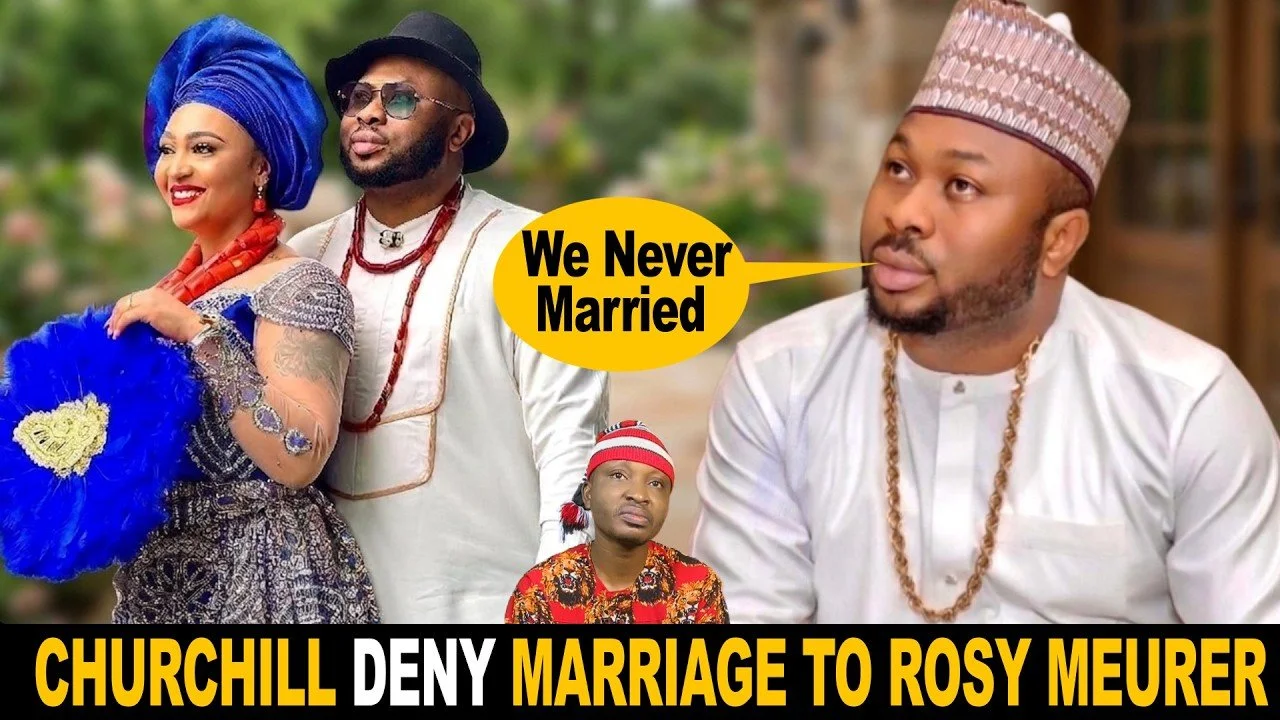
Nigerian businessman Olakunle Churchill has dismissed reports suggesting a marital crisis between him and actress Rosy Meurer, insisting that there was never a legally recognized marriage between them.
The development follows viral reports claiming that Meurer had filed for divorce after Churchill allegedly reconciled with his ex-wife, Tonto Dikeh.
Reacting via a series of Instagram posts on Wednesday, Churchill described the divorce claims as baseless, arguing that there was no legal union to dissolve.
“What took place was an introduction. Therefore, the idea of a ‘divorce’ is baseless from the outset,” he stated.
He further emphasized that there was neither a church wedding nor a court wedding to validate any legal marital status, questioning the authenticity and process behind the circulating divorce documents.
“There was no legally recognized marriage… I was never served. So I ask: what exactly is being presented to the public, and how was it obtained?” he added.
Churchill also criticized the handling of the alleged legal process, expressing doubts about the credibility of those involved in producing the documents.
The controversy has continued to generate reactions online, with many questioning the nature of the relationship and the legal implications of the claims.
Opinion: When Personal Relationships Become Public Disputes
The situation involving Olakunle Churchill and Rosy Meurer highlights a recurring issue in celebrity culture—the blurred line between private relationships and public narratives.
At the center of this controversy is a fundamental question: what defines a marriage in the eyes of the law versus in the eyes of the public? While Churchill insists there was no legal union, public perception may have been shaped differently based on appearances and previous reports.
This disconnect often fuels confusion and speculation, especially when legal terms like “divorce” are introduced without clear documentation or understanding.
It also reflects how quickly unverified claims can spread online, turning personal matters into widespread debates before facts are fully established.
Ultimately, beyond the personalities involved, this case underscores the importance of clarity in both legal processes and public communication. Without it, narratives can spiral, leaving more questions than answers.