Nigeria's Grooming 'Manissance': Why Nigerian Men Are Finally Buying the Skincare
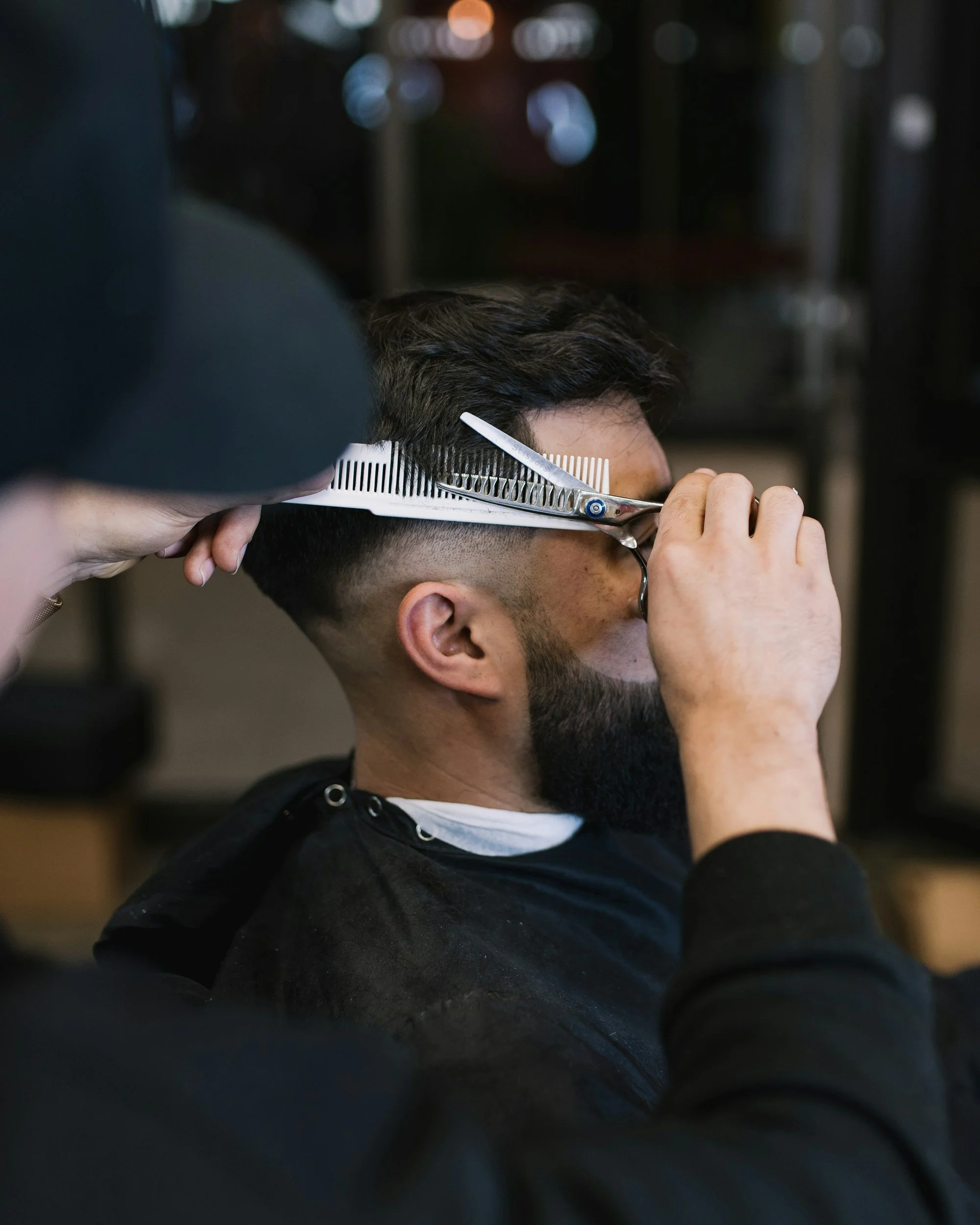
Walk into a barbershop in Lagos on a Saturday and you'll hear more than clippers. You'll hear gist, football arguments, somebody's uncle's opinion on the economy — and, increasingly, somebody asking the barber what he's using on his beard. That last part is new. Or new enough that it's worth calling what it is: Nigerian men have started buying skincare, and the market has noticed.
Let's be honest about what's actually happening here. This isn't a handful of Instagram-famous men discovering serum. It's a market — $311.7 million in 2024, projected to reach $455.6 million by 2033. That's not a trend piece. That's an industry deciding Nigerian men are worth building for.
And once you start looking for it, the evidence isn't hiding. It's in barbershops turned grooming lounges, in Instagram ads for beard oil, in brands that didn't exist a decade ago now running second locations. The manissance, if we're calling it that, isn't a prediction. It's already got a balance sheet.
Nigeria's men's grooming market: $311.7 million in 2024, projected to reach $455.6 million by 2033.
The stigma is loosening, slowly
For a long time, grooming beyond soap and a barber's clippers read as vanity, or worse, as something other men would clock and comment on. Sef, plenty of that attitude still exists. But the market numbers argue it's losing ground faster than the culture is willing to admit out loud. You don't build a $311.7 million industry, growing at a 4.25% compound annual rate toward $455.6 million by 2033, on a stigma that's actually holding.
And this isn't a Nigeria-only story lifted out of nowhere. The global men's personal care market was worth $202.6 billion in 2022, headed toward $376.4 billion by 2030. Nigerian men catching up to that shift isn't an anomaly. It's Nigeria arriving, later than some markets, at a place the rest of the industry was already heading.
What's worth arguing, though, is that "catching up" undersells what's happening locally. This isn't international brands parachuting in to sell Nigerian men imported serum. It's Nigerian founders building for Nigerian skin, Nigerian hair, Nigerian budgets — a different, more durable kind of market than one built entirely on imported product and borrowed aspiration.
Who's actually building this
What makes the Nigerian version of this story interesting isn't the global number. It's who's building the local supply. Adunni Organics, founded back in 2014 by Olumide Gbadebo, didn't wait for the market to prove itself — the brand's 'Adunni MEN' line was built around what Gbadebo has described as a gap in simple, premium and effective men's grooming made specifically for African skin. That's a founder identifying a gap almost a decade before the market data caught up to prove him right.
Midex Hair Care, based in Lagos and founded by Blessing Olamide Oluyemi, picked an even narrower lane: hair and beard care built specifically for African men. And Groomed By Elereka, founded in 2021 by Abimbola Akerele, has gone further than product — it's built physical space. What started as a flagship in Ikoyi has expanded to a second outlet in Lekki Phase 1, offering facials, manicures, pedicures and massages alongside haircuts. That's not a barbershop with a skincare shelf bolted on. That's a full grooming lounge, built on the bet that Nigerian men will pay for the experience, not just the product.
Three different brands, three different bets: product for skin, product for hair and beard, and an entire physical experience built around grooming as a destination rather than an errand. That spread is exactly what you'd expect from a market still early enough that nobody's cornered a single lane yet.
Where the customers actually are
None of these brands are building this the way a legacy beauty company would, either. They lean hard on Instagram, TikTok, WhatsApp commerce and influencer partnerships — not glossy TV campaigns, not mall counters. And affordability, not luxury positioning, is described as the decisive factor for most Nigerian male consumers. That combination — social-first marketing, WhatsApp checkout, price sensitivity front and centre — tells you exactly who's actually buying: not a tiny elite with disposable income, but ordinary men who found a product on their phone and could actually afford to try it.
That's the part worth sitting with. A "manissance" driven by affordability and Instagram, not luxury and magazine spreads, is a far more durable kind of shift than a trend confined to Victoria Island's wealthiest postcodes. It suggests the demand is broader than headlines about Lekki grooming lounges might imply.
It also explains why WhatsApp commerce, of all things, keeps showing up as a distribution channel for a beauty category. A customer unsure about trying a men's skincare product for the first time is more likely to message a brand directly, ask a question, get a reply from an actual person, than to walk into a store and ask a stranger. That's not a workaround. For a market this new, it might be the entire sales strategy.
What this actually is
Call it a generational loosening, not a revolution. Nobody in this story is claiming Nigerian men have collectively abandoned the idea that grooming is a woman's concern — the stigma clearly still has enough force that brands feel the need to explicitly market "for African skin," "for men," as if the default assumption still needs correcting. But a market doesn't grow toward $455.6 million by 2033 on stigma that's actually winning.
The barbershop is still the social hub. What's changed is what's being discussed there — and, increasingly, what's being sold across the counter next to the clippers.