Four Days to Braid Her Own Hair: Yinka Ogunbiyi's Answer Is a $7 Million Robot Called Halo
It took Yinka Ogunbiyi four days to braid her own hair. She was alone in a London flat during a COVID-19 lockdown, salons shut, and what should have been a routine wash-day ritual turned into a multi-day siege against her own scalp. Somewhere in the middle of it, the engineer in her started asking an obvious question: autonomous cars exist, surgical robots exist, so why has the technology behind braiding not moved in five thousand years?
Ogunbiyi, a Nigerian-American with a joint engineering and business master's from Harvard, spent the years after that lockdown trying to answer her own question. The result is HaloBraid, which its founder describes as the world's first patented braid-assist robot — and which has now raised $7 million in seed funding to bring the idea out of the lab and into salons, TechCrunch reported.
The round was led by Seven Seven Six, the venture firm founded by Reddit co-founder Alexis Ohanian, with AlleyCorp and Bling Capital also participating. More strikingly, HaloBraid did not need to sell salons on the idea first: more than 7,000 of them had already joined a waitlist before the company had shipped a single commercial unit, per TechCrunch's reporting.
What the Robot Actually Does
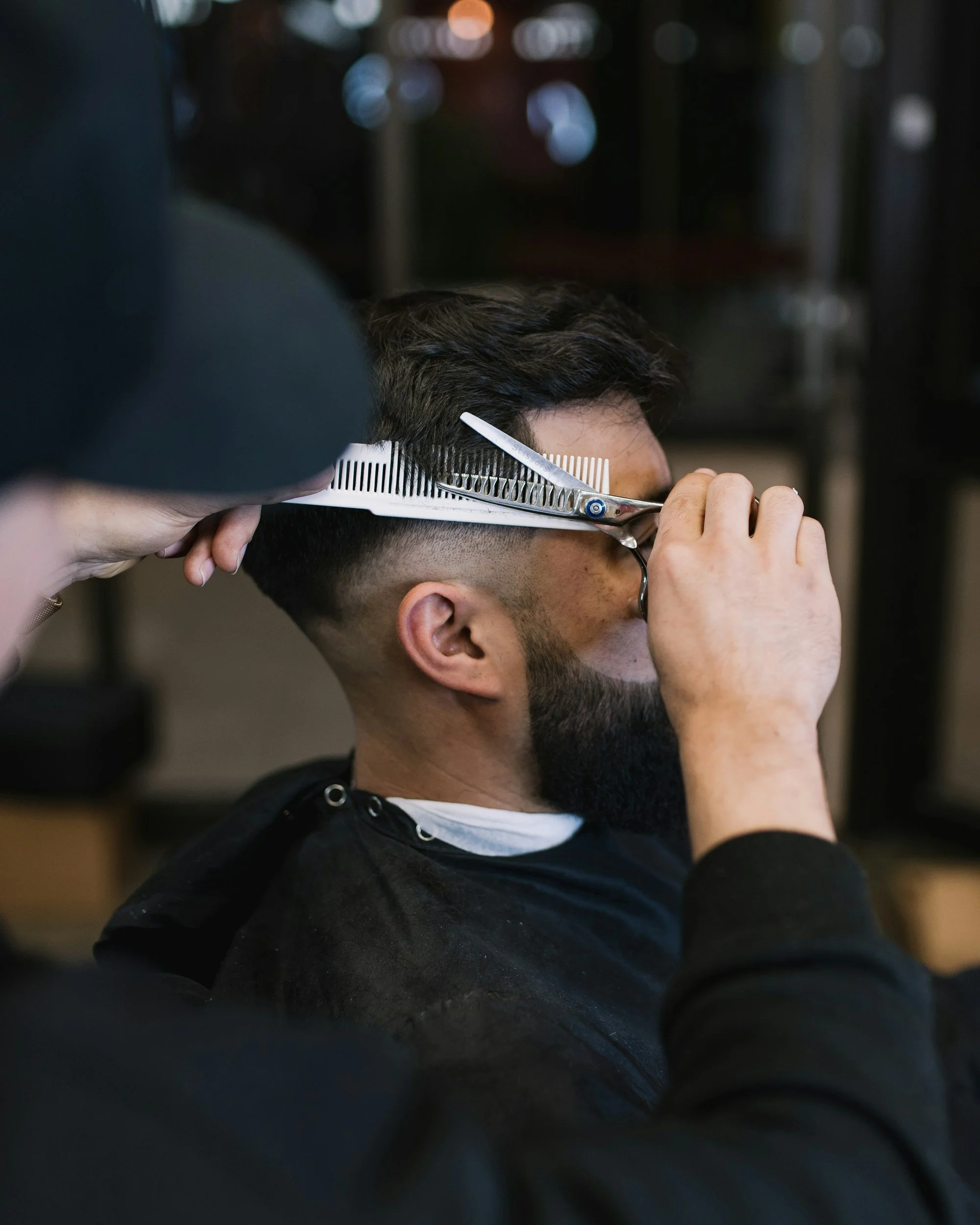
HaloBraid is not pitched as a replacement for the stylist in the chair — it is pitched as backup for the part of the job that wears stylists down the fastest. A human still handles the parting, the foundational anchor knot that starts each braid, and the finishing: sealing, trimming, styling. The robot takes over the repetitive downshaft weaving in between, working up to five times faster than a hand doing the same motion, according to details Ogunbiyi has shared with outlets including Vanguard and theGrio.
That speed gain matters because of what a full braiding appointment currently costs — not just in money, but in time. A typical session runs six to twelve hours, priced between $200 and $300, and needs repeating every six to eight weeks, per figures cited in that coverage. Multiply that across the roughly eight billion hours the company estimates are spent in braiding chairs globally each year, and the scale of the problem Ogunbiyi is chasing comes into focus. Cut even a third of that time out and the maths implies billions of hours handed back to braiders and clients alike — the kind of number that explains why a venture firm founded by a Reddit co-founder took the pitch seriously.
The Injuries Nobody Talks About
There is a second, less visible argument behind HaloBraid, and it has nothing to do with impatient clients. Professional braiders are, per Ogunbiyi's research, prone to the same repetitive strain injuries that show up in factory and assembly-line work — carpal tunnel syndrome and arthritis among them, the cost of thousands of identical hand movements a day, week after week, for a career's worth of years. A robot that absorbs the most repetitive share of that motion is, on this framing, as much an occupational-health tool as a convenience one.
Building it was not simple. Hair is soft, constantly shifting and different in texture from one head to the next — properties that make it a genuinely difficult material for robotics, harder in some ways than the rigid, predictable objects most industrial robots are built to handle. Sahara Reporters and other outlets covering the raise noted that Ogunbiyi's team borrowed techniques from materials science and inkjet printing to solve the grip, tension and quality problems that came with it — an unglamorous, years-long engineering slog behind what now reads, from the outside, as a tidy $7 million headline.
"Time is precious. Halo gives that time back." — Yinka Ogunbiyi, HaloBraid founder
A Nigerian Name in a Global Funding Round
What makes the story land differently for a Nigerian audience is not just the robotics — it is who built it and why. Ogunbiyi's own account, carried in Nigeria by The Guardian and in the diaspora press by outlets including Sahara Reporters, is explicit that the four days spent on her own hair were the origin point — a distinctly Black hair-care problem, tackled by a Nigerian-American engineer, funded by Silicon Valley venture capital at Silicon Valley speed. A Pulse Nigeria survey cited in coverage of the raise found that 95 per cent of around 2,000 people asked said they would wear braids more often if appointments took less time — evidence, Ogunbiyi argues, that the market has been waiting on the supply side to catch up with demand that was always there.
The coverage itself has travelled unusually widely for a beauty-tech seed round — picked up by outlets ranging from TechCrunch and WWD to syndication on Yahoo and AOL, alongside the wave of Nigerian and diaspora press treating it as a homegrown success story. That spread matters for a company still years from mass distribution: waitlists convert faster when 7,000 salon owners have already read about the founder's own four-day ordeal in outlets their clients read too.
What Happens This Fall
HaloBraid is not in salons yet. The company's own plan, per its funding announcement, is to begin rolling the device out through salon partnerships this fall — a real-world test of whether a robot trained on materials science and inkjet-printing techniques can hold up to the actual, endless variety of human hair on actual, paying clients. Seven thousand salons on a waitlist is a strong vote of confidence. It is also, inevitably, a queue: a $7 million seed round funds a pilot rollout, not simultaneous delivery to every salon that signed up, which means the earliest reviews of Halo in a working chair will likely come from a small first wave of partner salons rather than the full waitlist at once.
Ogunbiyi's own framing suggests she is comfortable with that slower start. Her account, across the interviews she has given since the raise, keeps returning to the four days in that London flat rather than to the venture-capital arithmetic — a founder story built around a real, specific frustration rather than a market opportunity spotted from a spreadsheet. Whether Halo can deliver on four days' worth of frustration turned into a five-times-faster machine is the test still ahead.