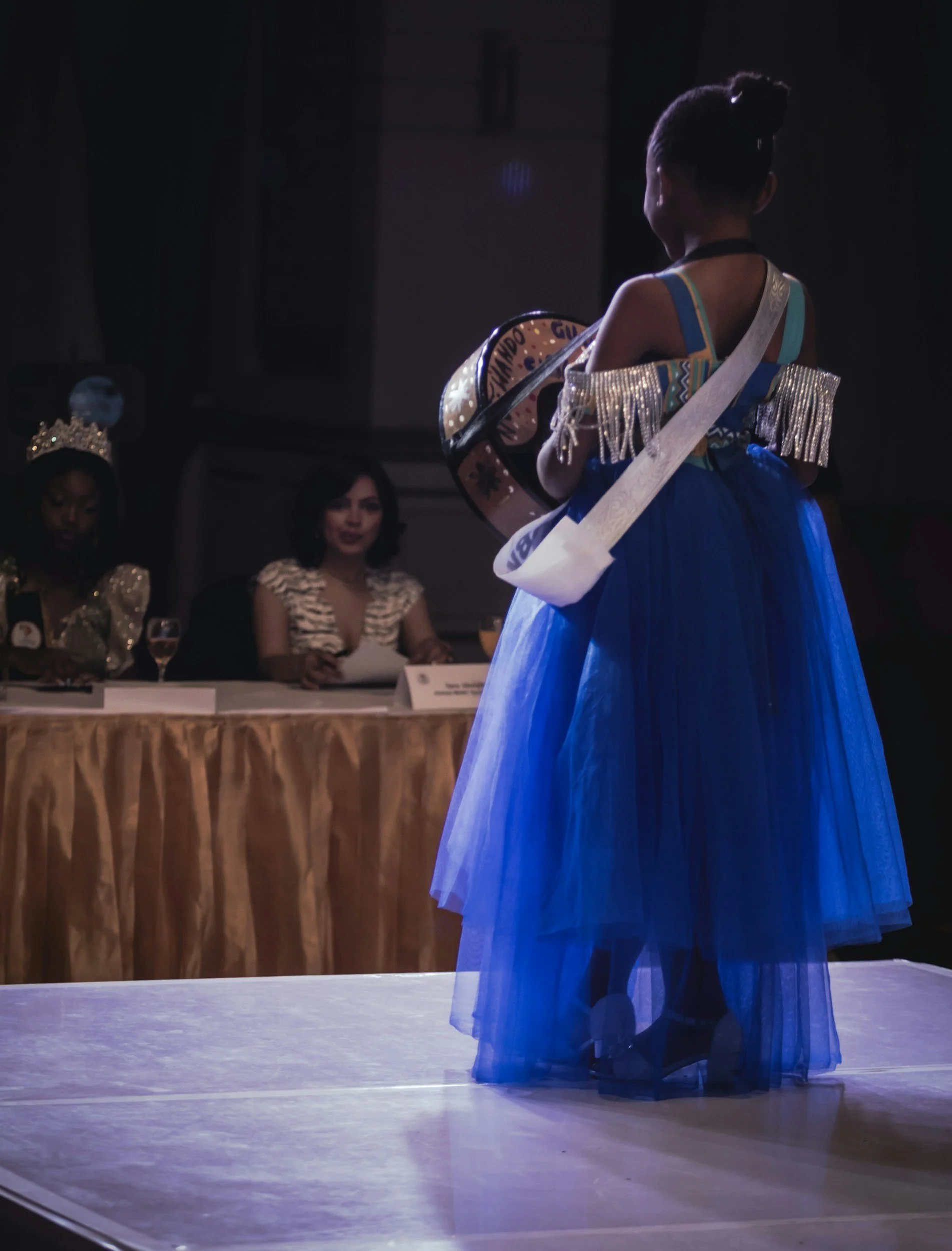
From Balmoral Hall To Ha Long Bay: Nigeria's Tamunosoye Karibi-George Chases The Miss World Crown
Three months ago, Tamunosoye Karibi-George was one of twenty finalists on a stage at Balmoral Hall inside Lagos's Federal Palace Hotel. Today, she is thousands of kilometres away, moving between Quang Ninh, Hai Phong, Khanh Hoa and Ho Chi Minh City as one of more than 120 national delegates chasing the Miss World crown — proof of how quickly a national pageant win can turn into a genuinely global assignment.
The 26-year-old, who represents Bayelsa State, won Miss World Nigeria 2026 outright in June, and has since arrived in Vietnam for the 73rd Miss World Festival, a sprawling, monthlong event running from August 8 through the September 5 grand finale, according to BellaNaija.
For a country that treats pageant season with the same intensity many nations reserve for major sporting tournaments, Karibi-George's departure for Vietnam has been tracked in granular detail — every fitting, every rehearsal photo, every cultural showcase appearance dissected by an online fanbase that has turned Nigerian pageant coverage into its own genre of entertainment journalism.
She beat a field of twenty finalists to take the national crown, a competition that Nigerian pageant media covered with its now-standard blend of red-carpet photography and behind-the-scenes rehearsal footage, building the kind of sustained domestic attention that typically follows a Miss World Nigeria winner all the way through her international campaign.
The résumé behind the crown
Karibi-George is not a newcomer to the pageant circuit. Before adding the Miss World Nigeria title, she had already won Miss Africa International in Accra in 2024, and she carries credentials well beyond the stage: a mass communication degree from Madonna University, Okija, and status as an Associate Member of the Nigerian Institute of Public Relations. She works as an event host, voice-over artist and actress, and runs the Beyond Labels Initiative, an advocacy platform for the dignity and inclusion of children with special needs, per Punch.
That combination of pageant pedigree and a genuine, pre-existing advocacy platform is increasingly what separates a competitive Miss World delegate from a merely decorative one. The competition's judging criteria have shifted markedly over the past decade toward rewarding contestants who arrive with a demonstrable cause already in motion, rather than one assembled hastily for the competition season — and Beyond Labels, running well before Karibi-George's Miss World Nigeria win, gives her exactly that kind of authenticity.
A festival, not just a pageant night
What makes Miss World genuinely demanding is the format itself. The 73rd edition runs nearly a month, taking delegates through cultural showcases, fast-track challenges and community outreach events across multiple Vietnamese cities before the competition narrows to a single finale night in Ho Chi Minh City. It rewards stamina and range as much as any single moment on a runway — a delegate has to keep performing, in one sense or another, for weeks before the cameras that matter most even switch on.
Nigerian coverage of Karibi-George's run so far has framed her as giving standard-setting performances that keep the country's pageantry fans cheering, and her advocacy background gives her a genuine story to tell in the fast-track rounds that increasingly reward substance over polish alone — Miss World has spent recent years pushing its Beauty With A Purpose angle harder than pure pageantry, which plays directly to Karibi-George's existing work with children with disabilities.
The multi-city format also functions as an extended audition for the international press covering the competition, since delegates who make a strong early impression in the smaller regional legs often carry that momentum, and that media attention, all the way into the grand finale conversation. A strong showing in Quang Ninh or Hai Phong this month is not simply a warm-up; it is part of how a delegate builds the kind of narrative that voting panels and international commentators remember three weeks later.
There is a physical toll to the format too, one rarely discussed in the glossier coverage of pageant season. A month spent moving between cities, time zones barely adjusted for, formal appearances scheduled around rehearsals and outreach visits, all while maintaining the composure a global broadcast demands — it is closer to an endurance event than the single-night spectacle most casual viewers imagine when they picture a Miss World final.
What a win would mean
Nigeria has a complicated modern history with the Miss World crown itself, despite a deep bench of talent regularly reaching the competition's later stages. A genuine run at the title from Karibi-George would be a significant moment for the country's pageant industry — one built, in her case, on a platform that extends well beyond the sash, and one that would validate the current Miss World Nigeria organisation's stated shift toward selecting queens with sustained advocacy work rather than pageant experience alone.
It would also carry weight for the broader Nigerian creative and fashion economy that increasingly rides alongside these competitions — the designers, stylists and photographers whose work travels internationally every time a Nigerian delegate reaches a major pageant's final rounds, turning a personal achievement into a wider showcase for Nigerian craftsmanship on a stage most of that industry could never otherwise afford to reach.
The bigger picture for Nigerian pageantry
Karibi-George's run also lands at a moment when Nigeria's various national pageant franchises — Miss World Nigeria among them — have been actively repositioning themselves around economic and social impact rather than pure spectacle, courting government and corporate partnerships on the strength of the platforms their winners go on to build. A strong showing in Vietnam would be the clearest possible validation of that strategy, giving organisers a tangible international result to point to the next time they pitch sponsors or government partners on the value of backing the competition.
It matters, too, for the small army of Nigerians who work in the industry that surrounds a single pageant run without ever appearing on camera themselves — choreographers, wardrobe consultants, media trainers and public speaking coaches who spend the months between a national win and an international final quietly shaping a delegate's readiness. Their work rarely gets credited beyond a passing mention, but it is very much part of why a Nigerian delegate can walk into a room of 120 competitors and genuinely believe she belongs among the favourites.
The grand finale is still weeks away. Between now and then, Karibi-George has a continent's worth of expectation to carry through several more Vietnamese cities first.