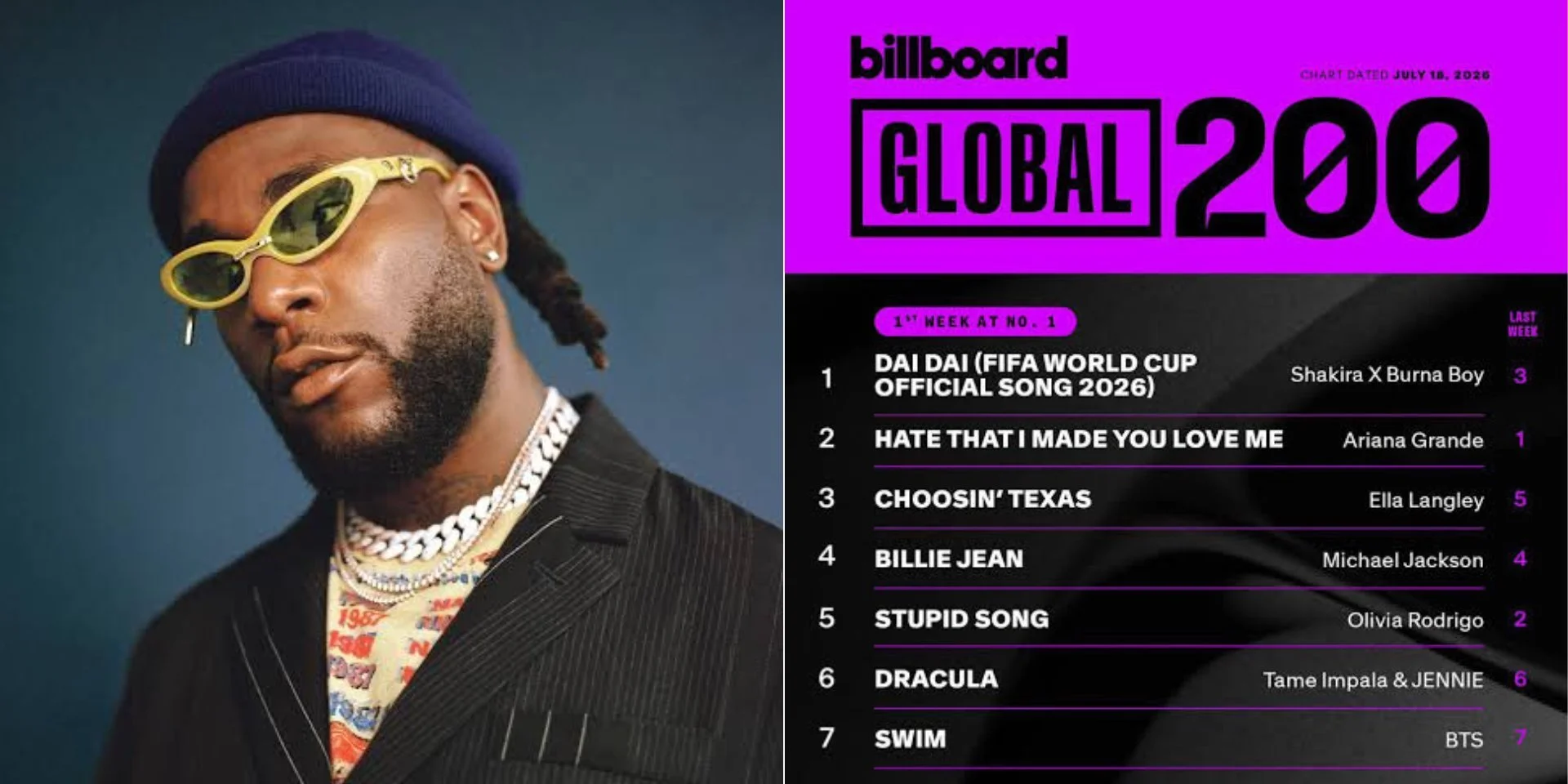
Burna Boy Makes History as First African Artiste to Top Billboard Global 200 Chart
Nigerian Afrobeats superstar Damini Ogulu, popularly known as Burna Boy, has achieved another career-defining milestone by becoming the first African artiste to top the Billboard Global 200 Songs chart.
The Grammy Award-winning singer reached the landmark with "Dai Dai," his official 2026 FIFA World Cup collaboration with Colombian superstar Shakira, which climbed to No. 1 on this week's Billboard Global 200 rankings.
The achievement marks a historic moment for African music, with Burna Boy breaking new ground on one of the world's most competitive music charts.
In addition to leading the Billboard Global 200, "Dai Dai" also secured the No. 1 position on the Billboard Global 200 Excluding U.S. chart, underlining its widespread international appeal.
The song also continued its impressive run in the United States, jumping 12 places to reach a new career peak of No. 55 on the Billboard Hot 100.

It was another successful week for Nigerian music globally, as fellow Afrobeats star Tems also extended her remarkable chart performance.
Her hit single, "What You Need," climbed five spots to a new peak of No. 39 on the Billboard Hot 100 after spending 15 weeks on the chart.
The song recently reached No. 1 on both the Billboard Mainstream R&B/Hip-Hop Airplay chart and the Mediabase Urban Radio Airplay chart, making Tems the first solo African artiste to achieve those milestones.
The latest accomplishments further reinforce Nigeria's growing influence on the global music scene, with Burna Boy and Tems continuing to break barriers and set new standards for African artists on international charts.
Opinion:
Burna Boy's latest achievement is more than a personal milestone—it represents another major victory for African music on the global stage. Becoming the first African artiste to top the Billboard Global 200 highlights the increasing worldwide acceptance of Afrobeats and the continent's creative talent. Equally impressive is Tems' continued success in the U.S. market, demonstrating that Nigerian artists are no longer occasional chart visitors but consistent global competitors. Together, their accomplishments signal that African music has firmly established itself as a dominant force in international pop culture.