'Serious Concern': Police Call In Fadahunsi as Ilesa Waits for Saturday
The palace of the Owa Obokun of Ijesaland in Ilesa is where Senator Francis Fadahunsi delivered the remark that has consumed Osun's final week of campaigning.
A viral video shows the Osun East senator telling supporters gathered there to "kill any Accord member" they see before Saturday's vote, according to ICIR. This site's August 13 piece, "Ilesa, Four Days Out," first reported the threat, when it was still a viral clip circulating among Osun's political class. With the election now a day away, the official response has finally caught up with the video.
"Kill any Accord member" — the phrase, captured on video at the Owa Obokun's palace, that has since drawn a police summons and a governor's demand for arrest.
What the Police Actually Did
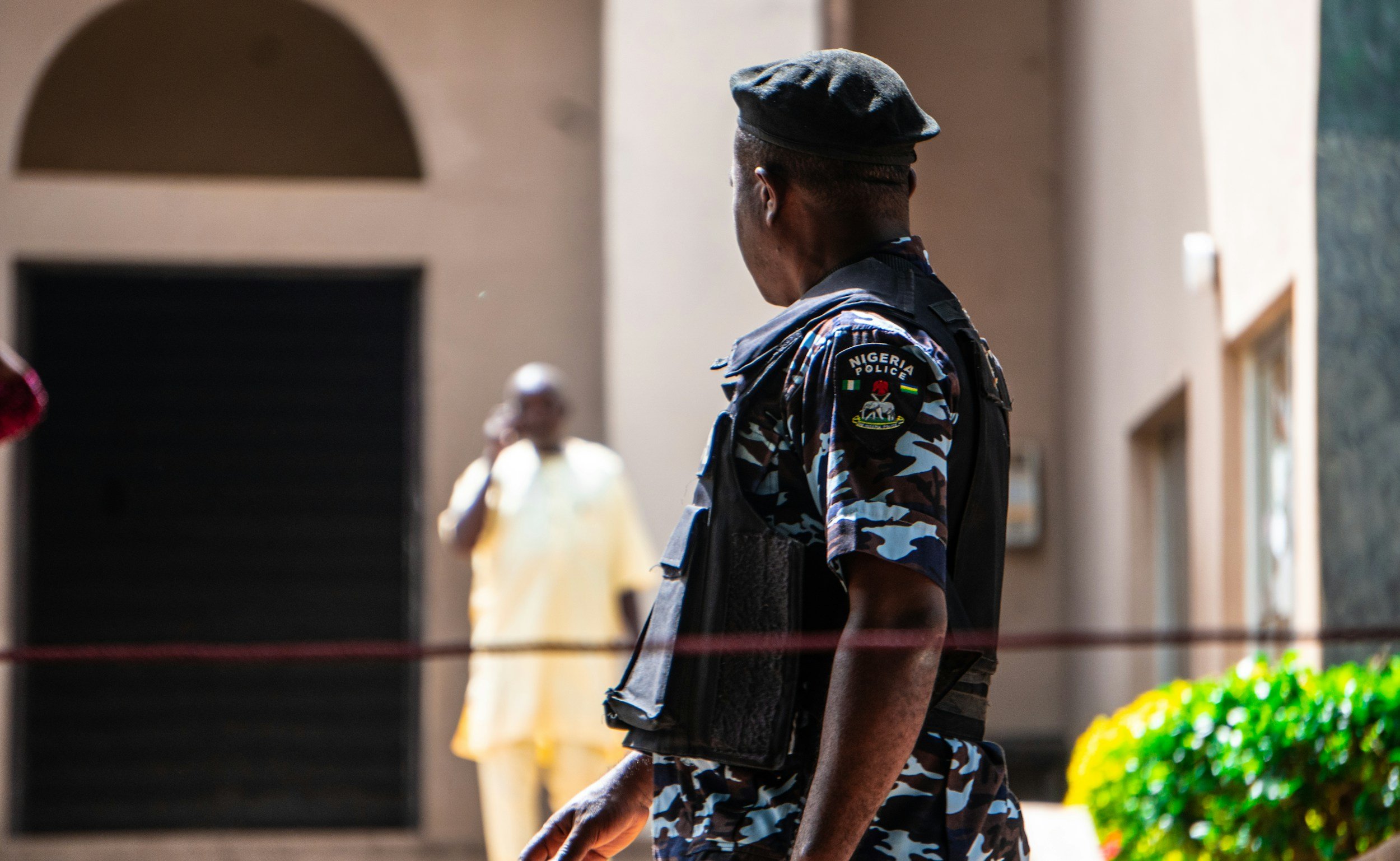
The Osun State Police Command described the video as a source of "serious concern" and invited Fadahunsi in for questioning around August 12, Legit.ng reported.
"Invited" is doing some work in that sentence. It is not an arrest, not a charge, and — as far as the public record shows — not yet a formal investigation with a stated outcome. It is a procedural step that can lead somewhere or quietly go nowhere.
Fadahunsi's media office has pushed back on the interpretation that produced the summons in the first place. The senator's words, his office said, were "metaphorical," not a literal call to violence — a defence the Accord Party rejects outright, per the same Legit.ng report. The gap between those two positions is now, in effect, the story: a police command calling a video concerning enough to warrant a summons, and a senator's office calling the same words a figure of speech.
Nigeria's election cycles have produced this pattern before: a viral remark, a police "invitation," a news cycle that moves on before any formal outcome is ever reported back to the public. What happens with Fadahunsi's case in the next day or two will say whether this cycle breaks that pattern or repeats it.
Adeleke's Response
Governor Ademola Adeleke did not wait for police process. He convened an emergency press briefing in Osogbo on August 11, calling Fadahunsi's remarks a national security threat and demanding the senator's investigation and arrest, the Tribune reported.
It is worth noting what Adeleke chose to do first: not a quiet police report, but a public briefing, on camera, the same news cycle the video itself was traveling through. That choice turns the police's eventual handling of the case into something Osun's electorate will watch as closely as any court would.
Adeleke went further, alleging that security operations were being directed at Accord Party leaders and members in the run-up to the August 15 vote — turning a single video into a broader claim about the security architecture around this election.
That is two separate grievances bundled into one press briefing: a specific video with a specific senator's name attached, and a wider pattern Adeleke says he is seeing across his party's structure in the campaign's final stretch. Only the first of those has produced a documented police response so far.
The 'Metaphorical' Defence, Tested
Nigerian political language has a long history of violent metaphor that everyone is supposed to understand is not literal — until it is. The defence Fadahunsi's office is offering rests on that shared understanding.
The problem is context: the words were delivered inside a royal palace, to an assembled crowd, about a named rival party, days before a vote his own party's candidate is contesting. Accord's rejection of the "metaphorical" framing is not really a linguistic argument. It is a political one — that intent matters less than the effect of naming a target in a specific town, days before people there are expected to vote.
Whether Fadahunsi intended a literal instruction or a rhetorical flourish is, in the end, a question about his own state of mind that only he can answer with certainty. What the public record shows is the effect: a video that reached enough people to prompt a governor's press conference and a police summons within roughly a day of each other.
A police command does not typically summon a sitting senator over language it considers obviously figurative. The summons itself — whatever it ultimately produces — is a signal that at least one state security institution did not read the remark as harmless.
A Flashpoint With an Audience
Commentary from Modern Ghana argued that the threat could backfire on its author, generating sympathy for Adeleke and turning Ilesa into a flashpoint watched well beyond Nigeria's borders.
That is the uncomfortable incentive structure around campaign incitement: a viral threat can harden opposition to the person who made it as easily as it can intimidate the people it names. Whether Ilesa's Accord supporters feel safer or more exposed by Saturday morning is not something a police summons alone will settle.
It is also not something that stays contained to Ilesa. A video like this one travels far faster than any correction or clarification behind it, which means Ilesa's reputation on Saturday is being written now, days before a single vote is cast there. International attention of the kind Modern Ghana's commentary describes tends to arrive faster than any Nigerian institutional response — itself part of the pressure now sitting on the Osun police command as Saturday approaches.
What Accountability Looks Like Here
What happens next — whether the invitation becomes an investigation, whether any charge follows the video around the news cycle the way the video itself has — will say something about where the line on campaign speech actually sits in Nigeria, and whether crossing it costs anything at all.
A summons is not nothing. But on its own, it is not accountability either — it is the start of a process that Nigeria has, in other cases, allowed to quietly stall once the news cycle moves on. Saturday's vote will happen regardless of where that process stands by morning.
Osun's voters do not get to wait for that process to finish before they decide who governs them. They vote first; the questions about accountability get answered, if they get answered at all, afterward.
Ilesa votes on Saturday like everywhere else in Osun. It just votes with more eyes on it.