Ilesa, Four Days Out: A Senator's Words And A Governor's Emergency Briefing
Adeleke has asked the Inspector-General to arrest Senator Francis Fadahunsi over a viral video. Fadahunsi's media office says the words were metaphorical. Nobody has been charged under the Electoral Act's incitement provision in living memory.
Four days before Osun votes for a governor, the loudest issue in the state is not a manifesto or a turnout projection. It is a short clip of a sitting senator speaking Yoruba to a crowd in Ilesa, and the question of whether the words in it were a threat or a figure of speech.
The video
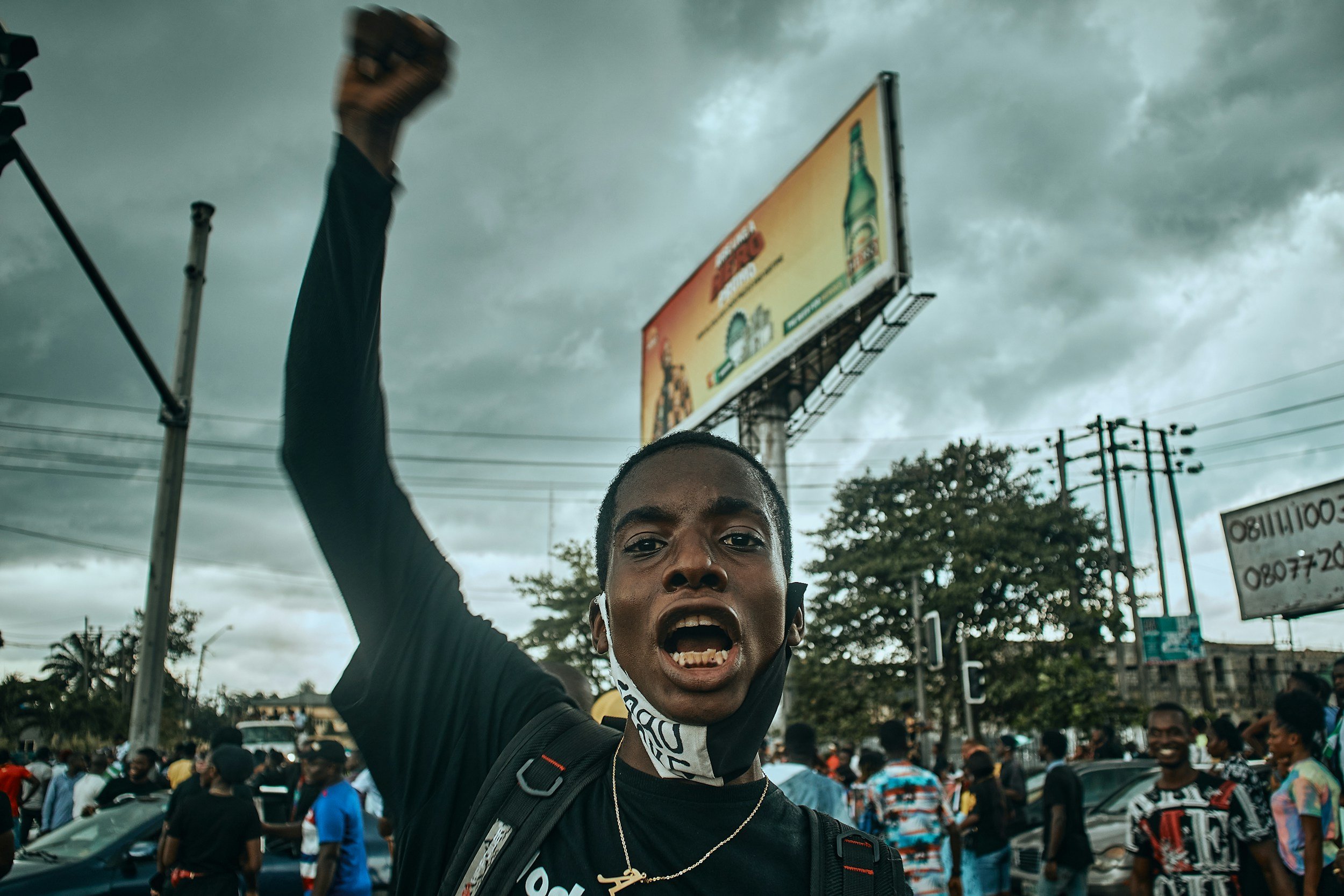
The footage shows Senator Francis Fadahunsi, who represents Osun East, addressing All Progressives Congress supporters in Ilesa ahead of Saturday's poll. Punch, which published an English rendering of the remarks, reported the key line as: "From now on, whenever you see Accord members, kill them. I authorise you to kill them." Vanguard reported that in the same clip the senator accused Accord Party members of attacking APC supporters, urged those present to confront them, and dared the gathering to record what he was saying and put it on social media.
The clip did not begin its life on a news site. It travelled because Davido shared it. The musician, whose uncle Ademola Adeleke is the incumbent governor and the Accord Party candidate, leads the youth mobilisation arm of Adeleke's campaign, and he posted the video with a translation attached. Leadership reported that he called out the senator over what he described as a plot against Accord members. By Tuesday morning it was on every political desk in the country.
Adeleke goes to the Inspector-General
Governor Adeleke called an emergency press briefing on Tuesday. Vanguard reported that he asked Inspector-General of Police Olatunji Disu to order the arrest and prosecution of Fadahunsi, and that he framed the matter in the sharpest terms available to a governor: "This is now beyond politics. This is now a national security threat that requires the attention of Mr President through the Office of the National Security Adviser." Vanguard further reported that Adeleke used the same briefing to allege that the Intelligence Response Team had been operating illegally against Accord leaders in the state, and to demand due process and neutral policing.
Separately, Punch reported that Pelumi Olajengbesi, spokesman for the Adeleke campaign council, issued a statement addressed directly to the police chief: "This is a serious threat to lives and the peaceful conduct of the August 15 election. Mr Inspector-General of Police, this must be addressed immediately. Nobody has the right to kill an Accord member or any citizen."
The senator's answer
Fadahunsi's media office issued a statement in Osogbo on Tuesday under the title "Kill Osun Accord with Votes, Not Violence, Senator Fadahunsi Tells APC." Vanguard reported the statement as saying his comment was "a call on supporters to overwhelmingly reject the Accord Party at the ballot box through lawful, peaceful and democratic means," and adding: "For the avoidance of doubt, the Senator's statement was purely political and metaphorical." The statement, as reported by Vanguard, also insisted that "At no point did Senator Fadahunsi advocate violence, intimidation or any form of physical attack," and that "elections should be decided by the votes of the people and not by force."
Tribune Online and Punch carried the same clarification. As of Tuesday evening no Nigeria Police Force statement on the matter had been reported by any of the outlets covering it, and no arrest had been announced.
Who these people are
Fadahunsi is a former Customs officer who built a national profile in the Senate largely on customs and revenue issues. He was elected on the Peoples Democratic Party platform and later crossed to the APC, one of a wave of Osun defections that reshaped the state's political map before this cycle. Ilesa is the commercial heart of Ijesaland and sits inside his senatorial district, which is one of the three blocs that decide Osun elections.
Adeleke's own party history is no simpler. Guardian Nigeria reported that he left the PDP for the Accord Party after months of turmoil at the PDP's national level, and that he emerged as Accord's governorship candidate with 145 of 150 delegate votes. Guardian also reported that a rival Accord faction held its own primary days later and produced a separate candidate, Clement Bamigbola, and that the PDP in Osun subsequently shunned its own candidate and adopted Adeleke.
The election this is happening inside
Fourteen parties are on the ballot on Saturday, 15 August. The contest that matters is between Adeleke of Accord, Bola Oyebamiji of the APC and Najeem Salaam of the African Democratic Congress. Punch reported that the candidates signed a peace accord, with Adeleke signing in person and representatives signing on behalf of Oyebamiji and Salaam.
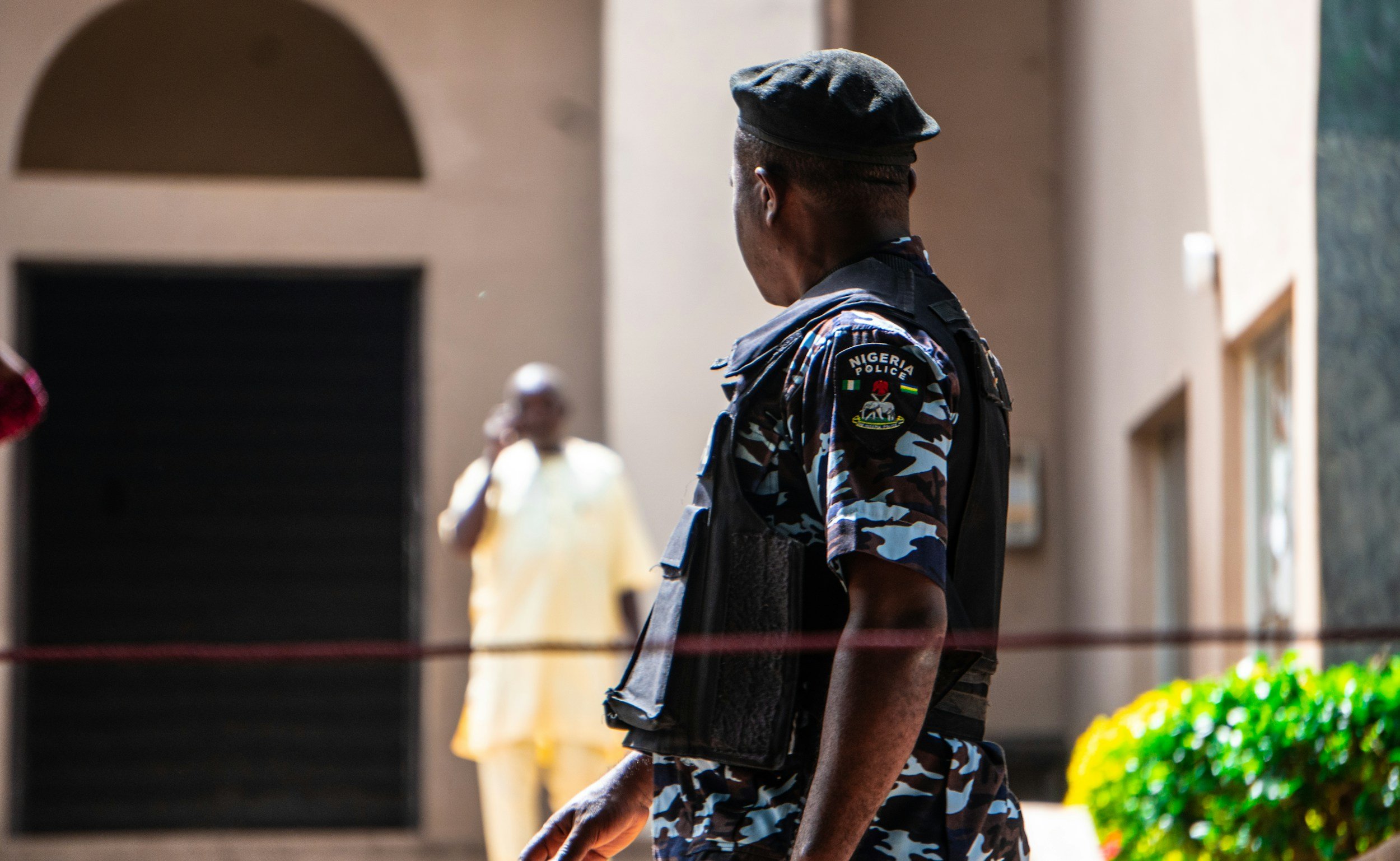
The security build-up is heavy even by Nigerian off-cycle standards. The Nation and Legit.ng reported that 25,310 personnel drawn from the Nigeria Police Force, the Nigeria Security and Civil Defence Corps and the Economic and Financial Crimes Commission have been deployed. Vanguard reported that the police component alone runs to 15,000 officers under a Deputy Inspector-General, with Assistant Inspectors-General and Commissioners attached. Punch reported that INEC will draw ad hoc staff from a pool of more than 30,000 corps members, and that sensitive materials have arrived in Osogbo. Daily Post reported that soldiers have taken over security at the INEC state office.
The law nobody enforces
Section 92 of the Electoral Act 2022 prohibits abusive, intemperate, slanderous or inciting language during campaigns, and specifically bars language designed to provoke violence. The Criminal Code separately covers incitement. Neither provision has produced a meaningful prosecution of a serving federal legislator for campaign speech in recent memory. That is the backdrop against which a "purely political and metaphorical" defence is being offered four days before a vote: not because it is a strong reading of the words, but because in practice it has never needed to be.
Whether the police act before Saturday will tell Osun voters more about how this election is going to be policed than any peace accord signed in a hotel ballroom.
Section 92 of the Electoral Act 2022 forbids abusive, intemperate, slanderous and inciting language in campaigns, and expressly bars words calculated to provoke violence. It has been on the books through two general elections. Name the serving federal legislator who has been convicted under it. Name one who has been charged.
That silence is the whole reason a "purely political and metaphorical" statement can be issued with a straight face four days before a governorship poll. The defence does not have to be persuasive. It has to be available. Nobody drafting it on Tuesday morning was seriously worried about a docket.
Consider what the state has actually mobilised for Saturday. The Nation reported 25,310 personnel from the police, NSCDC and EFCC. Vanguard reported 15,000 police officers under a Deputy Inspector-General. Daily Post reported soldiers at the INEC office in Osogbo. Punch reported more than 30,000 corps members in the ad hoc pool. Nigeria can put an army into Osun to guard ballot papers. What it cannot do, apparently, is open a case file on a recorded statement made by a named man in a known location in front of a crowd he himself invited to film him.
That asymmetry is the point. Election security in Nigeria is built entirely around the day and the object — protect the box, escort the result sheet, seal the collation centre. It is not built around the conditions that make violence likely in the weeks before. Incitement is treated as weather rather than crime.
And peace accords do nothing about it. Fourteen candidates signed one, per Punch, with two of the three serious contenders sending representatives rather than turning up. A signature in a hotel ballroom binds nobody and costs nothing to break.
If the Inspector-General wants Saturday to be different, the cheapest available intervention is not another deployment figure. It is one charge sheet, filed before polling day, against somebody senior enough that the message carries. Absent that, section 92 stays what it has always been: advisory.
Here is the detail worth sitting with. The video did not reach the country through the police, INEC, the National Peace Committee or a single one of the institutions built to catch exactly this. It reached the country because a musician posted it with a translation.
Davido is not a neutral actor — he runs youth mobilisation for his uncle's campaign, and he has spent the week writing to Donald Trump about Osun. But his Instagram did in an afternoon what no formal complaints channel in Nigeria has managed in a decade: it forced a sitting senator to issue a statement about his own words within 24 hours.
That is not a triumph. It is a symptom. When the fastest route from a threat in Ilesa to national accountability runs through a celebrity feed and, from there, to a foreign head of state, the machinery in between has failed. INEC has no enforcement arm of its own. The police answer upward, not outward. The Peace Committee convenes for photographs. So the escalation route becomes: film it, send it to somebody famous, hope it embarrasses power into moving.
The obvious cost is that this system only works for people with a famous relative. Osun is fortunate, in a grim way, to have a global pop star inside its politics. Zamfara does not. Neither does Ebonyi. The threats that go unfilmed, or that are filmed and land in the timeline of someone with 400 followers, simply do not happen as far as the national conversation is concerned.
The second cost is what it does to the argument. Once Trump enters the frame, the substance disappears. Shehu Sani has already dismissed the appeal to Washington as pointless; Babajide Otitoju has said you cannot report Nigeria to Trump. Both are now discussing Davido's judgement rather than Fadahunsi's words. That is a very efficient way to make a serious allegation about incitement vanish into a debate about celebrity.
We should want the boring institutions back. They are slower, but they cannot be changed by who happens to be somebody's nephew.