Atiku Wants Twenty Million Votes And Is Building Downward To Get Them
Abuja · Thursday 20 August 2026
Atiku Abubakar has set a target of twenty million votes and inaugurated campaign coordinators for the African Democratic Congress. The interesting part is not the number. It is that the campaign has stopped talking about coalitions and started talking about polling units.
Those are two different activities and Nigerian opposition campaigns have historically been much better at the first.
What has actually been set up
THISDAY reported the launch of the vote drive alongside the inauguration of ADC campaign coordinators at the start of this month. Running beside it is the RiseUpNaija Movement, which is described as young men and women drawn from the APC, the PDP, the Labour Party, the NNPP and other platforms.
Read that list again. It is a recruitment strategy aimed explicitly at people who are already organised somewhere else.
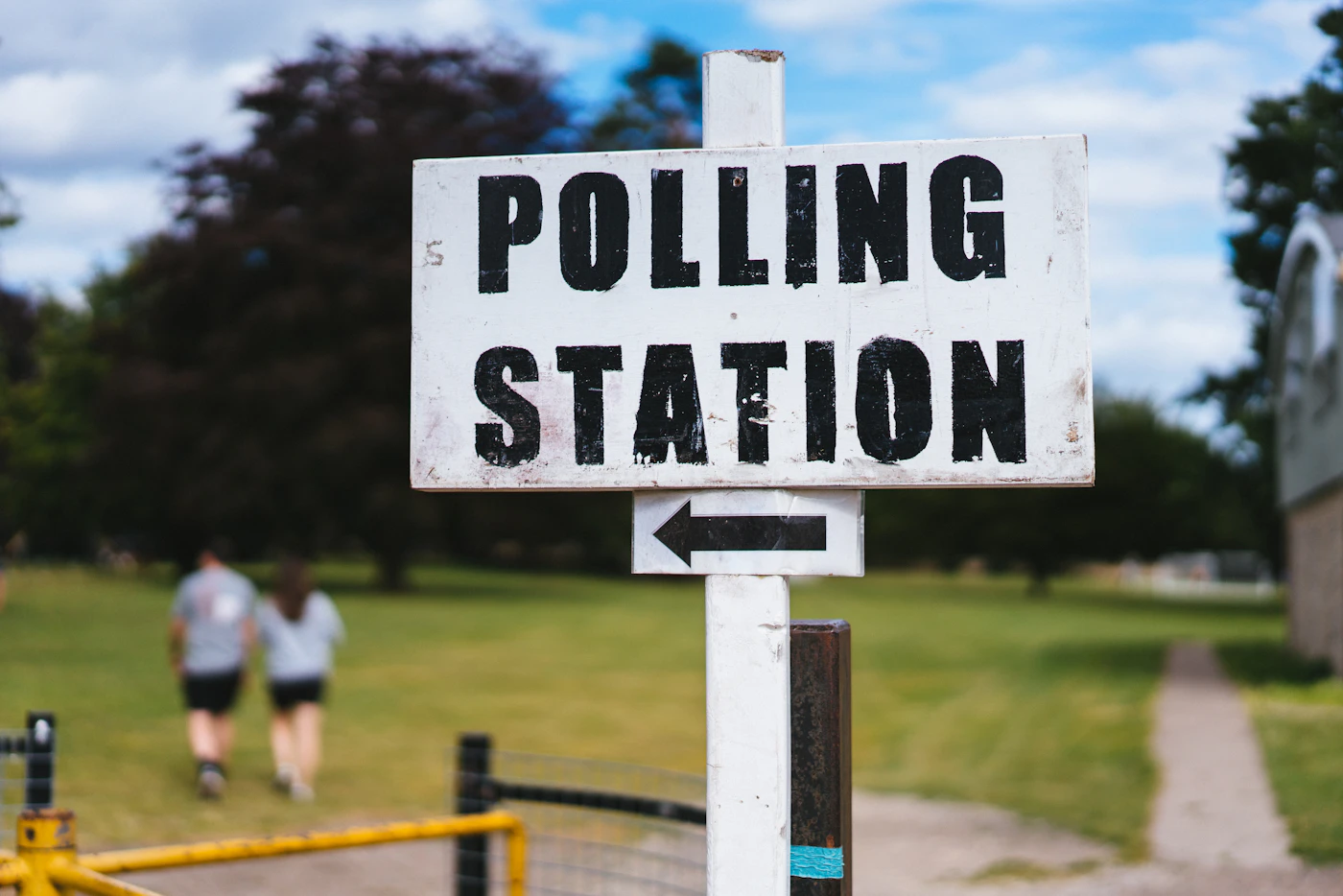
The stated intention is to build structures from the national level down to every polling unit in the country. Nigeria has more than 176,000 polling units. Covering them is not a slogan, it is a logistics operation with a payroll, and any campaign that claims it without the money behind it is describing an aspiration.
Why the polling unit is the only unit that counts
Nigerian elections are not won by persuasion in the final week. They are won by presence on the day.
A polling unit with an agent from your campaign is a polling unit where somebody is watching the count, where the result sheet gets photographed, and where an irregularity gets challenged in real time. A polling unit without one is a polling unit where whatever is written on the form is what happened.
That is not a claim about fraud in any particular election. It is a description of why every serious Nigerian campaign spends an enormous share of its budget on agents rather than on advertising, and why campaigns that look impressive on television lose to campaigns that look dull and have people in chairs.
A polling unit without an agent is a polling unit where whatever is written on the form is what happened.
The twenty million figure
Treat it as a planning assumption rather than a forecast, because that is what targets of this kind are for internally.
It is a large number by the standards of recent Nigerian presidential results, and reaching it would require either an unusually high turnout or an unusually decisive consolidation of the anti-incumbent vote. Neither is impossible. Both are outside the campaign's direct control.
What the number does do is set an internal metric that coordinators can be measured against. Twenty million nationally becomes a state quota, which becomes a local government quota, which becomes a number of votes a ward organiser has to produce. Campaigns that translate a headline into a chain of accountable sub-targets tend to outperform campaigns that do not, regardless of whether the headline was ever realistic.
The risk is the opposite failure, which is that an unreachable target produces inflated returns up the chain. A coordinator who cannot deliver his quota has an incentive to report that he can, and a campaign that believes its own reporting allocates resources to places it has already lost.
TVC News on the opposition's electoral arithmetic.
The cross-party recruitment is the aggressive bit
A youth movement pulling members from the APC, PDP, Labour Party and NNPP simultaneously is doing something more interesting than building enthusiasm.
It is buying local knowledge. A ward organiser who has worked for the PDP knows that ward: who the influential families are, which polling units turn out and which do not, who can be relied on to show up at six in the morning. That knowledge takes years to accumulate and cannot be replaced by a rally.
It also, deliberately or otherwise, weakens the parties being recruited from. In a contest where the anti-incumbent vote is already fragmented, an ADC campaign hiring Labour Party organisers is competing with the Labour Party for the same scarce resource: people who know a ward well enough to deliver it.
The contradiction sitting in plain sight
Atiku spent the first half of this year in coalition conversations and is now building an independent national structure aimed at twenty million votes.
Those two activities are not compatible past a certain point. A structure built to deliver one candidate does not transfer cleanly to another, and every month spent building it raises the cost of standing down. By December the machine will be a reason not to.
Which may be the point. Building a structure is also a negotiating position: the principal who arrives at a coalition talk with coordinators in thirty-six states is the principal who expects to be the candidate.
Not the rallies. Watch whether the ADC files a full slate of polling unit agents, whether those agents are paid on time, and whether the coordinators inaugurated this month are still in post in November. Nigerian campaigns shed structure quietly when money runs short, and that happens long before anybody announces it.
The measure that will settle it
In January, the useful question will not be how many votes Atiku received. It will be the ratio between his vote and the number of polling units where he had an agent.
That is the number that tells you whether the structure was real, and it is the number that almost nobody will publish.
What 176,000 polling units actually costs
This is the arithmetic that determines whether a structure exists or is announced.
An agent has to be recruited, trained on what to watch for, transported to the unit, fed across a long day, and paid. Multiply by 176,000 and then add supervisors at ward level, coordinators at local government level, and the communications to hold it together.
No Nigerian campaign publishes this number and every serious one has calculated it. It runs to billions of naira, it has to be paid in cash on or immediately before the day, and it is the single largest line in a presidential budget.
It is also where campaigns quietly fail. The agents get recruited, the money runs short in the final fortnight, coverage is cut to the units judged most important, and the campaign discovers on the day that its most important units were not the ones it guessed.
Reporting: THISDAY, Vanguard and coverage of the ADC campaign inauguration, August 2026.
Read next
- Six Parties Sat Down In Abuja. The Last Time They Tried This It Collapsed.
- 445 Casualties In Fourteen Days, And Where They Happened
- Nigerian Designers Are Building A Second Market In London
Whatever the news does this week, somebody at home still has to eat. The Send Home boxes land as a food shop, a care package or a learning kit. Naira pricing here.