Lagos Stops Work Today For The Òrìṣà
Lagos · Thursday 20 August 2026
Government offices in Lagos, Ogun and Oyo are shut today. Not for a public figure, not for a national anniversary, but for Ìṣẹ̀ṣe Day, the annual observance of Yoruba traditional religion.
If you work for the Lagos State Government you were told to stay home. The circular covers public servants and political appointees, and it went out on Wednesday, which is about as much notice as these things usually carry. Ogun declared the same day off. So did Oyo.
What the notice does not convey is the scale of what it is clearing the diary for. The Lagos State Government expects more than three million people to take part today, a figure that, if it holds, makes this very probably the largest single gathering of traditional worshippers anywhere in the world.
How this became routine
It did not arrive by decree. Lagos has treated Ìṣẹ̀ṣe Day as a work-free day since 2023, and it started with a request from the Lagos State Council of Obas and Chiefs rather than from a governor looking for a gesture. Babajide Sanwo-Olu granted it, then granted it again, and has now done so four years running.
The state files it under the inclusiveness strand of its THEMES+ agenda, which is the sort of phrase that usually signals a press release and nothing else. In this case there is something behind it. Nigeria's public holiday calendar is built almost entirely around Christian and Muslim observance. Adding a third tradition to that list, in the country's most commercially valuable state, costs real money in lost working hours and invites a predictable argument every August.
The argument still comes. It comes mostly from clergy, it recurs on the same schedule as the holiday itself, and so far it has not moved the policy.
What actually happens today
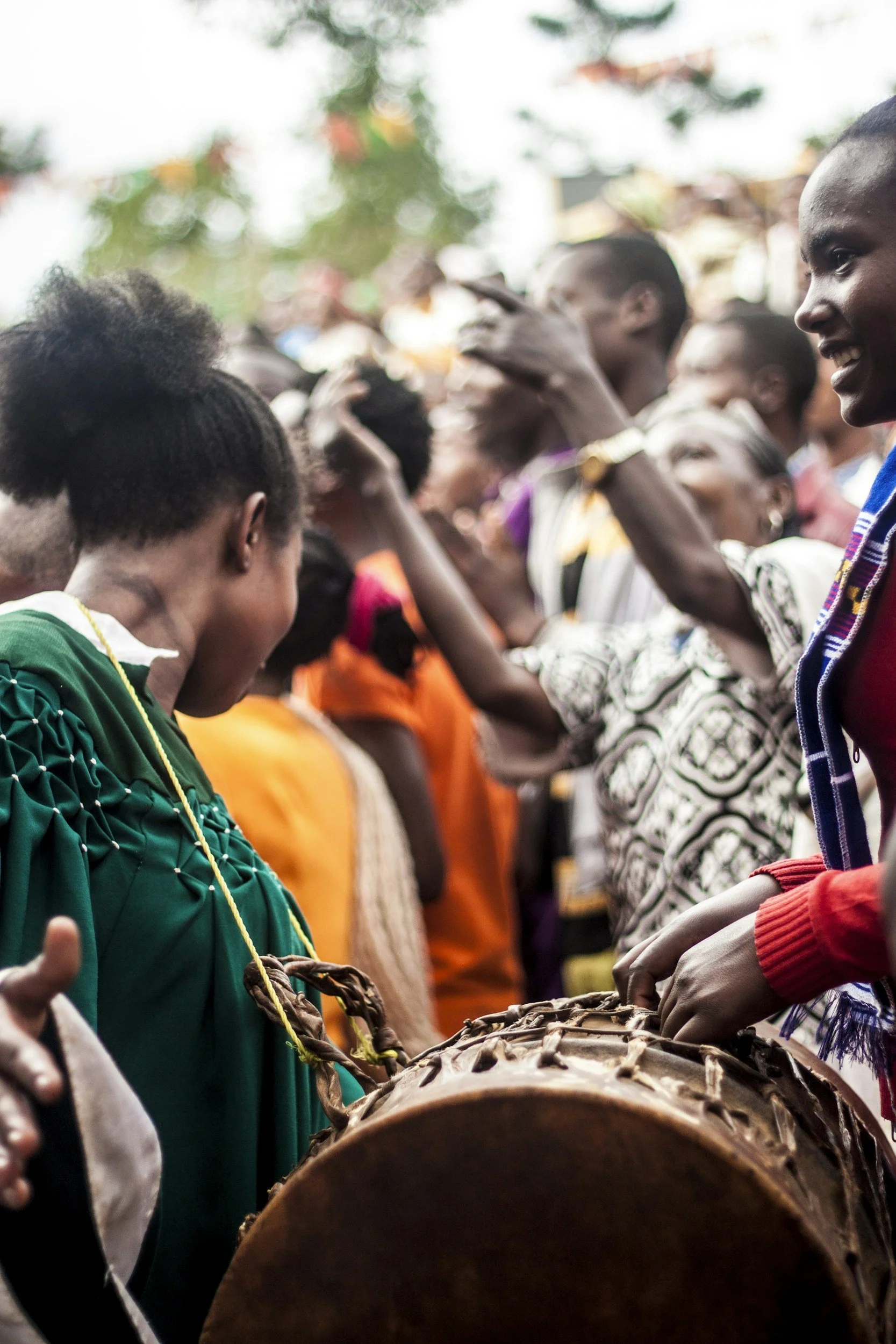
Today is the closing day of a week. The programme running into it involves prayers, rituals, processions, drumming and cultural display, all directed at the Òrìṣà, and it is coordinated by the Association of African Traditional Religion Nigeria and Overseas.
That last word in the association's name is doing more work than it looks.
TVC News on the Lagos declaration.
The part that is not about Nigeria
Ìṣẹ̀ṣe is not a Nigerian religion that happens to have travelled. It is a religion with several centres, and only one of them is in Nigeria.
The Yoruba practices carried across the Atlantic during the slave trade did not die on arrival. They adapted, they took on Catholic vocabulary in places where being visibly African was dangerous, and they survived in Cuba, in Brazil, and across the Caribbean in forms that are now older than most of what passes for tradition anywhere. There are practitioners in Salvador and Havana whose lineages are unbroken in ways that some Nigerian ones are not.
Which produces an odd situation. A Lagos holiday for Ìṣẹ̀ṣe is, among other things, a statement about who owns the centre of a global religion, made by a government that spent most of the twentieth century treating that religion as an embarrassment.
Nigeria's public holiday calendar is built almost entirely around Christian and Muslim observance. Adding a third costs real money and invites a predictable argument every August.
Three million is the number to hold onto
Take the three million figure with the caution any crowd estimate deserves, particularly one issued by the body that authorised the holiday. Crowd numbers in Lagos are a genre of fiction with its own conventions.
But even discounted heavily, it describes something the standard account of Nigerian religion does not have room for. The usual framing is a country split cleanly between a Muslim north and a Christian south, with traditional practice as a residue, something older people do quietly in villages. Three million people in one state on one Thursday is not a residue.
It is also worth being precise about what the number does and does not measure. Turning out for a procession is not the same as identifying as a practitioner, and plenty of people who will be on the street today also go to church on Sunday. Nigerian religious life has always been more layered than the census categories allow, and a holiday like this makes the layering visible for a day.
Ìṣẹ̀ṣe Day falls on 20 August each year and is marked across Yoruba-speaking communities. Lagos has observed it as work-free since 2023. This year Ogun and Oyo joined, which is the first time the holiday has covered this much of the South West at once.
The commercial footnote
Somebody has to say it: a work-free Thursday in Lagos is expensive. The state generates more internal revenue than any other in the federation and a good deal of that comes from people being at their desks.
The counter-argument, which the Lagos government has not made explicitly but which is sitting there, is that cultural tourism is a real industry and Yoruba religion has a diaspora with money and a strong reason to travel. Brazil alone has a Yoruba-descended population in the tens of millions. Ìṣẹ̀ṣe Day is one of the very few things Nigeria owns outright in that market.
Whether anyone in the state government is thinking about it in those terms is another question. For now it is a holiday granted because a council of obas asked for one, and kept because nobody has found a good enough reason to stop.
The constitutional question nobody quite asks
Nigeria has no state religion. Section 10 of the constitution says so directly, and it is one of the shortest and least ambiguous clauses in the document.
In practice the country has two, and the holiday calendar is where that shows most plainly. Christmas, Good Friday, Easter Monday, Eid al-Fitr, Eid al-Adha and Eid al-Mawlid are all federal public holidays. That is six days a year, every year, allocated to two traditions.
A state-level work-free day for Ìṣẹ̀ṣe does not change any of that. It is a state directive covering state employees, not a federal public holiday, and the distinction is legally significant even if it makes no difference to somebody sitting at home on a Thursday. Nobody has taken it to court, and it is not obvious on what grounds they would.
The more interesting point is what the asymmetry reveals. Two imported religions receive automatic national recognition. The tradition that was here first receives a discretionary day, in three states, granted annually at a governor's pleasure and withdrawable at any point. That is not neutrality. It is a settlement, and settlements can be renegotiated.
The objection, stated fairly
There is a standing objection to all of this from parts of the Christian and Muslim clergy, and it deserves to be put properly rather than waved past.
The argument is not usually that traditional worshippers should be prevented from worshipping. It is that a government granting a work-free day confers official endorsement, that public money and public time are being used to promote a specific spiritual practice, and that many public servants required to stay home hold beliefs that regard that practice as something to be resisted rather than celebrated.
The answer to it is reasonably clean. A work-free day compels nobody to participate in anything. Nigerians who do not fast during Ramadan still take the Eid holidays. The state is recognising a constituency, not prescribing a faith, and the practical alternative on offer is a permanent arrangement in which the oldest religious tradition in the region is the only one denied recognition in the place it originated.
Where the objection carries more weight is in process. The holiday arrives by circular, usually the day before, with no legislative debate and no obvious framework governing which traditions qualify. That is a genuine weakness, and it makes the arrangement more fragile than it needs to be, because whatever a governor can grant by circular a successor can drop the same way.
What Lagos gives up for it
Lagos generates more internally than any other state in the federation by a wide margin, and a substantial share of that comes from economic activity that stops when offices close.
The state has never published a cost estimate for the Ìṣẹ̀ṣe holiday, which is unsurprising, because no government publishes the cost of a holiday it has chosen to grant. Anyone quoting a number for it is guessing.
What can be said is that Lagos has now absorbed that cost four years running, through a period in which the state's finances have been under real pressure and its governor has been publicly focused on revenue. Whatever else that indicates, it is not a gesture made casually.
Reporting: Channels Television, Vanguard, TheCable, QED.ng and the Lagos State Government circular of 19 August 2026.
Read next
- JAMB Kept The Cut-Off At 150. Almost No University Will Use It.
- Atiku Wants Twenty Million Votes And Is Building Downward To Get Them
- N2.7 Billion Across Three Films, And Funke Akindele Is Not Finished
Whatever the news does this week, somebody at home still has to eat. The Send Home boxes land as a food shop, a care package or a learning kit. Naira pricing here.