Fourteen Days' Notice: ASUU's Ultimatum and the Agreement That Exists Only on Paper
In December 2025, the federal government and the Academic Staff Union of Universities signed an agreement that was supposed to draw a line under years of campus shutdowns. It included a 40% pay rise for academic staff, backdated to take effect January 1, 2026. It was presented, at the time, as the deal that ended the era of the indefinite strike.
Eight months on, that promise is being tested in real time. Two campuses are already shut. Twenty more branches are on a fourteen-day countdown, and the clock is running.
What The NEC Actually Decided
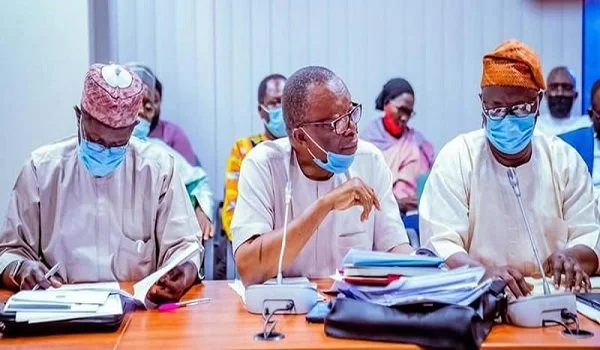
ASUU's National Executive Council met at the University of Abuja on August 8 and 9, 2026, and directed 20 state university branches to issue a 14-day ultimatum before proceeding on strike, over what the union describes as non-implementation of the 2025 FGN-ASUU agreement, per Vanguard and the Guardian.
Both outlets frame the NEC's move as a response to one specific complaint: money promised in December that has not shown up in lecturers' accounts by August. An ultimatum is meant to be taken as a warning, not a formality — which is precisely why the fourteen days matter. It gives the federal government and the affected state governments a defined window to show proof of payment before branches escalate from threat to action.
The centrepiece of the grievance is simple to state and, apparently, hard to deliver: a 40% upward review of academic staff remuneration that was supposed to take effect on January 1, 2026. Lecturers say it has not been implemented in many institutions, more than seven months after the effective date passed.
What "Non-Implementation" Actually Means In Practice
A 40% pay review sounds like a single number, but implementing it requires each university's payroll system — and in state universities, each state's own finance ministry — to actually recalculate and pay out the new figure. A federal-level signature does not automatically update a payslip printed in Owerri or Keffi.
That gap between signing an agreement and paying it out is exactly where ASUU says the 2025 deal has stalled, more than seven months after the new pay scale was supposed to take effect.
Two Campuses Already Down
The ultimatum is not the whole story. Some branches did not wait for the fourteen days to run out before acting. Lecturers at Imo State University (IMSU) began an indefinite strike on Monday, August 10, accusing the Imo State Government of failing to implement the agreement, per the Nigerian Observer.
The same week, Nasarawa State University, Keffi, began what its branch called a "total and indefinite" strike, as reported by The Sun and Premium Times. An indefinite strike, unlike the fourteen-day ultimatums other branches are working through, has no built-in expiry date — it ends only when both sides agree it does, which is precisely why IMSU and Nasarawa students are already living the disruption that other campuses are still only threatened with.
Separately, lecturers at Adekunle Ajasin University have threatened a fresh strike of their own, over delayed implementation of the new salary structure. Their dispute is different in kind, not degree: not yet a walkout, but a warning that even branches not officially on strike are watching the same implementation gap closely.
Three separate campuses, three separate disputes, all pointing back to the same December 2025 agreement — not one rogue institution, but a document whose implementation is faltering wherever it is tested.
Whose Debt Is This, Exactly
The grievance list ASUU is working from is older than the 2025 agreement it is meant to have settled, according to Legit.
Promotion arrears dating back to 2016. Months of unpaid salaries. Twenty-one months of withheld check-off dues. Earned Academic Allowances unpaid since 2009 — the backlog ASUU says sits behind the current ultimatum, per Legit.
That list is a reminder that "the government" is not one debtor here. IMSU's dispute is with the Imo State Government, not Abuja. Nasarawa State University's is with its own state authorities.
Each item on that list would be a story on its own. Together, they describe a relationship between Nigeria's universities and the governments that fund them that was strained long before the December 2025 agreement was ever signed.
Some of these arrears predate the current administration in Abuja entirely. A promotion delayed since 2016 or an allowance unpaid since 2009 has already survived multiple changes of government and, in many cases, multiple earlier rounds of agreements that were each supposed to resolve it.
The federal 40% pay review sits alongside these separate state-level obligations that predate it by close to a decade. That layering is part of why a single national agreement has not translated into uniform, or even partial, implementation on the ground: a federal signature commits the federal government to its own line items, not to arrears a state ministry ran up years earlier.
An Ultimatum Landing In Election Season
The fourteen-day clock ASUU set at its Abuja meeting is now running, with two campuses already past the point of waiting for it to expire. If it lapses without payment across the other 20 branches, a broader shutdown would land on top of an already tense political calendar, with today's Osun governorship poll and the January 16 general election five months out.
The fourteen-day window is short enough to signal urgency and long enough, in theory, for a last-minute settlement before picket lines form on the other twenty campuses.
For students, the calculus is the simplest and the harshest one in this entire dispute: an academic calendar does not pause to ask whether the underlying quarrel is with a state governor, a federal ministry, or an allowance formula frozen since before some of the affected undergraduates were born.
A deal signed to end the strike era has, eight months later, produced two strikes and a countdown on twenty more campuses. The question is no longer whether the December 2025 agreement was a good one. It is whether an agreement anyone can simply decline to pay still counts as an agreement at all.