146 'Electoral Mercenaries' and a Lawmaker Arrested as Ballot-Snatching Bids Rock Osun Election Day
At about 9:33am on Saturday, police stormed the residence of a sitting Osun State Assembly member and arrested him alongside 146 suspected "electoral mercenaries", The Sun reported — a haul large enough to reframe part of the conversation around election day, regardless of what the eventual result turns out to be. Whatever else Saturday's election produces, it has already produced this: a sitting lawmaker in custody, and a number — 146 — that will not be easy to forget.
Hon. Abiola Ibrahim Inaolaji was taken into custody at his home, officers said, along with the group of suspects allegedly transported in from neighbouring Ondo State. More than 200 Permanent Voter Cards were recovered at the scene — a detail that, if borne out, points to an operation built around controlling other people's ballots rather than casting one of his own. A single voter's card is meant to represent a single vote; recovering more than two hundred of them in one place is the kind of number that turns a routine election-day arrest into a genuine scandal.
No official confirmation of the specific allegations against Inaolaji had been issued by the police, INEC or the APC as of the reports, and the case has not gone before a court. That matters, and it should be stated plainly: an arrest is not a conviction, and a suspicion recorded at the scene is not a verified fact. But the arrest was only the most dramatic of several flashpoints reported before and during Saturday's vote, and together they form a pattern worth setting out in full.
Two more incidents before sunrise
In the pre-dawn hours, residents of Otan-Ayegbaju in Boluwaduro local government area confronted a group alleged to be APC supporters who were attempting to remove election materials from a Ward 2 registration centre. The materials were secured by residents, and the alleged perpetrators fled the scene, Tell reported. It was, in effect, ordinary citizens performing an election-security function hours before the official security presence would be tested at the polls.
A second, separate pre-dawn incident played out in Iperindo, in Atakumosa East local government area, where residents seized a firearm from a man identified as Ojo Aasa, alleged to be an APC political operative. The weapon was handed over to the Iperindo Police Station. Two communities, two separate confrontations, hours apart, both resolved before voting had even begun.
As with the Inaolaji arrest, these remain allegations reported from the scene rather than findings confirmed by any investigating authority. No party had, at the time of the reports, formally responded to the specific claims made against individuals linked to it.
Three flashpoints, three different parts of the state, all surfacing within the same several-hour window — the lawmaker's arrest mid-morning, the two community confrontations before dawn. However the individual allegations eventually hold up, the spread alone says something about how contested Saturday's vote was on the ground, away from the cameras trained on the candidates' own polling units.
Why the police were already on alert
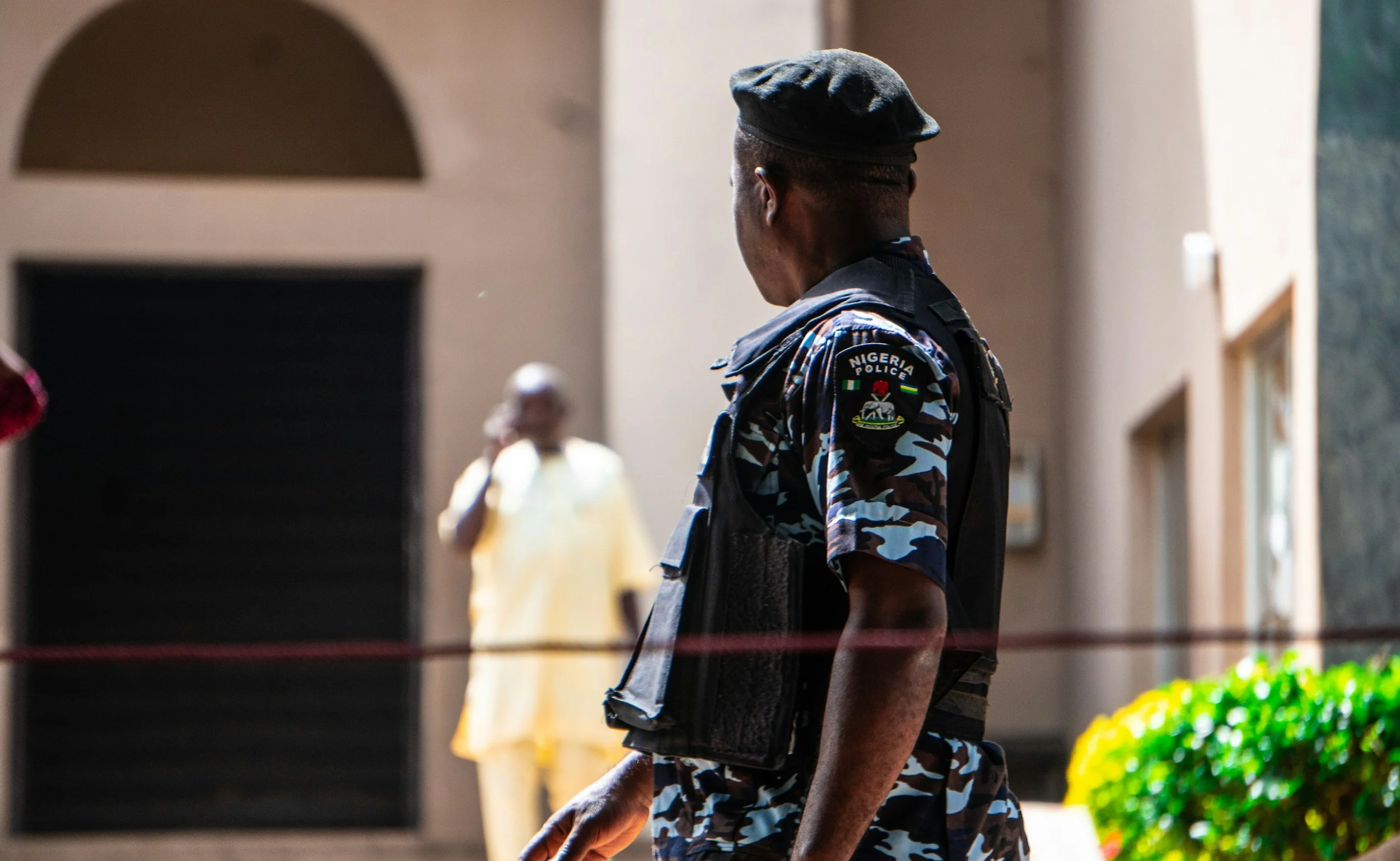
None of Saturday's incidents came without warning. On August 12, the Nigeria Police Force issued a public statement, Legit.ng reported, cautioning that ballot-snatching, voter intimidation, vote-buying and clashes between rival supporters would not be tolerated in Osun. The same statement went further than a general warning: it explicitly barred Amotekun, vigilante groups, the Joint Civilian Task Force, hunters' associations and neighbourhood watch outfits from playing any role in election security.
That decision to sideline local security outfits — familiar and present in Osun communities long before election day — left federal police and allied agencies as the sole official security presence at polling units. Saturday's arrests suggest that presence was, at minimum, active: 146 suspects in a single operation is not a small number for any police command to process in one sweep. Whether it was sufficient is a separate question the reported incidents don't answer on their own, since the Otan-Ayegbaju and Iperindo confrontations were resolved by residents before officers arrived.
A vote already disrupted before it began
Saturday's unrest did not erupt in isolation. It followed a chaotic 36-hour emergency reprint of ballot papers that INEC had to carry out after a court order added the SDP candidate to the ballot at short notice. That scramble delayed materials reaching some polling units until just hours before voting began — the kind of last-minute disorder that tends to widen the openings for exactly the sort of alleged manipulation reported on Saturday.
Taken together, the arrest of a sitting lawmaker, the recovery of over 200 PVCs, a foiled attempt on election materials and a seized firearm form a pattern rather than a series of unrelated local disputes. None of it has been tested in court, and none of it has been confirmed by the parties allegedly involved. But it is now part of the record any eventual winner will have to be measured against.
More than 200 Permanent Voter Cards were recovered when police arrested a sitting Osun State Assembly member and 146 suspected "electoral mercenaries" allegedly transported in from neighbouring Ondo State.
An arrest like Inaolaji's cuts in an uncomfortable direction regardless of which side eventually prevails in the governorship race. If his preferred camp goes on to win Osun, opponents now have a documented, on-the-record arrest to point to when questioning how the result was reached. If that camp loses, the arrest becomes one more entry in an argument that the contest was compromised before collation even finished. There is no outcome in which Saturday's arrests simply disappear from the story.
Whatever number INEC eventually reads out, Saturday's other headline is this one: a sitting lawmaker in handcuffs, a small army of alleged operatives detained, and pointed questions about how clean the count beneath the final figure really was. A credible result and a credible process are not automatically the same thing — and Saturday supplied plenty of reasons to examine both separately.