Tinubu's 'Maximum Security' Order Turns Osun Into a Dress Rehearsal for 2027
On the eve of Osun's governorship election, President Bola Tinubu picked up the phone to the Inspector-General of Police with a blunt instruction: maximum security, no exceptions. On August 14, a day before voting, Tinubu directed the IGP and other security chiefs to provide maximum security at Osun's polling units, warning there would be no room for troublemakers to disrupt voting, The Guardian reported. It was the kind of directive that, on its own, might read as routine pre-election reassurance. The numbers behind it suggest it was not.
The framing mattered as much as the order itself. Tinubu described Saturday's poll as the last off-cycle governorship election before the 2027 general election, and urged INEC to use it to demonstrate the commission's readiness, Channels Television reported — turning one state's governorship race into a proving ground for the machinery that will run the next national vote. Osun did not ask to be a rehearsal. But that is, in effect, the role Abuja assigned it in the space of a single presidential directive.
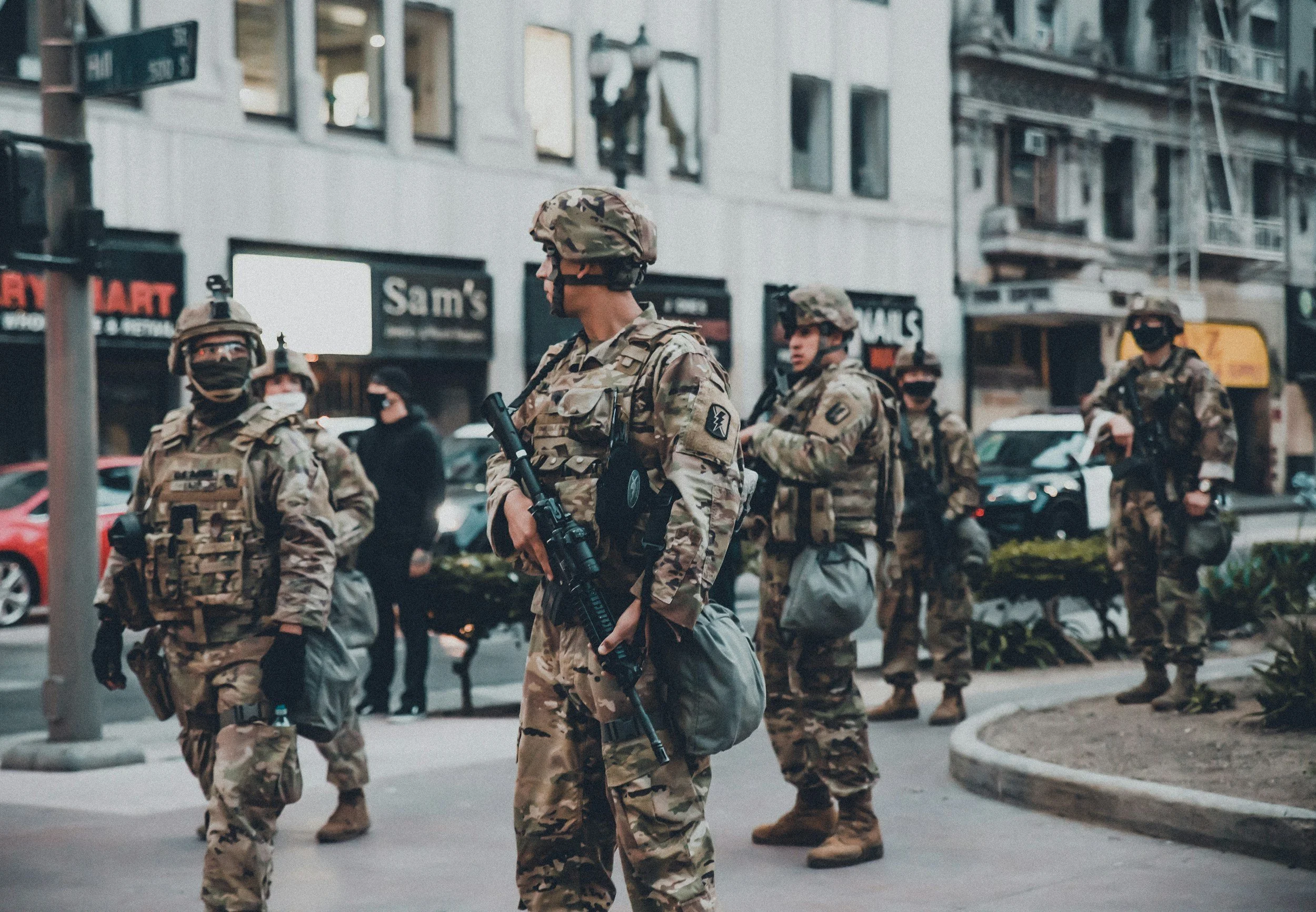
Behind that instruction sat a number: more than 25,000 security personnel were deployed statewide for the election, including roughly 15,000 police officers and 10,214 personnel of the NSCDC. For a single state governorship contest, that is a very large security footprint.
Who was allowed to carry a gun on election day
Part of what made this deployment distinctive was who was excluded from it. The Nigeria Police Force barred Amotekun, vigilante groups, the Joint Civilian Task Force, hunters' associations and neighbourhood watch outfits from any role in election security, limiting duty to six named federal agencies. In a state where Amotekun in particular has a visible, community-level presence, that was a deliberate narrowing of who could carry authority at the polls — control concentrated in federal hands, not local ones. The message underneath the maximum-security order, in other words, was not just more security, but a specific kind of security, run by a specific and centrally controlled set of agencies.
That is a meaningful distinction for a state where regional and community security structures are a familiar part of daily life. Whatever the merits of the decision, it meant that on the single most consequential day of Osun's political calendar, the personnel with formal authority to act were, almost entirely, federal rather than local. It also concentrated accountability: if a security failure surfaces after Saturday, it can be traced to one of six named agencies answering to the same chiefs Tinubu addressed directly, rather than to some diffuse mix of groups operating under separate, looser chains of command.
"No life is worth the governorship"
The scale of the deployment did not emerge from nowhere. INEC chairman Prof. Joash Amupitan had repeatedly stressed in the run-up to the election that no life is worth the governorship, and that the outcome should be decided by votes rather than violence, Daily Post reported. Coming from the umpire rather than a politician, that framing set the tone Tinubu's security order then reinforced with actual personnel numbers. An electoral chairman does not usually need to remind a state, repeatedly, that no office is worth a life — unless there is reason to think the reminder is necessary.
The warnings were not abstract. The APC and Accord campaigns separately alleged a combined 18 deaths among their members in the run-up to the election, according to each party's own count. Separately, the Kimpact Development Initiative, a group that has been tracking the race, documented 44 election-related violent incidents and 13 fatalities in Osun between October 2025 and June 2026. Two different sources, using two different methods, both arrived at a campaign period marked by real violence. Neither figure has been independently reconciled with the other — the campaigns' 18 and Kimpact's 13 describe overlapping but not identical periods and methods — but both point in the same direction: this was a campaign season with a real, not hypothetical, body count attached to it before a single vote was cast.
More than 25,000 security personnel were deployed statewide for Saturday's election, including roughly 15,000 police officers and 10,214 NSCDC personnel.
Why Abuja is watching this one closely
The 25,000-plus figure is also a statement of priority. Deploying that many personnel to a single state's governorship election, rather than spreading resources thinly across routine duties elsewhere, is a choice with a cost — officers and NSCDC personnel pulled from other postings, for one day, to stand at polling units in one state. Tinubu's directive effectively told the security services that Osun, for that day, mattered more than business as usual anywhere else.
Strip away the individual candidates, and Tinubu's framing turns Osun into something bigger than itself: a live test of whether INEC, the police and allied agencies can run a credible, secure election under real pressure, months before those same institutions have to do it again nationwide, in dozens of states at once rather than one. A record security deployment, a fatality count from the campaign period, and a president publicly staking his security chiefs' credibility on the outcome — all of that sits underneath whatever number Osun eventually produces.
None of it guarantees that Saturday passed off cleanly everywhere; a statewide election is difficult to secure perfectly no matter how many officers are assigned. What the deployment does establish is a baseline: this is what "maximum security," in the president's own words, looked like in practice, for the last off-cycle test before 2027. Whether it worked will be judged not just on whether Osun's result is accepted, but on whether the next state to vote can point to it as a template.
If 2027 is the exam, Saturday was the mock test — and every arrest, every deployed officer and every casualty figure from Osun will be read in Abuja as an early grade.