Nigeria Are Not At The World Cup, And The Song Is Nigerian
Lagos · Thursday 20 August 2026
The 2026 World Cup begins next summer without Nigeria. The Super Eagles drew 1-1 with DR Congo in the African playoff final and lost 4-3 on penalties. The tournament's official song is by a Nigerian.
Those two sentences describe the country's position in world sport more precisely than any amount of analysis. Nigeria exports culture at a level almost nobody matches and cannot get eleven men through a qualifying group.
How it ended
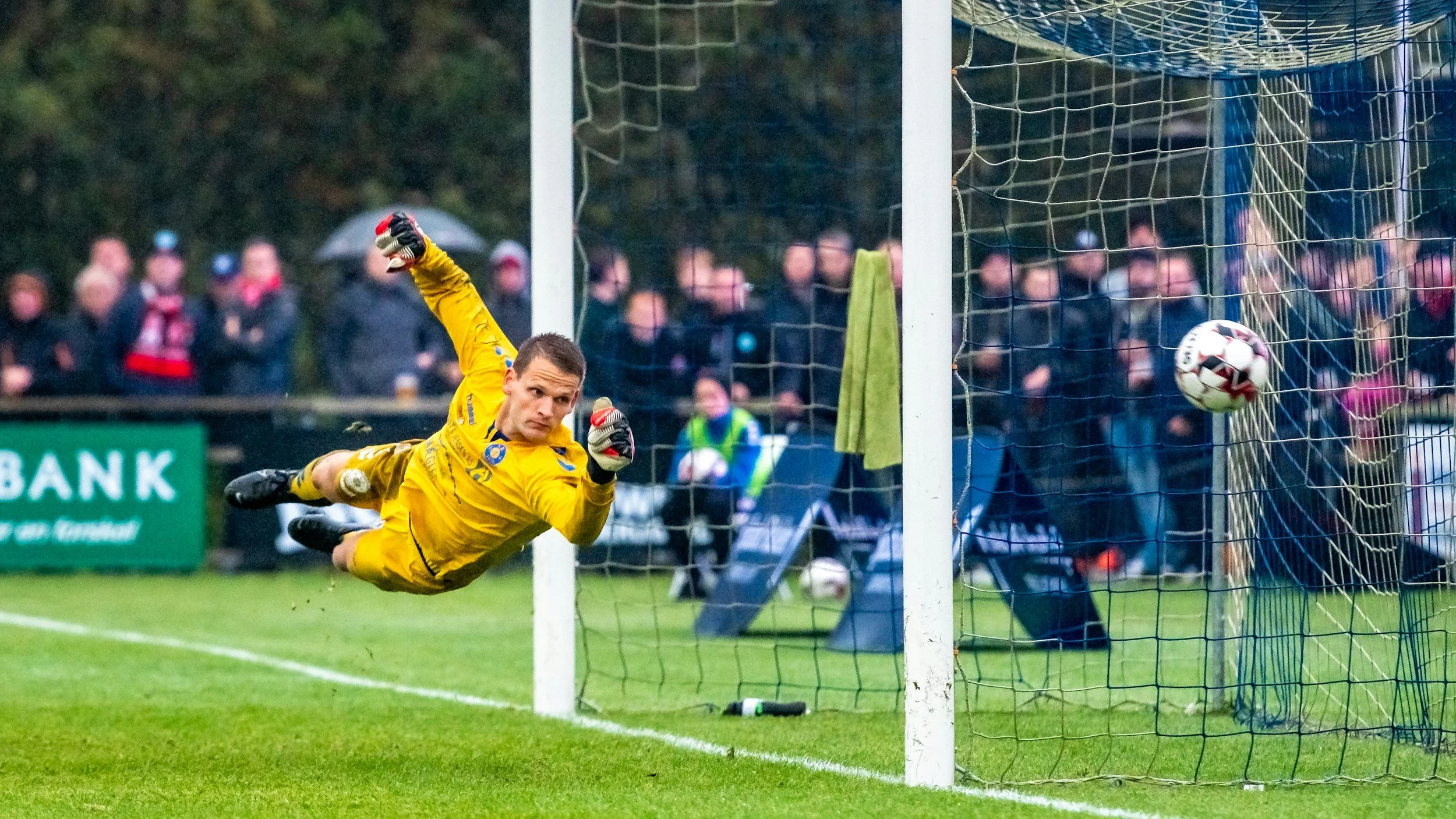
On penalties, which is the cruellest and least informative way for anything to be decided. One-all after the football, then the shootout, then 4-3 to DR Congo, and a qualifying campaign that had already been more difficult than it should have been was over.
The shootout that ended the campaign.
It is worth being clear that the playoff was not where this was lost. A team that reaches an intercontinental playoff has already failed to do the thing that was actually required, which was to win a qualifying group containing nobody Nigeria should fear.
The injury that shaped it
Osimhen missed the South Africa fixture through injury during the campaign, and the Super Eagles' dependence on him has been the defining structural weakness of this team for years.
That is not a criticism of Osimhen, who has carried the attack almost single-handedly through two cycles. It is a criticism of a federation that has watched a striker-dependent side for the better part of a decade and has not produced a second option who changes matches.
What missing a World Cup actually costs
More than pride, and the financial part is the smallest of it.
Player development. A World Cup is where a generation of Nigerian players get seen by clubs that do not routinely scout African leagues. Missing one removes that shop window for every fringe player in the squad, and the effect compounds because it is the fringe players who most needed it.
Commercial gravity. Sponsorship around a national team is priced off tournament appearances. A federation without a World Cup has less to sell, which means less money in the system, which affects everything from coaching to age-grade competitions.
Institutional attention. Nigerian football reform happens in the aftermath of humiliation and stops when results improve. A missed World Cup is exactly the moment when serious structural change is politically possible, and the window is roughly a year.
Nigerian football reform happens in the aftermath of humiliation and stops the moment results improve.
Two eliminations in one summer
Put this next to the Super Falcons going out of WAFCON in the quarter-final, 1-0 to Cameroon in Casablanca on 9 August, missing automatic qualification for the 2027 Women's World Cup in Brazil and dropping into the inter-confederation playoffs.
Two national teams, two eliminations, in the same window, both against African opposition that Nigeria would historically have expected to beat.
The temptation is to treat those as separate failures with separate causes. They are not entirely. Both squads are drawn from the same talent base, administered by the same federation, prepared in the same compressed camps, and both went out in matches where they had the ball and did not score.
The pattern across both
Nigeria's problem in 2026 has not been that its players are worse than its opponents' players. On any list of individual talent, the Super Eagles and the Super Falcons both remain near the top of African football.
The problem is preparation and structure: no second plan when the first one is not producing goals, no continuity of coaching, and a federation whose planning horizon has historically extended to the next fixture.
Opponents have noticed. Every African side now plays Nigeria the same way, and Nigeria has not adjusted to the fact that it is being played that way.
Morocco built a men's programme over a decade with continuity of coaching, a national training centre, and a deliberate policy on dual-nationality players, and reached a World Cup semi-final. None of that was cheaper than what Nigeria spends. It was simply spent on a plan rather than on a series of emergencies.
What qualification is worth, in money
FIFA distributes participation payments to every federation that reaches a World Cup, and the sums are large relative to what an African federation ordinarily has to work with. That money is the single biggest injection most federations receive in a four-year cycle.
Missing it does not just remove a windfall. It removes the money that would have funded age-grade competition, coaching education and the women's programme for the following cycle, which is how one failed campaign becomes the cause of the next one.
That compounding is the real damage and it is almost never discussed, because the conversation after an elimination is about the coach.
The dual-nationality question Nigeria keeps losing
There is a large population of players eligible for Nigeria who are born and developed in England, France, Germany, Belgium and the United States. Some of the best Nigerian players of the past decade came from exactly that route.
Persuading them is competitive. Those players have alternatives, and the decision turns on things that have nothing to do with money: whether the federation returns calls, whether travel and accommodation are organised properly, whether bonuses are paid when promised, and whether a player who commits will be treated well if he has a poor game.
Nigeria's record on all four of those is patchy and well known within the relevant dressing rooms. Every player who chooses elsewhere is not lost to scouting. He is lost to administration.
What other federations did after a miss
Italy failed to qualify for the 2018 World Cup, a genuine national humiliation for a four-time winner. They used the following cycle to rebuild around a young squad under a coach given time, and won the European Championship in 2021.
The Netherlands missed the same tournament and did something similar, returning as a serious side within one cycle.
Neither of those was luck. Both federations treated the absence as the reason to make changes they had been avoiding, and both gave a coach a horizon longer than the next set of fixtures. That is the entire lesson and it is available to Nigeria at no cost other than patience.
Meanwhile Burna Boy's record plays across every stadium at a tournament Nigeria will watch on television. There is a version of that which is funny and a version which is bleak, and which one it is depends entirely on what the NFF does with the next year.
Reporting: Premium Times, Tribune Online, Goal.com and match coverage of the CAF playoff final.
Read next
- The Super Falcons Are Out, And Now There Is A Playoff To Survive
- Coventry City Have Quietly Signed Two Super Eagles In One Window
- Every Big Nigerian Fintech Is Quietly Becoming A Bank
If you argue about Nigerian football for a living, you may as well dress like it. Caps and tees are in the TalkTalkNigeria store, and Naira pricing is here.