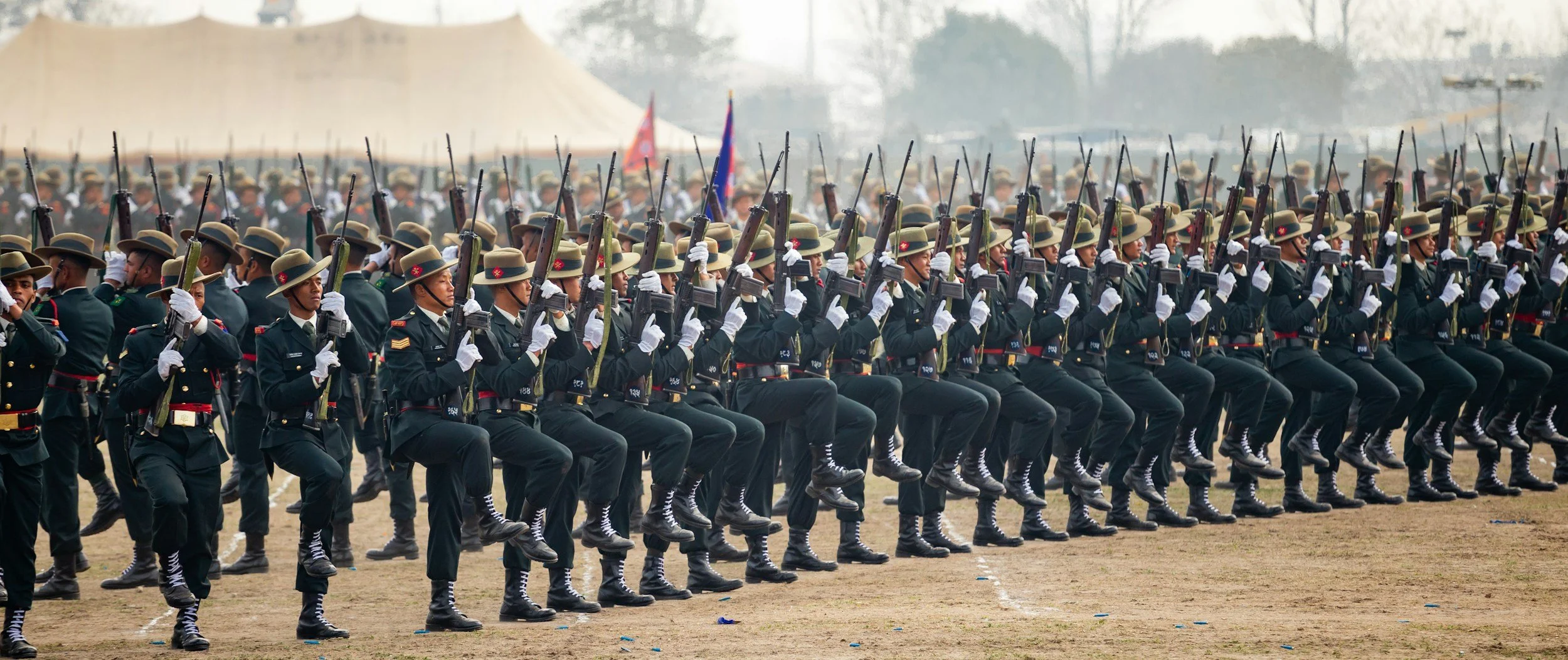
Nine Men, Ninety Days, And A Deadline That Lands Before The Election
Abuja · Thursday 20 August 2026
President Bola Tinubu has approved the immediate preparation of a National Threat Assessment and a rolling five-year Strategic Defence Operations Plan, and given a nine-man committee ninety days to deliver both.
Count forward ninety days from Wednesday and you land in the third week of November. Nigerians vote on 16 January. That is not an accusation of anything, but it is a fact about the calendar that anyone reading the announcement should have in front of them.
Who is actually on it
The composition tells you more than the communiqué does. Coordination and secretariat support sit with the President's Special Adviser on Homeland Security, Major General Adeyinka A. Famadewa. Around him:
| Member | Office |
|---|---|
| Maj. Gen. Adeyinka A. Famadewa | Special Adviser, Homeland Security (coordinator) |
| Malam Nuhu Ribadu | National Security Adviser |
| Gen. Christopher Musa | Minister of Defence |
| Alhaji Bello Muhammad Matawalle | Minister of State for Defence |
| Gen. Olufemi Oluyede | Chief of Defence Staff |
| Lt. Gen. Waidi Shaibu | Chief of Army Staff |
| Air Marshal Sunday Kelvin Aneke | Chief of Air Staff |
| Vice Adm. Idi Abbas | Chief of Naval Staff |
Committee as listed in the presidency's statement of 19 August 2026.
Every service chief, both defence ministers, the NSA. This is not an advisory panel of outside experts. It is the entire operational leadership of Nigerian security, told to sit in a room together and write down what they are actually trying to do.
Which is either encouraging or damning depending on how you read it, because the obvious question is what they have been working from until now.
Channels Television on the directive to the Homeland Security Adviser.
What the documents are meant to do
The Threat Assessment is the diagnostic half. Per the presidency, it is to identify the principal threats facing the country, rank them by urgency, and set operational objectives against them.
The Strategic Defence Operations Plan is the prescriptive half, and once approved it becomes the principal framework for coordinating military and defence operations over the medium term.
Then comes the sentence that matters more than either. The plan is to provide the basis for a corresponding multi-year defence expenditure and procurement plan, so that money goes towards agreed operational priorities.
Read that slowly. It is an admission, phrased as an intention, that Nigerian defence procurement has not been running off an agreed set of operational priorities. Anyone who has followed the arithmetic of Nigerian defence spending over the last decade will not find that surprising. Seeing it written down in a presidential directive is new.
The case for taking it seriously
Nigeria does not lack security plans. It lacks plans that survive a change of service chief, and it lacks any mechanism forcing the army, navy and air force to buy equipment that works together for a shared purpose.
A rolling five-year plan with procurement attached is the standard instrument other countries use to fix exactly that. It is boring, it is administrative, and it is the sort of thing that produces results four years later with nobody able to point at a ribbon-cutting.
It is an admission, phrased as an intention, that Nigerian defence procurement has not been running off an agreed set of operational priorities.
The case for holding your applause
Ninety days is quick for a document of this scope. Countries that do this properly spend a year on the threat assessment alone, with parliamentary scrutiny, outside analysts and published evidence sessions.
There is no indication that anything will be published. There is no external member on the committee, no academic, no civil society representative, nobody from the National Assembly. A threat assessment written entirely by the people whose performance it implicitly assesses has a known failure mode.
And the November delivery date means the plan arrives during a general election campaign, when the incentive to describe the security situation accurately is at its lowest point in the political cycle.
Whether any version of the Threat Assessment is made public. Whether the procurement plan that follows it is costed in the 2027 budget. And whether the ranking of threats puts banditry in the North West above insurgency in the North East, which is what the casualty data has been saying for some time and what the political conversation still mostly does not.
Nigeria has done this before
Defence reviews are not new here. Nigeria has produced national security strategies, defence policy documents and inter-agency coordination frameworks repeatedly over the past two decades, under several administrations.
The problem has never been the absence of a document. It has been that the documents do not bind anything. A strategy written under one Chief of Defence Staff has no particular hold on the next one, spending decisions are made annually against political pressures that have little to do with any published plan, and there is no standing body whose job is to check whether the thing that was agreed is the thing that is happening.
So the fair question about Wednesday's directive is not whether the plan will be good. It is whether anything about this one is structured to outlast the people who wrote it.
One detail suggests somebody has thought about that. The word used is rolling. A rolling five-year plan is updated annually rather than published once and shelved, which is the mechanism that keeps a document alive in every system where this works. Whether it survives contact with the Nigerian budget cycle is another matter, but the choice of word is not accidental.
What a threat assessment looks like when it is done properly
The countries that get value out of this treat it as an evidence exercise, not a drafting exercise.
A serious threat assessment takes in casualty data, economic modelling, demographic projections and climate forecasting. It is contested by outside analysts before it is finalised. Parts of it are published so that a legislature can hold the executive to it. And it explicitly ranks threats against one another, which is the painful part, because ranking means telling a service chief that his theatre is not the priority.
Ninety days is not obviously enough time for that. It is enough time to convene, commission papers from the existing intelligence apparatus, and synthesise them into something presentable. That would still be worth having. It would not be the same thing.
The procurement sentence is the one to keep
Buried in the presidency's statement is the line about the plan providing the basis for a multi-year defence expenditure and procurement plan, directing resources towards agreed operational priorities.
Nigerian defence procurement has been the subject of investigations, tribunals and recovered-funds announcements for a decade. The recurring finding is not simply theft. It is incoherence: equipment bought that does not fit the mission, platforms acquired without the maintenance contracts to keep them flying, purchases made in one service that duplicate capability in another.
Incoherence is what happens when there is no agreed statement of what the armed forces are for. Tying procurement to a ranked, written set of operational priorities is the standard remedy, and it works less because it prevents corruption than because it makes deviation visible. It is much harder to justify an unusual purchase against a published plan than against nothing.
Three things that would signal seriousness
- An unclassified summary of the Threat Assessment published alongside the classified version. Not the whole thing, but enough for the National Assembly and the press to know what the government believes it is fighting.
- The procurement plan appearing as a costed line in the 2027 budget rather than as an aspiration in a communiqué.
- At least one external voice added to the committee before it reports. As constituted it is nine people assessing threats they are also responsible for having failed to contain, which is a structure with a predictable output.
None of those are difficult. All of them are optional. Which of them happens over the next ninety days will tell you considerably more than the announcement did.
Reporting: Premium Times, Vanguard, Tribune, PRNigeria and the presidency's statement of 19 August 2026.
Read next
- Lagos Stops Work Today For The Òrìṣà
- JAMB Kept The Cut-Off At 150. Almost No University Will Use It.
- The Super Falcons Are Out, And Now There Is A Playoff To Survive
Whatever the news does this week, somebody at home still has to eat. The Send Home boxes land as a food shop, a care package or a learning kit. Naira pricing here.