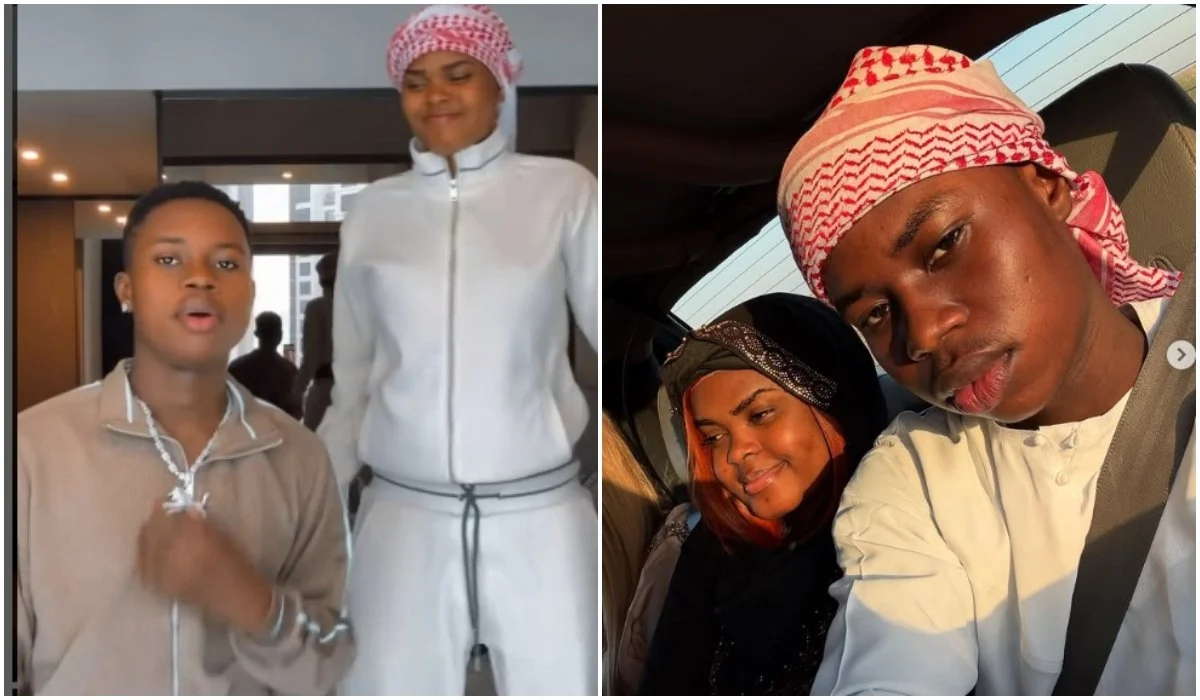
Peller Calls Out Ayra Starr Over ‘Boyfriend’ Question to Jarvis
Nigerian streamer Peller has publicly criticized singer Ayra Starr following her recent TikTok livestream interaction with content creator Jarvis.
The controversy began during an interactive session when Ayra Starr casually asked Jarvis if she had a boyfriend. While the question appeared harmless to many viewers, Peller took offense, describing it as disrespectful and dismissive of his relationship with Jarvis.
In a viral video circulating online, Peller expressed frustration, suggesting that the singer’s question implied she was unaware of his presence in Jarvis’ life despite his perceived public visibility.
He questioned why Ayra Starr would ask such a thing, arguing that it undermined him and the relationship he claims to share with Jarvis. Peller also referenced past gestures, including trips and gifts, to support his point.
The incident has since sparked conversations across social media, with users divided over whether the singer’s question was inappropriate or simply part of a normal conversation.

🧠 Opinion: A Misunderstanding or an Overreaction?
At its core, this situation seems more like a clash of perception than intentional disrespect.
Ayra Starr’s question — asking if someone has a boyfriend — is, in most contexts, a routine and harmless conversation starter. It doesn’t necessarily imply ignorance or dismissal. In fast-moving livestream interactions, such questions are often spontaneous rather than calculated.
However, Peller’s reaction highlights something deeper: the role of public recognition in modern relationships. In a digital world where visibility equals validation, not being acknowledged can feel like a slight, even if it wasn’t intended.
That said, the intensity of the reaction may be disproportionate to the situation. Not every public figure is expected to know or recognize every relationship, especially in informal settings like livestreams.
The bigger takeaway here is how quickly minor moments can escalate online. What might have been a simple question has now turned into a trending debate, fueled by emotion, audience interpretation, and social media amplification.
In the end, this may not be about disrespect at all — but about expectations in a world where personal and public lives are constantly overlapping.