N100m Licence, 11% Tax: Inside the New Rules Reshaping Nigeria's Betting Industry
Ask about a betting licence in Nigeria today, and the first question back is: which state?
That is not a rhetorical flourish. Since a Supreme Court ruling in November 2024, the power to license and tax betting and lottery operators no longer sits in Abuja. It sits with individual state assemblies, one by one — dozens of different regulators, in principle, each with its own rules, its own forms and its own fees.
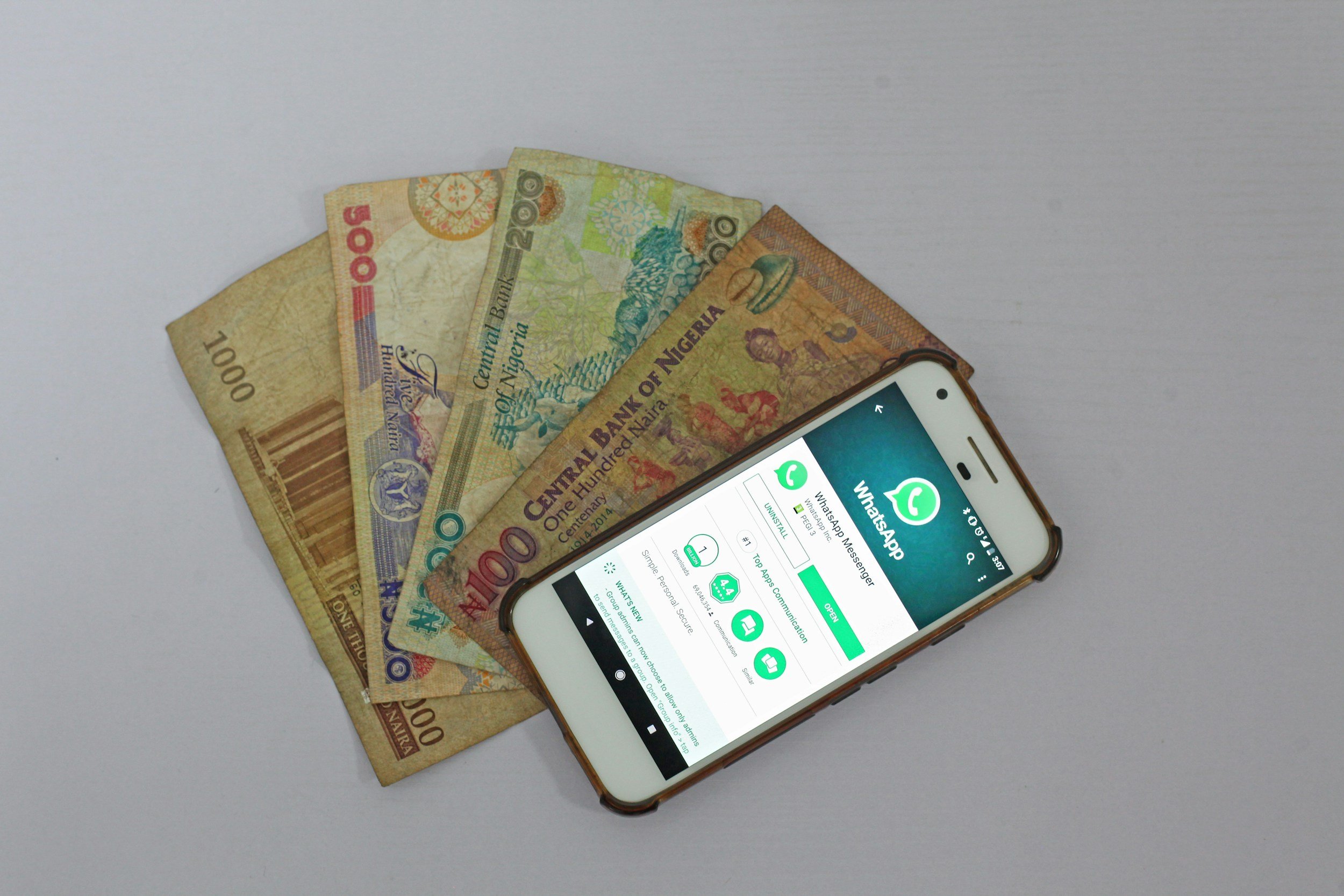
The states have used that power. An operator now needs roughly ₦100 million a year, per category, just to hold a licence — the same price whether it is running a shop on a street corner or an app on ten million phones. Almost two years after that court ruling, the shape of Nigeria's betting industry looks fundamentally different from the one it replaced.
Why It's the States' Call Now
The shift traces back to that November 2024 Supreme Court ruling, which settled a long-running argument over who actually regulates gambling in Nigeria, iGaming Business reported. The answer: states, not the federal government — a decision that upended assumptions an entire industry had built its licensing strategy around.
That single ruling is the reason every operator in the country has spent the better part of two years rebuilding its compliance around individual state assemblies instead of one federal body. For an industry built on national apps and national advertising campaigns, regulation that stops at a state line is a genuinely awkward fit — getting it wrong in even one state can mean losing access to a meaningful share of the national market overnight.
For an industry used to dealing with a single federal regulator, that is a lot of new relationships to manage — a compliance team's workload multiplying by however many states an operator wants to legally operate in.
It also created an obvious coordination problem. Dozens of states, each free to set its own price and its own rules, is not a recipe for a simple national market — which is exactly the gap the industry's own regulators' body has spent the past two years trying to close.
₦100 Million Just to Play
Nigeria's Federation of State Gaming Regulators, known as FSGRN, has since approved a unified regime that applies a flat 11% tax on Gross Gaming Revenue across sports betting, lottery and casino operators alike, effective from January 1, 2026, the News Agency of Nigeria reported. One rate, three verticals, applied the same way regardless of which state is collecting it.
A flat, unified rate is not a small thing in a market that, until recently, faced a patchwork of different state levies depending on where an operator happened to be registered. Uniformity is, in its own way, a form of relief — even at 11%.
On top of that sits the licence fee itself: roughly ₦100 million a year per category, with no distinction between a retail shop and a pure online operation. A single betting shop on a single street corner pays the same licence price as a national app processing millions of transactions a month.
For a small, local operator, that is not a formality. That is a decision about whether the business is worth running at all — and for many of the smaller shops that have defined Nigeria's betting scene for two decades, ₦100 million a year is simply not a number the books can absorb.
A Tax on Winning, For the First Time
The state-level rules landed alongside a federal change with its own bite. Sportsration reported that Nigeria's Tax Act 2025, signed into law on June 26, 2025 and effective January 1, 2026, introduced a 5% withholding tax on betting winnings.
For the first time in Nigeria's history, winnings themselves are taxed directly — a 5% withholding tax that takes a cut before a payout ever reaches a bettor's wallet.
The Act does throw bettors one concession: the stakes themselves are exempt from VAT. But the message is clear enough. Win, and the taxman now has a line in the payout — a psychological shift as much as a financial one, for a betting culture used to thinking of a win as the full amount shown on screen.
Bettors will feel this at the point of payout, not at the point of the stake — which is likely why stakes stay exempt from VAT even as winnings face a direct tax for the first time. It is a design that keeps the front door open while taking a cut on the way out.
Combined with the states' 11% levy on operators, Nigeria's betting industry is now taxed from two directions at once: a cut of every operator's revenue, and a cut of every bettor's winnings. Neither existed in anything like this form before 2026.
One Certificate, More Than Twenty States
To stop the new system from drowning operators in dozens of separate applications, FSGRN built a Subnational Reciprocity Licensing Framework. More than 20 states have joined so far, and operators inside it can trade across all of them on a single Universal Reciprocity Certificate, rather than filing state by state.
That framework is, in effect, the industry's answer to the coordination problem the Supreme Court ruling created. It does not fully restore the simplicity of a single federal licence, but for an operator willing and able to pay, it at least removes the worst of the duplication.
The certificate matters most for mid-sized operators trying to expand beyond a single home state. Without it, growth into a second or third state would mean repeating the entire licensing process, and the entire ₦100 million fee, all over again.
It is already reshaping who gets to operate where. Lagos's active 2025–2026 licence list includes familiar names:
Bet9ja
SportyBet
Betway
BetKing
22Bet
Betano
All of whom, evidently, found the ₦100 million entry price — and everything that comes with it — worth paying, in Nigeria's largest and most valuable betting market.
The harder question is who has not made that list, and won't. An 11% revenue tax and a nine-figure licence fee are a rounding error for operators processing billions in stakes. For everyone smaller, it is closer to existential. Almost two years after the Supreme Court handed regulation to the states, the next twelve months will show how many of Nigeria's betting brands were actually built to survive regulation, and how many simply outran it for as long as they could.