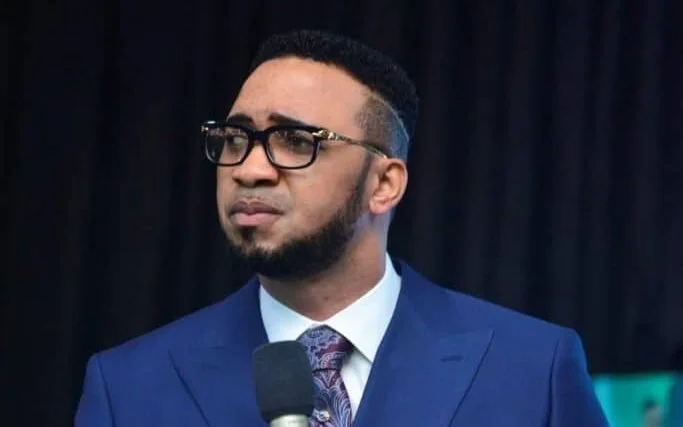
Chris Okafor’s Legal Team Demands Evidence from Social Media Allegers, Warns of Criminal Action
The legal team representing Lagos-based cleric Chris Okafor has called on Nollywood actress Doris Ogala, social media influencer Martins Vincent Otse (known as VeryDarkMan or VDM), and other bloggers to present evidence supporting allegations circulating against him, warning that failure to do so could result in criminal prosecution.
Speaking to journalists in Lagos on Wednesday, Ife Ajayi, Lead Partner at Sovereignty LP and counsel to Okafor, described the claims as false, malicious, and part of a coordinated campaign of cyberbullying, blackmail, and public incitement. According to Ajayi, the allegations resurfaced in December 2025, originating from Ogala and later amplified across digital platforms without giving Okafor an opportunity to respond.
“Our client is a private citizen and a law-abiding Nigerian. What has played out is not advocacy or responsible journalism, but a calculated attempt to try him in the court of public opinion,” Ajayi said.
Tracing the dispute’s origins to late 2024, Ajayi explained that it began after a business engagement between Okafor, Ogala, and a third party ended without resolution. Ogala allegedly claimed Okafor owed her ₦45 million — a claim Ajayi dismissed as unfounded. He noted that the allegations then escalated from monetary disputes to romantic claims and, eventually, accusations bordering on criminal conduct.
Ajayi highlighted that Ogala had previously faced legal action for cyberstalking, bullying, and threats — a matter settled out of court. He stressed that during that settlement, no sexual misconduct allegations were made, and that the more serious claims only emerged after an alleged breach of the agreement.
The lawyer accused VDM and other online platforms of misusing their influence by soliciting public claims and presenting them as facts, stressing that serious allegations such as rape or murder must be reported to law enforcement, not tried on social media. Okafor, he said, has cooperated fully with police, provided evidence countering claims, and honored all invitations to investigations.
Ajayi urged Ogala, VDM, and others to submit their allegations and evidence to the Nigerian Police, warning: “If they believe their claims, let them present evidence to law enforcement. Otherwise, we will pursue all available legal remedies.” He further cautioned the public against mob justice fueled by online narratives, emphasizing that legal investigation and evidence remain the foundation of justice.
Opinion: This case highlights the growing tension between social media activism and due process. While online platforms can be powerful tools for accountability, they also risk amplifying unverified claims that can damage reputations and lives. The Okafor situation underscores the importance of balancing freedom of expression with responsibility: allegations of serious crimes should be handled through proper legal channels, not trial by social media.
Social media outrage may feel immediate and satisfying, but justice requires patience, evidence, and law enforcement. Until verified proof emerges, public commentary should lean toward caution and empathy, rather than assuming guilt based on virality alone.