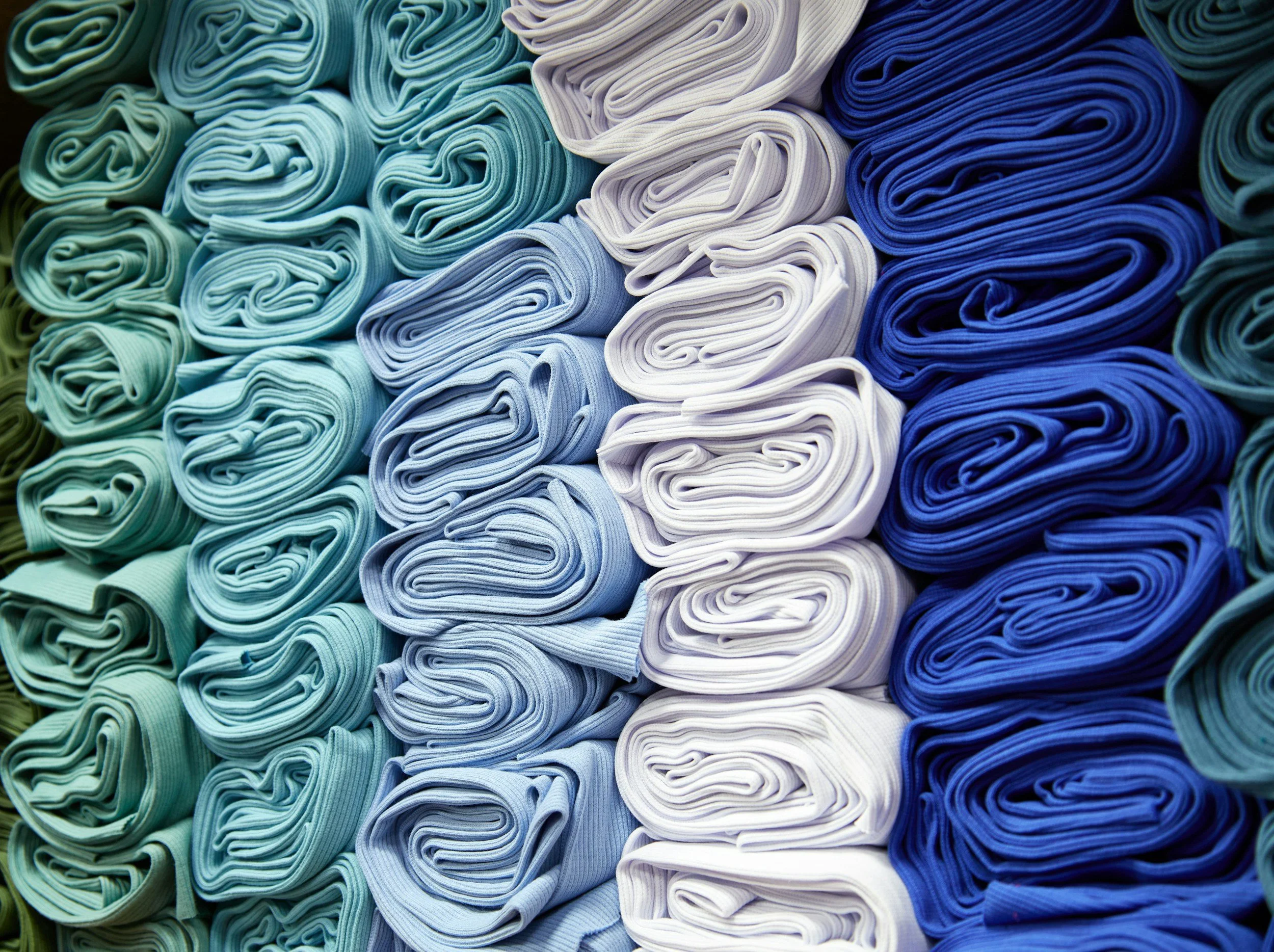
The Adire Supply Problem Is Now Nigerian Fashion's Best Opportunity
Lagos and Abeokuta · Thursday 20 August 2026
On the day three states shut their offices for Ìṣẹ̀ṣe Day, it is worth noting what has been happening to Yoruba textile in the commercial market. Nigerian designers have spent 2026 walking away from imported fabric, and the local supply chain cannot keep up.
The turn away from imports
For years the default for a Nigerian label with ambition was imported cloth. Italian wool, Chinese lace, whatever the buyer in Dubai had. Local textile was for occasion wear and for people who could not afford the alternative.
That has flipped, and quickly. The reporting through this year has designers building collections around aso oke and adire as the primary material rather than the accent, and the reasons are commercial before they are patriotic. A devalued naira made imported fabric punishing to buy. International buyers, meanwhile, will pay a premium for something they cannot source anywhere else, and there is no version of adire that comes out of a mill in Guangzhou.
Aso oke has left the wedding
The interesting shift is in colour.
Aso oke's traditional commercial life was ceremonial: gold, silver, burgundy, bought by the family, worn once, folded away. That market is intact. Sitting alongside it now is a younger buyer asking for the same weave in deep olive, burnt orange, off-white and muted earth tones.
| Aso oke, by market | Traditional ceremonial | Contemporary |
|---|---|---|
| Palette | Gold, silver, burgundy | Deep olive, burnt orange, off-white, muted earths |
| Occasion | Weddings, funerals, chieftaincy | Everyday tailoring, ready-to-wear |
| Purchase | Family bulk order, worn once | Individual, repeat |
| Buyer | Older, domestic | Younger, domestic and export |
A weave that used to sell once per family event now has a repeat market.
That is not a colour story. It is a business model story. Ceremonial cloth sells once per event. Everyday cloth sells again, and a weaver with a repeat customer has something a weaver with a wedding order does not.
The bottleneck, stated plainly
There is not enough real adire.
Genuine hand-dyed adire is undersupplied relative to what designers now want, and the constraint is the production itself. Hand-resist dyeing is slow, weather-dependent, and concentrated among producers in and around Abeokuta whose capacity was sized for a much smaller market.
Which is why direct relationships with those producers have become a genuine competitive advantage. A designer with a standing arrangement in Abeokuta can plan a collection. A designer buying on the open market is bidding against everyone else for the same limited run, and will be told there is nothing until November.
Hand-resist dyeing is slow, weather-dependent, and concentrated among producers whose capacity was sized for a much smaller market.
What normally happens next, and what should happen instead
The standard resolution to a supply squeeze like this is machine printing. Somebody prints an adire pattern on plain cotton, sells it at a third of the price, and within three years the market cannot tell the difference and stops paying for the real thing. The craft survives as a luxury niche and the producers who built the market end up with nothing.
It has happened before, to almost every West African textile that found an international audience, most visibly to wax print.
The alternative requires unglamorous work: investment in the Abeokuta production base so capacity rises without the process changing, some form of origin marking so a buyer can tell hand-dyed from printed, and pricing that leaves enough margin with the dyer to make expansion worth doing.
The names doing the arguing
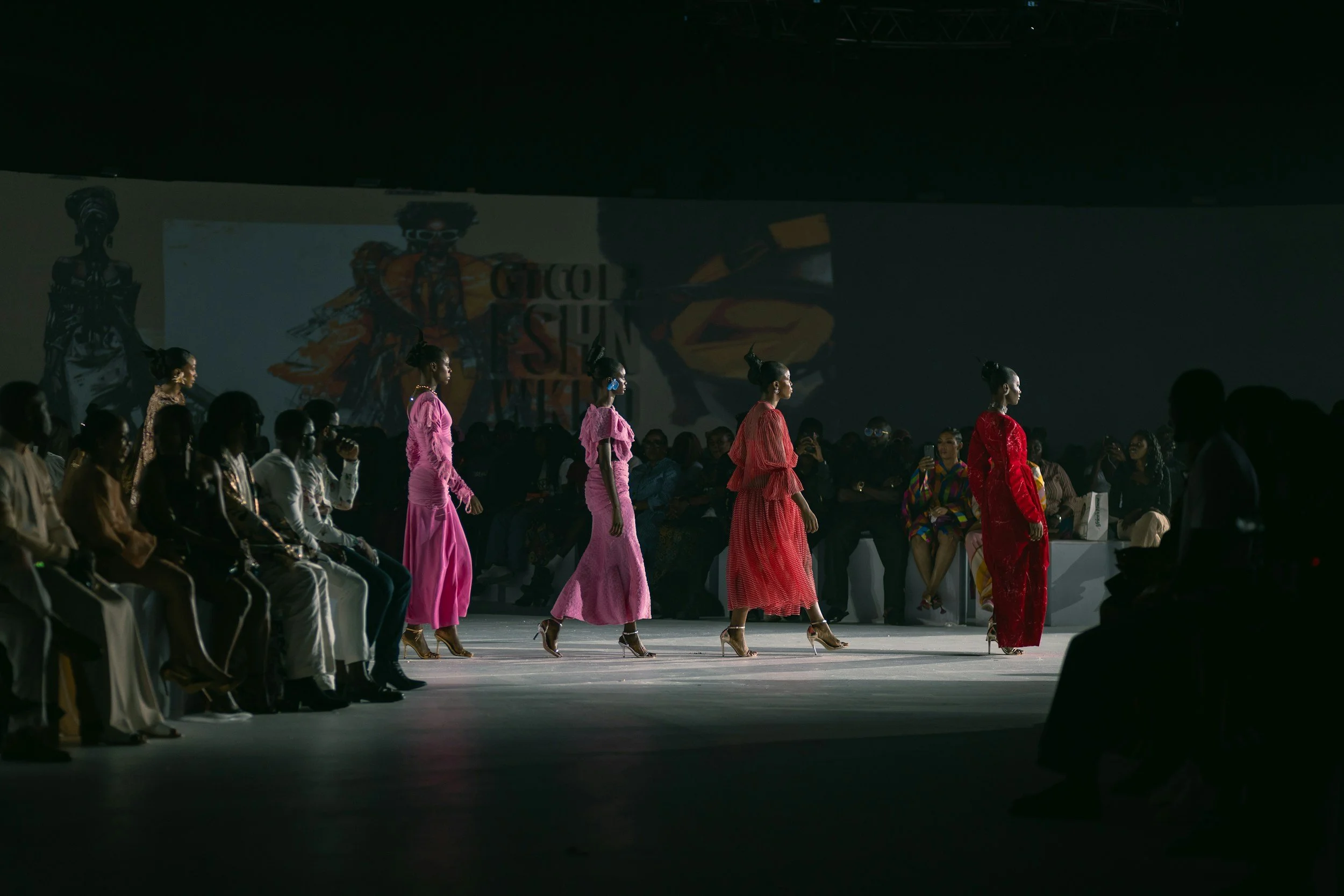
Nigeria is not short of designers with the standing to make this case internationally. Lisa Folawiyo, Kenneth Ize and Adebayo Oke-Lawal have all built reputations abroad on work that treats Nigerian craft as material for contemporary design rather than heritage display, and this year's Africa Fashion Week London cohort has leaned further into local cloth and slow production.
What none of them can do individually is fix the supply base. That takes capital and coordination, and it is the same problem that shows up every time Nigerian fashion gets an international opening: the design is world class and the industrial capacity behind it is not.
The difference this time is that the shortage is of something no one else can make. That is a much better problem to have than the usual one, and a considerably worse one to waste.
How adire is actually made
The word covers a family of resist-dyeing techniques, and the process is the reason the supply problem exists.
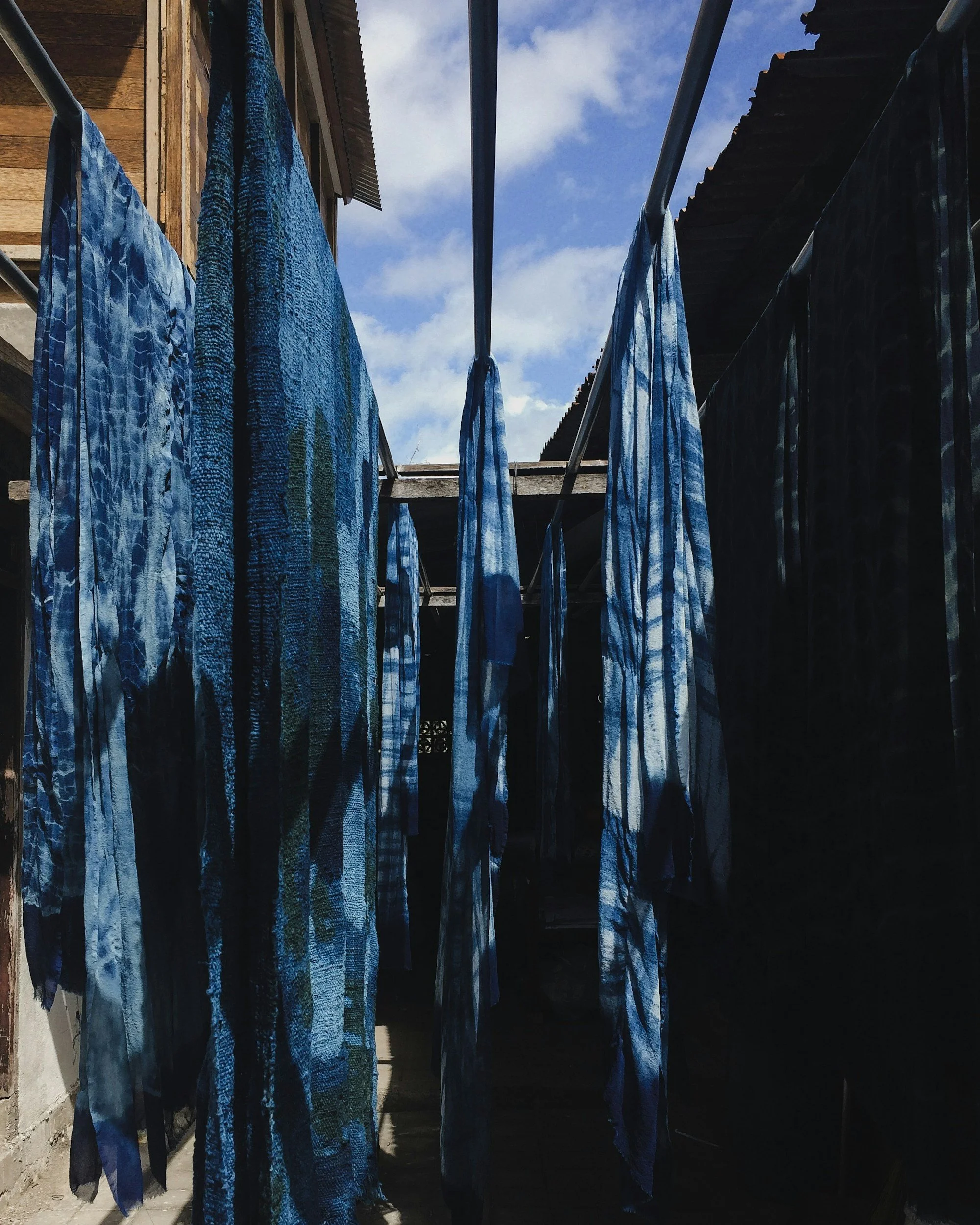
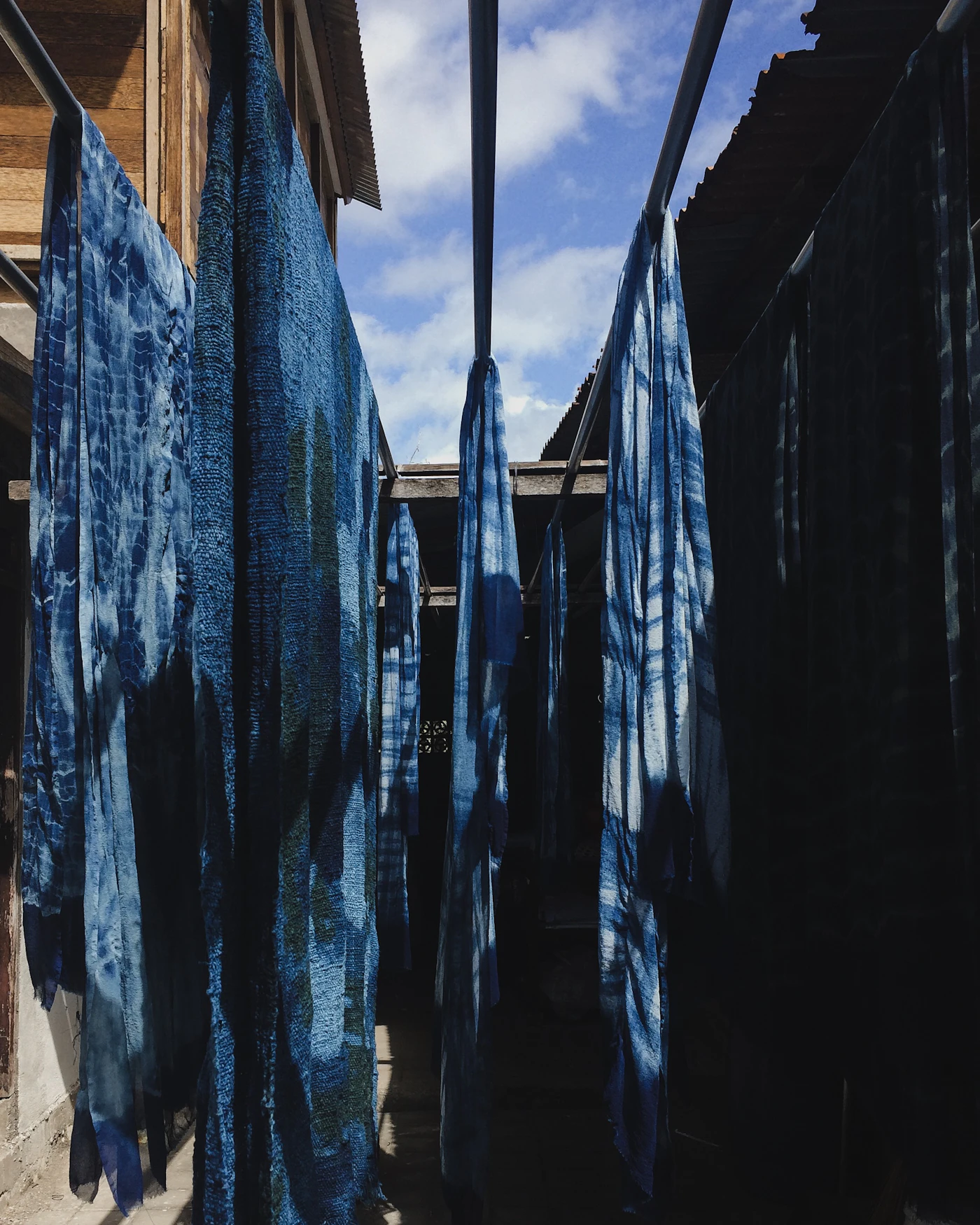
Pattern is created by preventing dye from reaching parts of the cloth. That resist is applied by hand: tying and stitching for adire oniko, or painting on a cassava starch paste for adire eleko, which is then scraped away after dyeing. The cloth goes into indigo, sometimes repeatedly, because depth of colour comes from multiple immersions rather than from a stronger bath.
Between immersions it has to dry, outdoors, which makes the whole thing weather-dependent. A wet fortnight is a lost fortnight. Then the resist is removed, the cloth is washed and dried again, and only then can anyone tell whether it worked.
Days per piece, in other words, and the skilled part is not mechanisable without becoming something else. That is the constraint, and no amount of demand changes it.
Why Abeokuta
Abeokuta has been the centre of adire production for well over a century, and the concentration is not accidental. The town had the water, the indigo, and the guild structures that trained dyers across generations, and it built an export trade in the cloth long before anyone used the word heritage about it.
That inheritance is also the vulnerability. A craft concentrated in one town, held by an ageing cohort of practitioners, with young people looking at the day rate and choosing almost anything else, is one generation from a real problem regardless of how fashionable the cloth becomes in Lagos.
The wax print warning, in detail
The cautionary tale is not hypothetical, and West Africa has already lived it.
Wax print became the visual signature of West African dress and, over decades, the production of it moved decisively away from the region. Dutch and later Chinese manufacturers industrialised the process, priced local mills out, and the cloth that reads internationally as African is now overwhelmingly made elsewhere. Nigeria's own textile industry, which once employed enormous numbers of people, was among the casualties.
The lesson is specific. Once a design language is separated from the people who make it, the value migrates permanently and does not come back, because the market cannot tell the difference and stops paying for the distinction.
Adire is at exactly that juncture right now. There is significant demand, a constrained authentic supply, and an obvious opportunity for somebody to print the pattern cheaply.
What would have to happen
- Capacity, not substitution. More dyers trained, better facilities, covered drying space so a rainy fortnight is not a lost one. The process stays the same; the throughput rises.
- A mark of origin. Some verifiable way for a buyer in Lagos or London to know they are holding hand-dyed cloth from a named producer. Other craft sectors have done this successfully and it is the single highest-leverage intervention available.
- Margin that reaches the dyer. If the person doing the work cannot fund an apprentice out of what they earn, the capacity problem is permanent regardless of anything else.
- Export logistics. The recurring Nigerian failure. A designer who lands an international order and cannot ship reliably loses the customer once and the reputation permanently.
Why this matters beyond fashion
Nigeria spends a great deal of energy looking for things it can sell to the world that are not oil. Most candidates on that list are competitive markets where Nigeria has no particular advantage.
Adire is the opposite. It is a product with genuine scarcity, an established international appetite, a story attached that buyers actively want, and no competing source of the authentic article anywhere on earth. That combination is rare and it is being handed to a supply chain that currently cannot meet the orders.
On a day when three states have closed their offices to mark Yoruba heritage, that seems worth saying plainly. The heritage in question is not only ceremonial. Some of it is an export industry that nobody has yet bothered to build.
Reporting: BusinessDay Weekender, Connect Nigeria, NigeriaMag and Lagos Fashion Week material.
Read next
- Nigerian Designers Are Building A Second Market In London
- Mama G Has Spent Thirty Years Being The Reason You Cried
- The VMAs Have Quietly Dropped Best Afrobeats
Same idea, smaller scale: Nigerian lines on things you actually wear. The TalkTalkNigeria store ships worldwide, and Naira pricing is here.