Natasha Akpoti Urges FG to Apply Reciprocity Over Tyla’s Visit After Ayra Starr’s Visa Denial
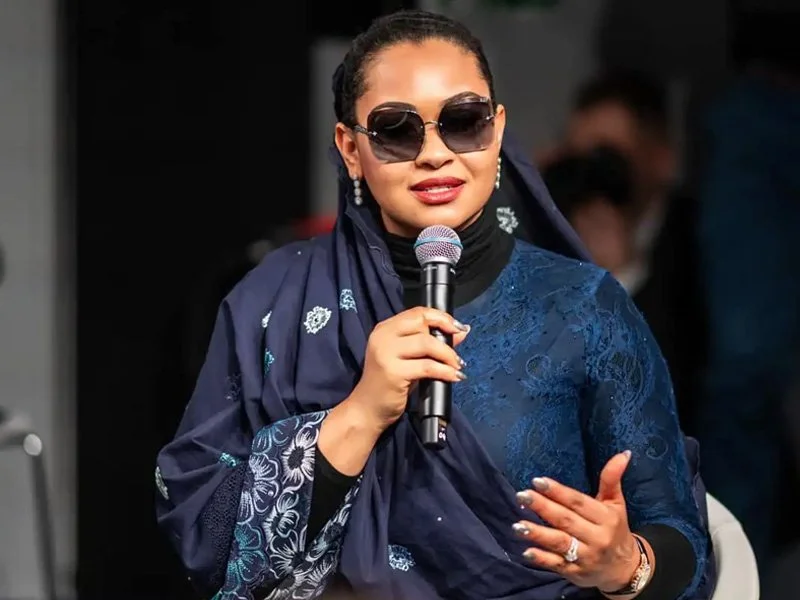
Senator Natasha Akpoti, who represents Kogi Central, has urged the Federal Government and the Nigeria Immigration Service (NIS) to adopt the principle of reciprocity in response to South Africa's treatment of Nigerian citizens and entertainers.
The lawmaker made the call on Thursday while reacting to growing public criticism surrounding South African singer Tyla's planned concert in Lagos, following reports of attacks on Nigerians in South Africa and the recent denial of visas to Nigerian music star Ayra Starr and her team.
The reported visa refusal forced Ayra Starr to cancel her scheduled performance in South Africa, sparking fresh debates about diplomatic fairness and the treatment of Nigerian artistes abroad.
In a post shared on Instagram, Senator Akpoti stressed that Nigeria should respond in line with established foreign policy principles if the reports are confirmed.
"I call on the Nigeria Immigration Service and the Federal Government of Nigeria to review the visa applications of South African artistes and their entourages in accordance with the principle of reciprocity in foreign policy," she wrote.
She added that if it is verified that Ayra Starr and her crew were denied visas, resulting in the cancellation of their engagements, Nigeria should consider taking equivalent measures until Nigerians receive fair and respectful treatment.
The senator clarified that her position was not directed at Tyla personally but was instead a broader call for Nigeria to defend the interests and dignity of its citizens.
"This is not a call against Tyla as an individual. Rather, it is a call for Nigeria to uphold the principle of mutual respect that underpins international relations," she said.
Akpoti further noted that reciprocity remains a recognized diplomatic tool and argued that Nigeria must demonstrate that discriminatory treatment of its citizens abroad should attract corresponding consequences.
According to her, Nigeria's foreign policy should prioritize protecting the dignity of Nigerians while ensuring that relationships between nations are built on mutual respect rather than one-sided concessions.

Opinion: Diplomacy Should Be Firm, But Culture Must Remain a Bridge
Senator Natasha Akpoti's call highlights an important question about how Nigeria should respond when its citizens or public figures are treated unfairly abroad. Reciprocity is indeed a recognized diplomatic principle, and governments often use it to encourage fairness in international relations.
However, it is equally important to distinguish between government actions and cultural exchanges. While visa policies are decided by states, artists often serve as ambassadors of culture rather than politics. Any response by Nigeria should therefore be measured, lawful, and carefully targeted to avoid punishing individuals for decisions beyond their control.
The controversy also underscores the need for stronger diplomatic engagement between Nigeria and South Africa. As Africa's two largest economies and major cultural powerhouses, both countries have far more to gain from cooperation than from escalating tensions.
Ultimately, protecting the dignity of Nigerian citizens abroad should remain a priority, but achieving that goal will require a balance of firm diplomacy, dialogue, and respect for cultural ties that have long connected both nations.