Delta's Gridlock Is Not a Traffic Story. It Is an Economic Tax
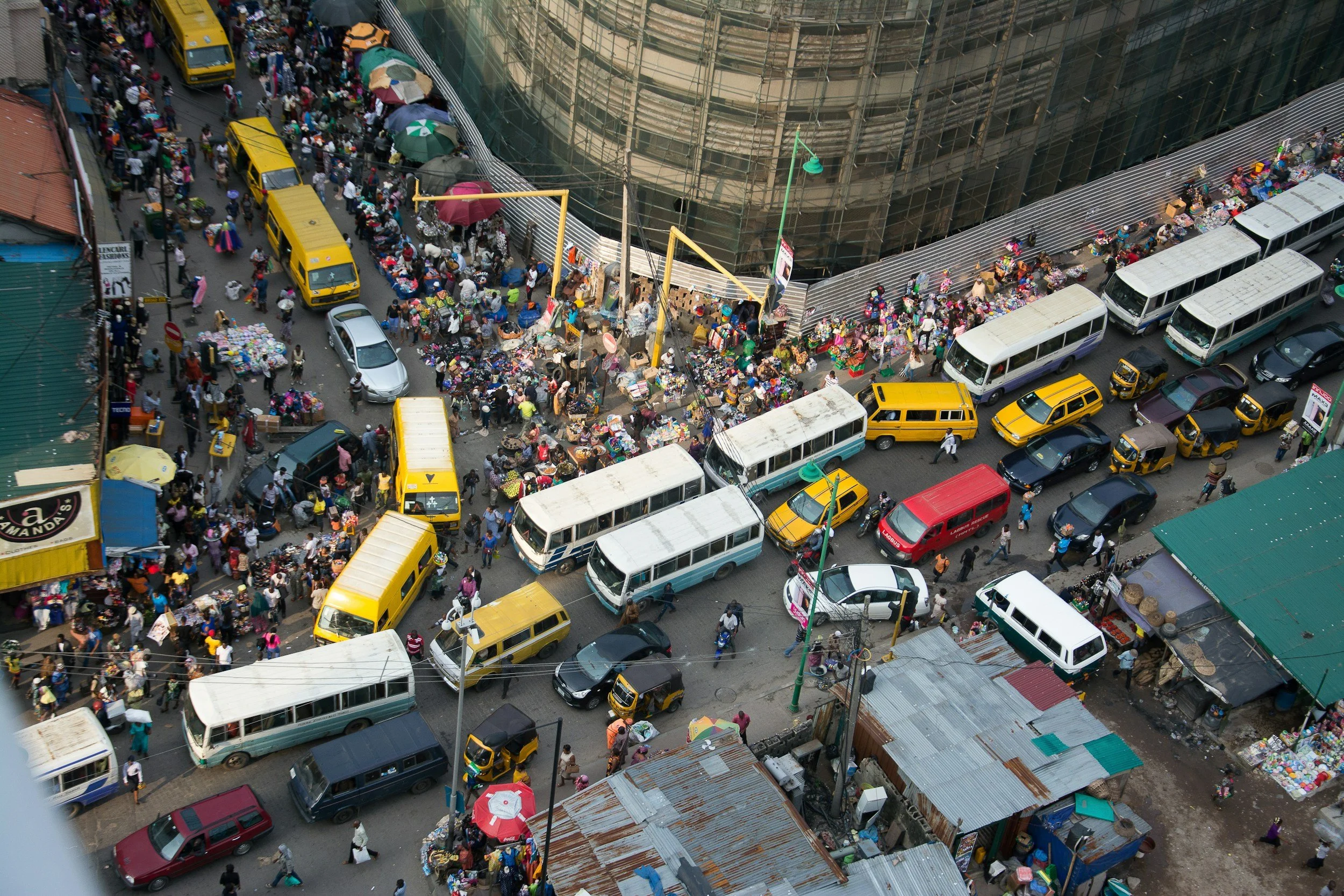
EDO–DELTA CORRIDOR, 25 August 2026 — Five days of paralysis on major South-South roads have turned a transport failure into a supply-chain shock. Thousands of trucks carrying raw materials, fuel and finished goods were reported trapped around the Benin-Sapele-Effurun corridor, while some passenger operators suspended services.
The easiest way to describe the crisis is “gridlock.” The more accurate description is an unlegislated tax: businesses pay through delayed inputs and spoiled goods, workers through lost time, travellers through higher fares, and households through the prices that eventually absorb every extra logistics cost.
The headline loss estimate needs context
The immediate past chairman of the Manufacturers Association of Nigeria's Edo-Delta branch estimated losses above N500 billion, citing factory shutdowns, trapped materials and finished products that could not reach markets. That number should be treated as an industry estimate rather than an audited total, but the underlying mechanisms are visible.
A factory that cannot receive an input does not merely postpone production. It may still pay wages, finance costs, rent and energy bills. A truck immobilised for days misses other journeys. Perishable food can lose most of its value before it arrives. Contracted deliveries can attract penalties. None of those costs appears at a toll gate, yet consumers eventually pay them.
Fuel scarcity can travel far beyond the blocked road
Manufacturers warned that petrol, diesel and gas trucks were among the trapped vehicles. That creates a second-order risk: a road blockage in one corridor can tighten energy supply elsewhere, especially in a country where firms routinely generate part of their own electricity.
If diesel becomes harder to obtain, a manufacturer already waiting for materials faces a new production constraint. If passenger buses cannot complete a return trip, operators either suspend the route or raise fares to cover longer journey times and uncertain fuel use. Reports that a Lagos-Warri fare reached N55,000 before a suspension illustrate how quickly infrastructure failure becomes a household bill.
Palliative work is necessary, but it is not a maintenance system
The Federal Government began palliative work as the works minister visited the affected corridor. Emergency intervention is appropriate when people and cargo have been stranded for days. It should not be confused with a durable plan.
Road management requires published condition surveys, drainage work before peak rains, axle-load enforcement, rapid removal of broken-down heavy vehicles and procurement milestones that the public can track. Repeated emergency repairs may restore movement temporarily while leaving the same road vulnerable to the next failure.
Rail freight is also part of the answer. Heavy cargo that has no practical alternative to the highway accelerates road damage and makes one obstruction economically contagious.
Why a road failure raises prices long after traffic moves
Logistics firms do not price a route only by measuring fuel consumed on a normal day. They price uncertainty. When a journey that should take hours can trap a vehicle for several days, an operator needs more working capital, more substitute vehicles and a larger allowance for breakdowns, security and missed return trips. Insurers and lenders also respond to that risk. The result is a higher base cost even during weeks when the road appears clear.
Businesses then make defensive decisions. A distributor holds more inventory to protect against delayed deliveries. A manufacturer buys inputs earlier and pays for extra storage. A trader chooses goods with a longer shelf life, reducing the market available to farmers selling perishable produce. Some firms simply avoid customers beyond the corridor. These decisions are rational for each business, but collectively they reduce competition and make the region more expensive.
The N500 billion loss estimate cited by the manufacturers' representative cannot be verified from the public information currently available. A proper assessment would separate lost production from delayed production, damaged stock, extra transport costs, cancelled passenger journeys and income transferred to alternative routes. It would also avoid counting the same loss at several points in one supply chain. The estimate is a warning; an independently documented methodology would turn it into evidence for budget priorities.
The corridor needs an incident command system
A fallen truck on a degraded two-lane section can become the point at which an already fragile route stops functioning. Nigeria has several agencies with relevant powers—road maintenance, traffic management, police, safety and state emergency bodies—but users often cannot see one command structure responsible for reopening a federal corridor.
The government should define escalation thresholds. After a heavy vehicle blocks a strategic road, a named control centre should dispatch recovery equipment, manage contraflow where safe, protect stranded travellers and publish verified alternative routes. Fuel, water and medical support may be necessary when passengers are trapped overnight. Live updates should state what has happened, not merely advise “patience.”
Recovery capacity is physical as well as administrative. Tow vehicles able to move loaded articulated trucks must be positioned within a realistic response distance. Contractors working on the road should be required to maintain emergency access and provide equipment under pre-agreed terms. Waiting to negotiate after a crisis has begun adds hours to an event whose costs grow with every queue.
Maintenance funding should follow freight importance
Road budgets often favour visible new construction because a launch and commissioning ceremony are politically valuable. Maintenance prevents a photographable disaster but produces fewer ribbons. That incentive is especially damaging on corridors that carry industrial inputs, petroleum products and food.
A national road-asset register should rank routes by condition, traffic, freight value, safety history and the economic consequence of closure. The highest-risk sections should receive drainage, pavement and bridge work before failure. Published scores would allow the public to understand why one road is funded before another and would make it harder to replace engineering priorities with political convenience.
Contracts should include performance outcomes, not only quantities of asphalt. A repaired section should meet standards for drainage, load tolerance and ride quality for a defined period. Independent test results and geotagged progress photographs can be published without revealing commercially sensitive information. When a repair fails early, the record should show whether design, materials, maintenance or abnormal loading was responsible.
Rail is necessary, but it will not rescue this week's travellers
Moving more bulk freight by rail would reduce pressure on highways, but rail investment is a medium-term programme. It requires functioning lines, reliable schedules, terminals, last-mile connections and prices that make switching worthwhile. Businesses will not abandon trucks merely because a railway exists on a map.
The immediate road response and the longer freight strategy must therefore run together. The Benin-Sapele-Effurun corridor needs safe passage now. Nigeria also needs a plan under which ports, industrial areas and agricultural hubs can send containers and bulk goods by rail without adding days of uncertainty at terminals.
State governments have a role even where the damaged asset is federal. They can coordinate traffic within cities, protect stranded people, monitor price effects and document business losses. The Federal Government retains responsibility for the highway, but jurisdiction should not become an excuse for silence while communities absorb the consequences.
What the public should be able to track next
The works minister's visit and palliative intervention should produce a dated recovery schedule. That schedule ought to identify the sections being stabilised, the traffic-management plan, the scope of permanent reconstruction and the funding already available. If the permanent solution is not fully funded, the gap should be stated plainly.
Transport unions and passenger companies should publish route changes and fare reasons rather than allowing rumours to set prices. Manufacturers can help by releasing anonymised data on shutdown hours, damaged consignments and additional logistics costs. A shared evidence base would give policymakers something more reliable than competing speeches.
TalkTalkNigeria's view: count the hours, not only the kilometres
Governments like to announce the length and cost of roads. Users experience reliability. A 100-kilometre corridor that unpredictably takes a day is not functioning economic infrastructure, however impressive its project signboard.
The works ministry should publish a short incident report after traffic normalises: the precise causes, the number of days affected, emergency spending, the contractor and completion dates for permanent work. State authorities and business groups should publish independently checkable loss estimates instead of leaving one large number to carry the entire debate.
That transparency would change the political incentive. The cost of neglect would no longer disappear when traffic starts moving again.
Read next: The Fuel Policy Is Filling Government Coffers, Says Duke and The Naira Got Stronger. Your Market Money Did Not.
Sources: The Guardian Nigeria's on-the-ground business and transport report; Vanguard's earlier reporting on the affected federal-road network. Loss and fare figures are attributed estimates, not independently audited totals.